
NIMO 15.6 Student Laptop
5.0Editor score
128GB SSD storage
Backlit keyboard
Two-year warranty
Finding the right laptop for kids to learn coding requires balancing performance with durability and ease of use. Young learners need devices that can handle educational software without slowing down or breaking easily during daily use.
We evaluated ten top-rated models based on processor speed, memory capacity, display quality, and parental control features. Our comparison includes Chromebooks, Windows laptops, and specialized educational devices designed for various age groups and skill levels.
Each pick highlights specific strengths for coding education, from touchscreen flexibility to long battery life. Note that prices and availability change frequently, so verify current details before purchasing to ensure you get the best value for your family.
5.0Editor score

4.2Editor score

4.4Editor score
As an Amazon Associate we earn from qualifying purchases.
This side-by-side comparison highlights the key specifications and features of each laptop to help you quickly identify the best match for your child's coding journey and learning needs.




The HP Chromebook 14 x360 Plus stands out as an excellent choice for young coders who need versatility and reliability. With a rating of 4.2 stars, it offers a balance of performance and durability that suits school environments well.
We may earn a commission when you buy through this link, at no additional cost to you.
Its 360-degree hinge allows four modes, making it easy to switch between typing code and viewing diagrams on the touchscreen. The Intel N150 processor handles light development tasks smoothly, while Chrome OS provides access to essential coding apps and cloud tools.
While the 128GB storage might fill up quickly with large projects, the cloud backup features mitigate this issue. The MIL-STD 810H testing ensures it can withstand bumps and drops during daily school use without damage.
This laptop is ideal for K-12 students needing a device for online classes and introductory coding. Its long support life until 2033 ensures longevity, making it a smart investment for families focused on technology education.
The 2-in-1 design supports various learning styles by allowing tablet mode for touch-based coding games and laptop mode for serious programming tasks.
Wi-Fi 6 and Bluetooth 5.4 ensure stable connections for virtual classes and wireless peripherals, keeping young learners connected without interruptions.
We may earn a commission when you buy through this link, at no additional cost to you.
The NIMO 15.6 Student Laptop offers an impressive 5.0 rating while maintaining a budget-friendly price point. It provides the core performance needed for educational coding without breaking the bank.
We may earn a commission when you buy through this link, at no additional cost to you.
Equipped with a 128GB SSD, it boots quickly and runs multiple browser tabs for research and coding platforms. The Intel N150 processor ensures stable performance for lightweight development environments like Python or JavaScript.
Potential buyers should note the renewed condition means the unit has been refurbished. However, the two-year warranty provides significant peace of mind for parents concerned about durability and long-term support.
This laptop is perfect for families seeking a reliable device for online classes and basic coding practice. The fingerprint reader adds a layer of security, keeping personal data safe during shared family use.
The high-speed SSD eliminates lag when opening large educational files or switching between coding IDEs and web browsers.
Fingerprint authentication allows quick logins without needing to remember complex passwords, which is helpful for younger students.
We may earn a commission when you buy through this link, at no additional cost to you.
The Lenovo Chromebook 14 Touchscreen delivers premium features with its MediaTek Kompanio 520 processor, which outperforms many competitors in the same price range. Its sleek design appeals to older students who value aesthetics and portability.
We may earn a commission when you buy through this link, at no additional cost to you.
The 14-inch Full HD IPS display provides clear visuals for reading code and watching tutorials. The included Marxsol accessory bundle adds value with a docking station and mouse, reducing the need for separate purchases.
While storage relies on eMMC and a memory card, the Wi-Fi 6 ensures quick downloads and cloud access. The battery life supports full school days without needing a charger, enhancing usability in various settings.
Ideal for students advancing in coding who need a reliable, fast device for more complex projects. The combination of performance and portability makes it a top choice for academic and personal use.
The octa-core processor handles multitasking smoothly, allowing kids to run coding environments alongside research tools.
Accessories like the USB-C hub and wireless mouse provide immediate connectivity for peripherals without additional costs.
We may earn a commission when you buy through this link, at no additional cost to you.
Designed specifically for education, the HP Chromebook 11A G8 is built to withstand the rigors of daily classroom use. Its 4.5 rating reflects its reliability and effectiveness in school environments.
We may earn a commission when you buy through this link, at no additional cost to you.
The spill-resistant keyboard and durable chassis protect against accidental drops and spills. With a 11.6-inch display, it is lightweight and easy for children to carry in backpacks without strain.
While the 32GB storage is limited, Chrome OS cloud integration handles most file needs efficiently. The AMD processor provides adequate power for web-based coding tools and educational apps.
This model is best for younger students who need a robust device for basic coding lessons. Its focus on durability over flashy features ensures long-term usability in busy academic settings.
The rugged design ensures the device survives accidental drops or bumps during commutes and classroom activities.
Chrome OS simplifies management for teachers and parents, providing easy access to educational resources and apps.
We may earn a commission when you buy through this link, at no additional cost to you.
The VTech Genio Bilingual JuniorBook introduces very young children to computer concepts through playful activities. Its 4.5 rating highlights how engaging and educational the experience is for kids ages 5 and up.
We may earn a commission when you buy through this link, at no additional cost to you.
With over 80 activities, it covers math, science, and logic skills essential for future coding. The bilingual feature supports language learning alongside technical skills, enhancing cognitive development.
Since it does not require internet, it is safe and distraction-free. However, it is not a functional computer for real coding, serving better as a precursor to actual laptops.
Best for preschoolers and early elementary students starting their tech journey. The full-size keyboard helps develop typing skills before transitioning to a real device.
Pre-loaded activities ensure no internet exposure, keeping young children safe while they explore educational concepts.
Bilingual support helps kids develop vocabulary in two languages, which can aid in understanding coding terminology later.
We may earn a commission when you buy through this link, at no additional cost to you.
The HP 11 FortisG1m11 offers a balance of performance with its 8GB RAM, making it capable of handling multiple educational apps simultaneously. It is a reliable option for students needing consistent performance.
We may earn a commission when you buy through this link, at no additional cost to you.
The MediaTek MT8186 processor ensures smooth navigation across web-based coding platforms. Chrome OS optimizes the hardware, extending battery life for all-day use without frequent charging.
While storage is 64GB, the cloud integration supports document and code storage effectively. The build quality matches HP's reputation for durability, suitable for frequent travel to school.
Ideal for students needing more RAM for multitasking without high costs. It serves well as a secondary device or primary tool for web-based learning.
8GB of RAM allows students to keep multiple tabs and applications open without slowdowns during study sessions.
The operating system streamlines hardware resources, ensuring fast boot times and responsive performance.
We may earn a commission when you buy through this link, at no additional cost to you.
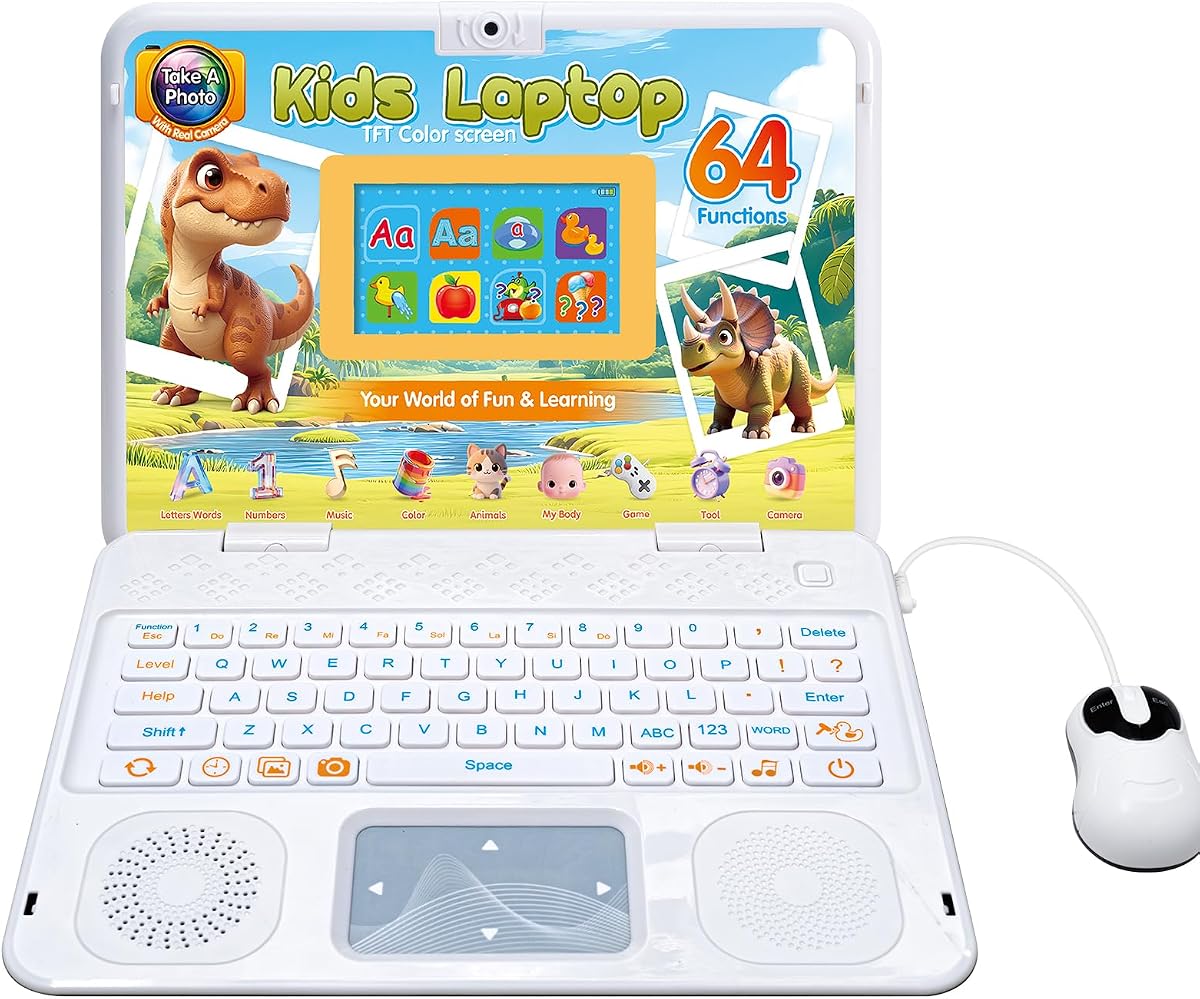
This Kids Laptop with Camera encourages creativity through 64 learning modes and photography features. With a 4.6 rating, it appeals to children who enjoy visual and interactive learning experiences.
We may earn a commission when you buy through this link, at no additional cost to you.
The camera allows kids to take pictures and apply filters, fostering creative thinking. The vibrant screen provides clear visuals for learning activities, keeping attention focused.
While it lacks real coding software, the logic and memory games build foundational skills. It is designed for fun learning rather than professional development.
Best for children who need motivation to learn through games. It works well as a supplementary tool alongside real coding education.
Camera features and photo editing introduce visual creativity, which complements logical coding thinking.
The colorful screen and games maintain interest, reducing frustration during learning activities.
We may earn a commission when you buy through this link, at no additional cost to you.
The LeapFrog ABC and 123 Laptop is designed for preschoolers aged 3 to 7, introducing basic coding concepts through play. Its 4.7 rating reflects its success in engaging young learners.
We may earn a commission when you buy through this link, at no additional cost to you.
Children can create simple code programs to interact with Pixel, their digital friend. Animations and sounds provide immediate feedback, reinforcing learning through fun and repetition.
While it uses batteries, the educational value is high for early cognitive development. It simplifies coding logic into manageable activities for tiny hands.
Ideal for parents wanting to introduce logic skills before primary school. It sets a positive foundation for future technical learning.
Pixel's digital face moves and reacts to code, making abstract concepts concrete for toddlers.
Simple programming sequences teach cause and effect, a core concept in coding logic.
We may earn a commission when you buy through this link, at no additional cost to you.
With 48 learning modes, this Kids Laptop provides a broad range of educational activities. Its 4.0 rating indicates solid performance for its price point and target audience.
We may earn a commission when you buy through this link, at no additional cost to you.
The ergonomic design fits comfortably in small hands, making it easy to hold during lessons. The color screen enhances visibility, keeping children engaged with vibrant content.
While it lacks advanced coding tools, the logic games build problem-solving skills. It is a practical option for families looking for introductory tech entertainment.
Best for children needing a dedicated device for educational play. It serves as a stepping stone to more serious computing.
The size and shape are tailored for children, preventing hand fatigue during extended use.
Multiple modes cover various subjects, ensuring that learning remains diverse and interesting.
We may earn a commission when you buy through this link, at no additional cost to you.
The LEXiBOOK LAPTAB 10 inch blends a tablet form factor with laptop features, offering a 10.1-inch touchscreen ideal for touch-based coding games. Its 4.2 rating reflects a solid family-friendly device.
We may earn a commission when you buy through this link, at no additional cost to you.
With 128GB storage and an octa-core processor, it handles apps and games efficiently. Parental controls ensure a safe environment for children to explore without risky content.
While not a full laptop, it serves well for visual learners who prefer tapping over typing. The USB and Wi-Fi connectivity support external devices and internet access.
Best for families needing a versatile device for both entertainment and light education. Its security features make it a trusted choice for younger users.
The touchscreen allows intuitive interaction with block-based coding apps, simplifying the learning process.
Customizable profiles and browser restrictions ensure that children access only age-appropriate educational content.
We may earn a commission when you buy through this link, at no additional cost to you.
Selecting the right device involves balancing performance, durability, and educational features. This guide outlines key factors to consider for informed purchasing.
A capable processor ensures smooth operation of coding platforms and web-based IDEs. Look for Intel N100 or MediaTek Kompanio models for adequate speed.
Prioritize processors that handle multitasking without lag to maintain focus during learning sessions.
At least 4GB RAM is necessary for running multiple tabs and apps. SSD storage provides faster load times than eMMC or HDD options.
Choose a device with expandable storage or cloud integration to store projects without space constraints.
Kids are active users, so sturdy construction matters. MIL-STD tested Chromebooks often withstand drops and spills better than consumer laptops.
Ruggedized models with spill-resistant keyboards offer the best protection for daily classroom use.
A clear screen reduces eye strain during long study hours. HD or Full HD resolution with anti-glare coatings is ideal for reading text.
Touchscreen capabilities can enhance interactive learning but are not strictly necessary for coding tasks.
Chrome OS provides simplicity and cloud integration suitable for school environments. Windows offers more flexibility for advanced software but requires more management.
Consider the ecosystem your child will access at school before making a decision.
Safety is crucial when kids use devices unsupervised. Look for built-in profile controls and safe browsers to limit distractions.
Features that restrict app downloads and set screen time limits help manage healthy usage habits.
Multiple USB ports allow connection to external keyboards or storage drives. Wi-Fi 6 ensures stable connections for virtual classes and downloads.
Bluetooth support enables wireless peripherals like mice or headsets for a cleaner workspace.
Long battery life supports full school days without charging. Aim for at least 8 hours to avoid interruption during homework time.
Efficient processors and display technologies contribute significantly to overall battery performance.
Set up parental controls and safe browsers immediately to protect children from harmful content. Create a dedicated user profile for coding tasks to keep the desktop organized and focused on learning.
Regularly update the operating system and apps to ensure security and performance. Teach kids to close unused programs to save battery life and maintain device speed.
Store the laptop in a padded bag to prevent physical damage during transport. Keep the screen clean with microfiber cloths and avoid placing heavy objects on the keyboard.
Chrome OS is often the best choice for younger students due to its simplicity and cloud integration. Windows is better for older kids needing specific development tools. Both support popular educational coding platforms effectively.
A minimum of 64GB is acceptable, but 128GB offers more room for projects. Cloud storage helps mitigate limited local space. Expandable options like SD card slots provide extra flexibility.
No, a keyboard is more important for typing code. However, touchscreens can be helpful for block-based coding apps and visual learning. They add versatility but are not a strict requirement.
Kids as young as 5 can start with simplified laptops like VTech. For real coding, ages 8 and up benefit from Chromebooks or lightweight Windows machines. Match the device to their current skill level.
Use built-in parental controls to block unsafe sites. Enable safe search and monitor browser history. Choose devices with Qwant Junior or similar kid-safe browsers for added protection.
Durability and battery life are critical for school environments. A comfortable keyboard helps with typing lessons. Connectivity options like Wi-Fi 6 ensure smooth access to online resources.
We highlighted ten laptops ranging from durable Chromebooks to playful educational devices. Each offers unique strengths for different age groups and learning styles to help parents choose.
Prioritize durability and battery life for daily school use. Ensure the device supports the specific coding platforms your child needs for their curriculum and future projects.
Prices and availability change frequently so check current listings before purchasing. Investing in the right device now can support your child's coding journey for years to come.