
EBOOT 30 Pieces Photoresistor Photo Light Sensitive Resistor
4.6Editor score
Thirty GM5539 resistors included
High voltage tolerance up to 150V
Ideal for bulk DIY projects
This guide compares the best Light Sensor for Arduino modules including LDRs and digital sensors for precise ambient light detection in your electronics
Finding the right Light Sensor for Arduino is crucial for building responsive automation systems. Whether you need simple threshold detection or precise lux measurements, the right module ensures accurate environmental awareness for your projects.
We evaluated ten top-rated options based on sensor type, output flexibility, and ease of integration. Each product offers unique strengths for hobbyists and professionals seeking reliable light intensity monitoring capabilities.
Every pick highlights specific use cases and technical specs to help you decide. Prices fluctuate frequently so verify current costs before purchasing to ensure you get the best value for your specific application needs.
4.6Editor score

4.4Editor score
4.7Editor score
This side-by-side comparison highlights key specifications across all ten selected Light Sensor for Arduino modules. Review these details to match your project requirements with the most suitable hardware option available today.



The WWZMDiB 6 Pcs 5MM LDR Light Sensor combines a photoresistor with an LM393 comparator to offer both analog and digital outputs. Rated at 4.4 stars, it provides reliable ambient light detection for Arduino projects requiring automated thresholds.
We may earn a commission when you buy through this link, at no additional cost to you.
Its key strength lies in the dual output configuration. You get a raw analog signal for precise measurement and a digital switch output for simple on-off triggers. The built-in potentiometer allows you to fine-tune the activation point for specific environmental conditions.
While the module works well, the calibration might take time to perfect. Users should expect to adjust the potentiometer carefully to avoid false triggers. This small trade-off ensures you get a robust signal that drives relays or microcontroller inputs effectively.
This module is ideal for hobbyists needing versatile light sensing. Whether you are building a nightlight or an automated curtain system, its flexible output options make it a top recommendation for general-purpose light sensing tasks.
The module provides both analog and digital outputs, allowing you to choose between raw data or simple threshold triggers depending on your project complexity.
An integrated potentiometer lets you calibrate the detection brightness manually ensuring the sensor responds correctly to your specific lighting environment without software intervention.
We may earn a commission when you buy through this link, at no additional cost to you.
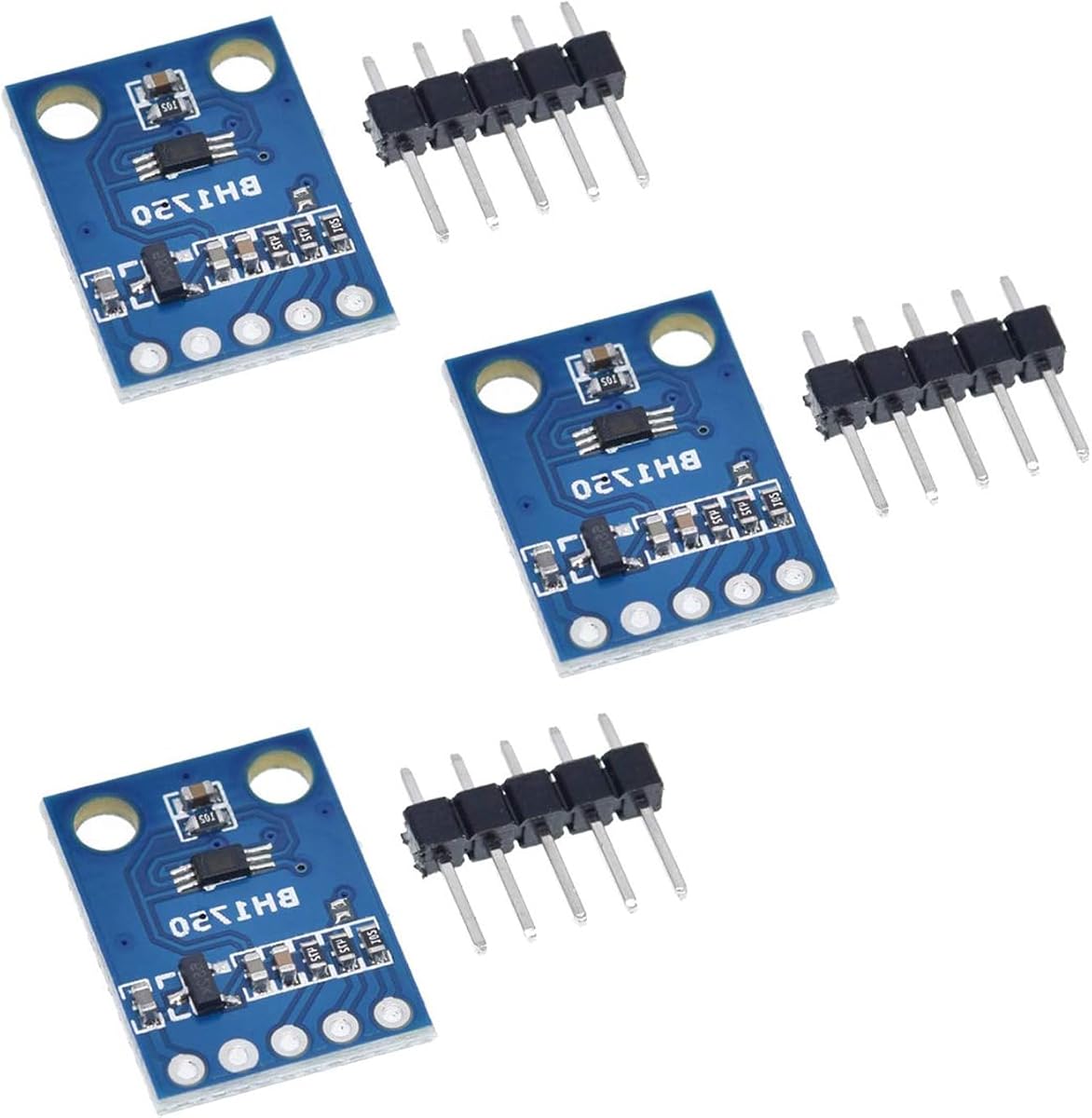
This 3-pack features the GY-302 module powered by the high-quality BH1750FVI chip from ROHM. It delivers precise light intensity measurements in Lux making it superior for projects needing accurate ambient data rather than simple threshold detection.
We may earn a commission when you buy through this link, at no additional cost to you.
The compact size of 13.9mm by 18.5mm makes it incredibly easy to integrate into tight spaces. It supports a wide power supply range of 3 to 5 volts ensuring compatibility with most modern microcontrollers without needing additional regulators.
While the I2C communication is efficient it does require specific library handling which might challenge beginners. This trade-off is acceptable given the accuracy gain over standard photoresistors. It is perfect for climate control or display brightness automation.
Professional and advanced hobbyists will appreciate the consistent performance. If your project relies on exact lighting conditions for decision-making this premium module offers the reliability you need to maintain system stability.
The BH1750FVI chip provides high-resolution digital output directly in Lux eliminating the need for complex software calibration often required by analog sensors.
With dimensions of just 13.9mm by 18.5mm the module fits easily into small PCB designs or portable devices where space is at a premium.
We may earn a commission when you buy through this link, at no additional cost to you.
The HiLetgo GY-302 module is another reliable option featuring the original BH1750FVI chip. It provides high-quality light intensity illumination sensing ideal for Arduino environments needing accurate data. The 4.5 rating reflects consistent user satisfaction.
We may earn a commission when you buy through this link, at no additional cost to you.
Its specs match the premium option with a compact design and wide power compatibility. This makes it a strong contender for those needing multiple units without breaking the budget. It supports 3 to 5 volts ensuring broad device support.
It is straightforward with standard digital outputs requiring I2C setup. There are no extra bells or whistles just solid performance. For bulk projects requiring several sensors this pack offers excellent value compared to individual buys.
Buyers looking for accuracy without premium pricing should choose this. It suits industrial monitoring or automated systems where light levels must be tracked precisely over time.
Utilizing the original BH1750FVI chip ensures consistent digital readings that are crucial for reliable long-term monitoring applications.
The small 13.9mm by 18.5mm footprint allows for easy mounting on crowded breadboards or PCBs.
We may earn a commission when you buy through this link, at no additional cost to you.
This photodiode sensor module distinguishes itself by offering directionality compared to standard photoresistors. It only senses light sources directly in front of it making it perfect for applications needing precise beam detection or light seeking behaviors.
We may earn a commission when you buy through this link, at no additional cost to you.
Sensitivity is adjustable via a blue digital potentiometer on the board allowing you to tweak the threshold easily. It offers both digital switch output and analog voltage output fitting various logic needs. The voltage range is standard at 3.3 to 5 volts.
Its small size and fixing bolt holes make installation secure and simple. While it misses ambient light better than omni-directional sensors its fixed direction capability solves specific problems like obstacle avoidance or target tracking.
Use this when you need to detect a specific light path. It is ideal for smart cars or industrial controls where directional accuracy matters more than general ambient readings.
Unlike general sensors this module focuses on direct light sources enabling precise detection for specific directional applications.
A built-in potentiometer lets you adjust sensitivity ensuring accurate triggering based on your specific brightness requirements.
We may earn a commission when you buy through this link, at no additional cost to you.
The EBOOT pack offers thirty GM5539 photoresistors providing excellent value for bulk purchases. Rated at 4.6 stars these raw components are perfect for DIYers needing multiple sensors. The maximum voltage of 150V ensures robust performance under stress.
We may earn a commission when you buy through this link, at no additional cost to you.
With a spectral peak at 540nm these resistors respond well to visible light. They require an external voltage divider circuit to function but this simple two-pin design allows total control over the readout. They are cheap enough to experiment freely.
While they lack built-in comparators the flexibility they offer is unmatched. You can build custom circuits to match exact project specs. This is a trade-off worth it for custom engineering or large-scale production prototypes.
Hobbyists needing a large supply for testing will find this ideal. It ensures you never run out of sensors mid-project. Keep a stock on hand for future builds requiring basic light resistance detection.
These photoresistors can withstand up to 150V DC allowing them to handle harsh environments or specialized power setups.
Thirty resistors provide ample quantity for large projects spare parts ensuring you never stop building due to missing components.
We may earn a commission when you buy through this link, at no additional cost to you.
The Teyleten Robot module is designed for triggering relay modules directly. It uses an LM393 comparator to sense ambient light intensity and output a digital signal. Rated at 4.6 stars it is a reliable choice for automation requiring binary decisions.
We may earn a commission when you buy through this link, at no additional cost to you.
The digital output switches high or low based on the set threshold. This makes it easy to connect to a microcontroller pin or directly drive a relay for switches. Its three-pin interface simplifies wiring significantly.
While it shares similarities with other comparator boards it stands out for its proven stability in relay applications. It is simple to install and calibrate. The only downside is it offers no analog data for detailed logging.
This module is perfect for light-operated switches. Buy it for streetlights or automated alarms where you need a clean digital signal to control heavy loads without complex coding.
The output signal can drive relay modules directly simplifying the design of automatic lighting or alarm systems.
The sensor is optimized to detect general ambient light ensuring it reacts appropriately to changing day-night cycles.
We may earn a commission when you buy through this link, at no additional cost to you.
This digital light sensor is highly versatile supporting Arduino ESP32 and Raspberry Pi. It features an adjustable threshold via a potentiometer and provides both digital and analog outputs. Rated at 4.6 stars it is a safe bet for mixed-platform projects.
We may earn a commission when you buy through this link, at no additional cost to you.
The included tutorials help beginners get started quickly. Its supply voltage works for 3.3V and 5V systems making it future-proof. The four-piece pack ensures you have spares for multiple stations.
While it lacks advanced spectral filtering it covers most general needs well. The analog output allows for calibration even if you mostly use digital switching. It is a solid mid-range tool for standard automation tasks.
Buy this if you work with various microcontrollers. Its universal compatibility makes it a staple for prototyping shops needing reliable light detection without specialized features.
Support for Arduino ESP32 and Raspberry Pi ensures you can use this module across your entire electronics toolkit.
Comprehensive guides help you set up wiring and code quickly reducing the learning curve for new users.
We may earn a commission when you buy through this link, at no additional cost to you.
This pack of 50 GL5516 photoresistors offers incredible value for bulk buyers. With a 4.9 rating users trust their performance for automation tasks. The high dark resistance ensures clear signal separation in low light.
We may earn a commission when you buy through this link, at no additional cost to you.
The resistance ranges from 5 to 10 KOhm in light and 0.2 MOhm in dark. This makes them compatible with standard Arduino pins and ESP boards without complex interfacing. It is ideal for large-scale solar tracking or lighting projects.
While simple components they are incredibly durable and responsive. You can distribute them across multiple devices easily. The sheer quantity eliminates the risk of running out mid-production.
Choose this for production runs or classrooms needing many sensors. It saves time and money while maintaining high reliability for basic light detection needs.
With a dark resistance of 0.2 MOhm the sensor maintains strong signal isolation in low-light conditions.
Fifty units provide enough components for multiple prototypes or classroom workshops without additional orders.
We may earn a commission when you buy through this link, at no additional cost to you.
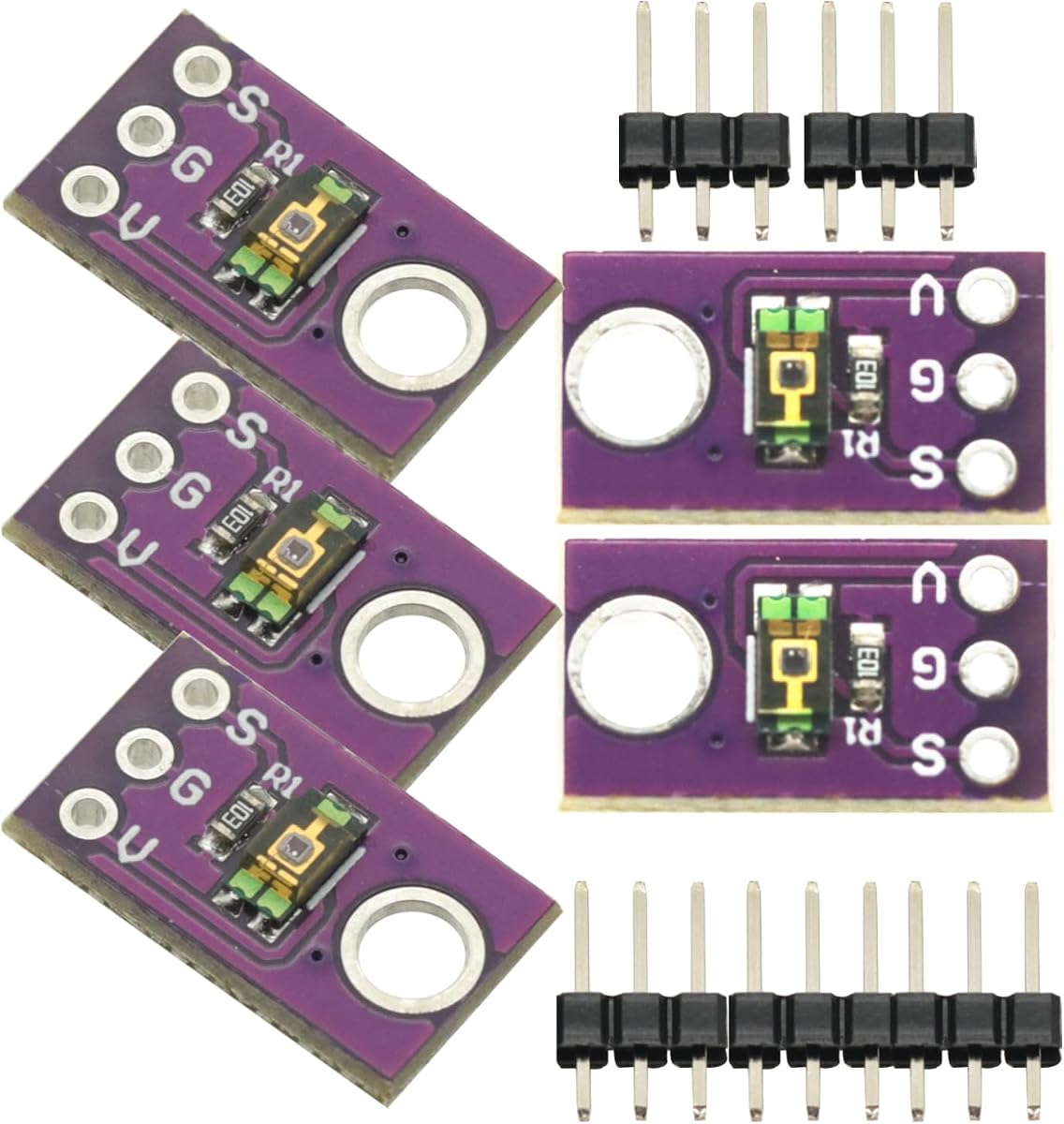
The TEMT6000 sensor is a professional-grade module designed for industrial lighting control and display backlight dimming. It holds a perfect 5.0 rating reflecting its high precision. It is tailored for devices needing consistent ambient light monitoring.
We may earn a commission when you buy through this link, at no additional cost to you.
Its design supports keypad backlighting and LCD displays making it suitable for consumer electronics. The module provides accurate analog output allowing for smooth dimming curves. It is built to handle continuous operation in critical systems.
While it is specialized it excels in its niche. The reliability ensures you do not need to recalibrate often. It is a premium choice for professional product development rather than simple hobby experiments.
Engineers developing commercial products should choose this module. Its professional rating ensures the lighting experience matches industry standards for brightness and efficiency.
Designed specifically for display backlight dimming and keypad backlighting this module optimizes user interface brightness control.
The perfect rating highlights consistent performance and reliability for industrial control applications requiring high precision.
We may earn a commission when you buy through this link, at no additional cost to you.
The uxcell photodiode module is tailored for smart car applications and light intensity detection. It uses a wide voltage LM393 comparator for stability. Rated at 4.6 stars it offers both digital and analog outputs for flexible interfacing.
We may earn a commission when you buy through this link, at no additional cost to you.
Its working voltage supports both 3.3V and 5V systems. This makes it compatible with modern ESP microcontrollers as well as classic Arduino boards. The module is small enough to fit on compact car dashboards or robot chassis.
While the pack includes only three units it is perfect for single project prototypes. The digital and analog outputs allow you to test different control methods. It is a solid choice for smart car prototypes needing reliable sensing.
Automotive hobbyists will find this reliable. Its stability ensures consistent readings in varying environmental conditions. Use it for automatic headlight controls or ambient light monitoring in vehicles.
Optimized for automotive use this module handles the voltage fluctuations and environmental demands of vehicle electronics.
The LM393 chip ensures consistent signal processing reducing false triggers caused by electrical noise.
We may earn a commission when you buy through this link, at no additional cost to you.
Selecting the right light sensor depends on your project needs such as precision vs simplicity. This guide explains the key factors to consider before purchasing a module.
The most common types are photoresistors (LDR) and photodiodes. LDRs change resistance based on light and are cheap but slower. Photodiodes are faster and more precise but often require external circuits or amplifiers.
Choose LDR for basic threshold tasks and photodiodes for accurate or fast detection.
Modules offer analog or digital outputs. Analog outputs provide a continuous voltage proportional to light intensity while digital outputs give a simple high or low signal based on a threshold.
Digital outputs simplify code for simple triggers but analog allows for precise measurements.
Check if the module supports 3.3V or 5V logic. Many sensors run on both but some require specific levels to avoid damaging your microcontroller.
Always match the sensor voltage to your board to ensure safe operation.
Modules with a potentiometer allow you to adjust the detection threshold manually. This feature helps in fine-tuning the sensor response to your specific environment.
Prioritize modules with adjustable sensitivity for easier calibration.
Some boards have mounting holes for screws or bolts while others are designed for breadboards only. Secure mounting is essential for industrial or automotive use.
Look for fixing holes if your project requires a permanent installation.
Bulk packs of photoresistors are cheaper per unit but require more effort to wire. Single modules offer convenience but cost more per piece.
Buy in bulk if you plan multiple prototypes to save money.
Digital modules often use branded chips like BH1750FVI for better accuracy. Generic modules might be cheaper but less consistent.
Invest in branded chips for critical projects needing precise data.
Identify your use case such as display dimming or simple lighting control. Professional modules support industrial standards while hobby modules focus on ease of use.
Match the sensor to the application for best results.
Connect the VCC and GND pins to your power supply ensuring correct polarity. For analog modules connect the output to an analog pin and for digital to a digital pin.
Calibrate the potentiometer by turning it slowly until the output changes at your desired light level. Use a multimeter if available to verify voltage levels during adjustment.
Keep the sensor lens clean and avoid direct exposure to moisture. Use a protective casing if mounting outdoors to maintain long-term accuracy and prevent false triggers.
An LDR changes resistance based on light intensity while a photodiode produces current when exposed to light. LDRs are cheaper and slower whereas photodiodes are faster and more precise for specific directional sensing tasks.
Check the module voltage rating first. Most modern modules support both 3.3V and 5V but some might burn out if you exceed the rated voltage. Always verify the datasheet for compatibility.
Most modules have a small potentiometer or screw you can turn to change the sensitivity. Adjust it while monitoring the output signal until it switches at your desired light level.
Yes digital sensors like BH1750 require specific I2C libraries to communicate with the microcontroller. These libraries are often provided by the manufacturer or found in the Arduino IDE library manager.
Standard modules are not waterproof so you must add an external enclosure if using them outdoors. Look for IP-rated sensors if moisture resistance is required for your environment.
Analog sensors give a rough estimate of light intensity but are affected by temperature and drift. Digital sensors provide more precise and consistent measurements for critical applications.
Yes you can connect multiple analog sensors using different analog pins or multiple digital sensors using the I2C bus if they have unique addresses. Check the pin limits of your specific board.
The WWZMDiB module stands out as the top overall pick thanks to its versatile dual output and reliable comparator. It offers a great balance of features for most general automation tasks.
For precision projects the GY-302 packs provide superior accuracy with digital lux measurement. Consider the EBOOT pack if you need bulk components for large scale prototyping.
Prices change frequently so always check the current listings before buying. The right Light Sensor for Arduino depends on your specific project needs and budget constraints.