
Behringer RHYTHM DESIGNER RD-8
4.6Editor score
Analog sound engine
64-step sequencer
Wave designer filter
This guide compares the top 808 drum machines for producers seeking authentic analog tones, advanced sequencing, and flexible workflow options for modern music
Creating powerful beats starts with the right rhythm source. An 808 drum machine offers the iconic low-end punch and crisp hi-hats that defined hip-hop and electronic music. Choosing the best model depends on your need for portability, sound design depth, or studio integration.
We evaluated ten leading drum machines based on sound accuracy, sequencing features, connectivity, and build quality. Each product was analyzed for its ability to deliver classic analog warmth while supporting modern production demands. The list spans compact portable units to robust standalone workstations.
Each pick highlights specific strengths such as analog modeling, sample capabilities, or interface design. Prices and availability change frequently so verify current listings before purchasing. Our goal is to help you find the instrument that best fits your creative process and budget constraints.
4.6Editor score

4.6Editor score
5.0Editor score
The following table provides a side-by-side overview of key specifications across all ten models. Use this quick reference to compare sound engines, sequencer capabilities, and output options before diving into detailed reviews.



The Roland TR-6S stands out as a versatile rhythm performer blending classic analog modeling with modern features. It holds a strong rating among users who value both sound quality and workflow flexibility. This unit excels at delivering iconic drum tones while offering tools to reshape them.
We may earn a commission when you buy through this link, at no additional cost to you.
Its six tracks of advanced sequencing allow complex pattern creation with sub-steps and motion recording. The FM sound engine introduces futuristic textures that complement the traditional TR-808 and TR-909 sounds. Users appreciate the large preset library and support for custom samples to expand sonic palettes.
While powerful the device is compact enough for mobile production with battery operation. Some producers may find the six track limit restrictive for full arrangements but it suits beat creation well. The USB audio interface adds significant value for integrating with laptops without extra hardware.
This machine is ideal for producers needing a balance of legacy sound and contemporary control. It works equally well for live performance or studio sketching. Choosing the TR-6S ensures access to Roland's refined sound design in a portable package.
Circuit models of vintage Roland machines ensure the core tones feel true to the originals while offering editable parameters for fresh variation.
Battery power and compact size let you create anywhere without needing an outlet or computer connection during sessions.
We may earn a commission when you buy through this link, at no additional cost to you.
The Behringer RD-8 offers a compelling entry into analog drum synthesis at a budget friendly price. It recreates the legendary 662 OTA chip to capture the warmth of classic machines. Users praise its ability to deliver rich tones without requiring expensive hardware.
We may earn a commission when you buy through this link, at no additional cost to you.
With sixteen original drum sounds and a powerful 64 step sequencer it supports detailed rhythm programming. The 11 independent analog outputs allow for external processing which is rare at this price. Features like global accent and real time triggering enhance performance capabilities significantly.
Some users note the lack of built-in speakers means you need monitoring or headphones. The interface is functional but may require time to master compared to more modern units. These trade-offs are acceptable given the value proposition and sound quality delivered.
This drum machine suits producers seeking pure analog character on a tight budget. It is excellent for recording multi-track audio or processing sounds externally. For those wanting vintage style without vintage costs the RD-8 delivers strong results.
Replicating the 662 OTA chip ensures the sound engine produces authentic oscillations and decay curves true to the original hardware.
Eleven independent outputs provide flexibility for mixing drum elements separately or routing them to effects pedals externally.
We may earn a commission when you buy through this link, at no additional cost to you.
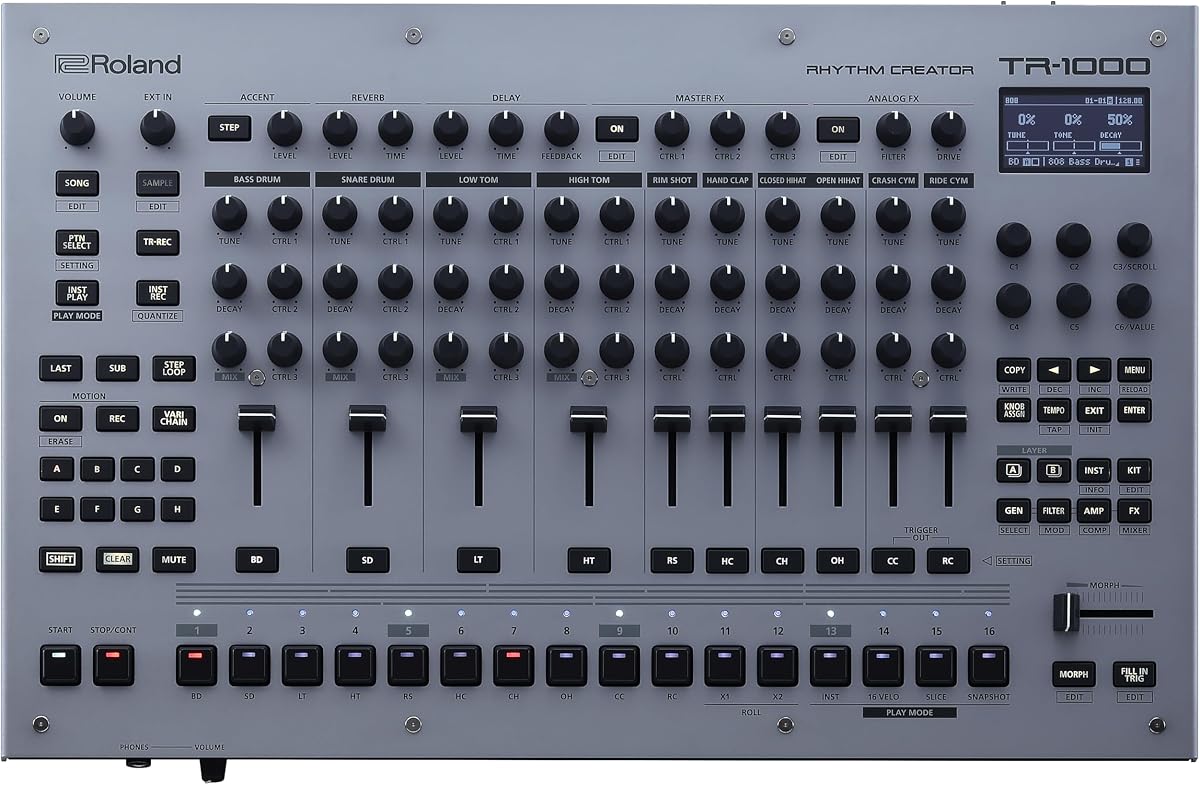
The Roland TR-1000 represents the pinnacle of drum machine technology with unmatched power and flexibility. It combines analog modeling with a vast sampler allowing for limitless sound design. A perfect score reflects its status as the deepest machine Roland has ever created.
We may earn a commission when you buy through this link, at no additional cost to you.
Features include over 2000 onboard sounds and 46 GB of memory for user samples. The advanced sampler supports time-stretching and non-destructive editing for professional workflows. Tactile performance effects like the morph slider let you manipulate sounds dynamically during live sets.
The high price and size may limit appeal to hobbyists but professionals will find it invaluable. It is essentially a full studio drum center in one unit. For those needing every tool possible for rhythm creation this model justifies the investment.
Ideal for serious producers and performers who require top-tier sound and reliability. It handles complex arrangements and live processing with ease. Choosing the TR-1000 ensures you have the most capable drum tool available today.
The ACB modeling engine provides vintage analog feel while FM and PCM engines create modern textures and digital sounds.
Tactile morph sliders and snapshots allow real time manipulation of effects and sound layers during performance.
We may earn a commission when you buy through this link, at no additional cost to you.
The Roland TR-08 is a faithful recreation of the legendary TR-808 in a miniature form factor. It retains the sound and user interface that made the original iconic. Users value the authenticity and the ability to tweak tone and decay hands-on.
We may earn a commission when you buy through this link, at no additional cost to you.
Features include added compressor and gain controls that provide modern flexibility. The classic step and tap write modes ensure easy programming for beginners. Despite its size it offers robust controls for tuning and pan to shape the sound precisely.
Some users may wish for more sample capabilities or a built-in sequencer. It is primarily a sound source rather than a full arranger. The compact design is great for setups where space is at a premium.
This machine suits those who want the specific TR-808 character without the bulk. It is perfect for live sets or desktop studios. The TR-08 delivers the exact vibe you expect in a portable package.
The layout mimics the original TR-808 so users familiar with vintage gear can pick it up and start immediately.
Knobs for tone and decay allow quick sound shaping without digging into menus during performance or recording.
We may earn a commission when you buy through this link, at no additional cost to you.
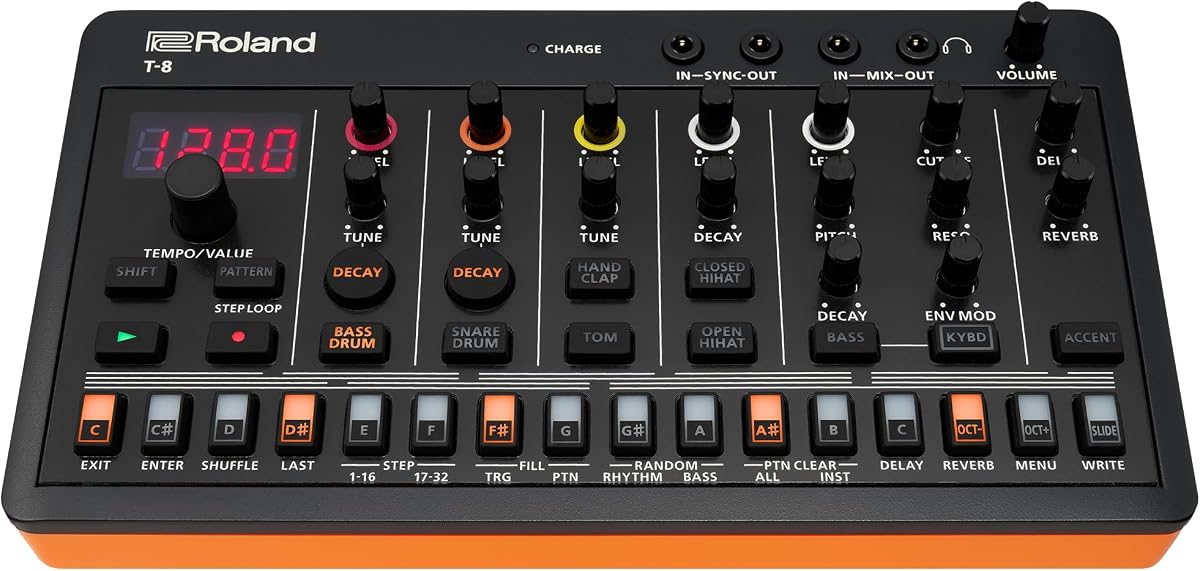
The Roland T-8 fits legendary creative magic in the palm of your hand for jamming anywhere. It offers pristine TR drum sounds and TB-303 bass for genre-defining tracks. Users love the ability to develop ideas on the go without a computer.
We may earn a commission when you buy through this link, at no additional cost to you.
The 16 step sequencer allows quick acid jams or trap bangers with flip and dice tools. Analog circuit behavior technology recreates vintage tonality accurately for authenticity. Built-in effects like delay and reverb help enhance tracks without extra gear.
While compact the controls are streamlined which may limit deep parameter tweaking. It is best suited for rapid idea generation and performance rather than detailed editing. The USB-C interface ensures easy integration with mobile devices.
This beat machine is perfect for travelers and producers who prioritize inspiration over complexity. It simplifies the process of turning ideas into tracks. The T-8 proves powerful sounds can come in a tiny package.
Tools that flip and dice beats stimulate creativity and put the fun back into flow for quick sessions.
USB-C audio and MIDI interface requires no drivers for plug-and-play functionality with computers or mobile devices.
We may earn a commission when you buy through this link, at no additional cost to you.
The Behringer RD-9 offers a focused analog drum machine experience with practical connectivity options. It provides 11 distinct drum sounds and features an analog filter for tonal shaping. Users appreciate the 10 individual outputs for mixing and external processing.
We may earn a commission when you buy through this link, at no additional cost to you.
MIDI connectivity ensures it integrates well with other hardware in a studio. The analog filter wave designer helps tailor sounds creatively. Three trigger outs offer additional control options for external gear or lights.
Sequencing capabilities are straightforward which may not satisfy complex rhythm needs. The sound palette is limited compared to hybrid or sampler models. However for those wanting pure analog simplicity it delivers a solid core performance.
This machine suits producers who prefer tactile analog control over digital menus. It works well in hybrid setups where specific drum tones are needed. The RD-9 is a reliable component for rhythm-focused workflows.
The included analog filter and wave designer tools allow for deep manipulation of drum sounds for unique textures.
MIDI and trigger outs facilitate smooth integration with synths and sequencers in a larger hardware studio setup.
We may earn a commission when you buy through this link, at no additional cost to you.
The Behringer LM Hybrid combines sampling technology with classic drum machine workflows. It offers a hybrid approach that supports modern production needs effectively. The compact design makes it suitable for mobile setups and smaller studios.
We may earn a commission when you buy through this link, at no additional cost to you.
Users benefit from a modern interface that simplifies operation compared to older units. Sampling capabilities allow for unique sound customization and layering. It bridges the gap between traditional drum sounds and sample-based production.
Specific sequencing and output details are less publicized but the model aims to balance utility and portability. The price sits in a competitive mid-range for hybrid units. It serves well for those needing flexibility without full workstation size.
Ideal for producers looking for sampling power in a compact format. It complements other hardware by providing flexible sound sources. The LM Hybrid offers a practical bridge for modern rhythm production.
Blending analog modeling with sampling allows for both classic tones and modern sound design in one device.
Designed to fit easily on small desks or into travel cases without sacrificing essential production features.
We may earn a commission when you buy through this link, at no additional cost to you.
The Behringer BMX offers a pad-focused approach to hybrid drum synthesis with 24 performance pads. It supports 8 voice hybrid sampling and includes sample recording for custom content. The 64 step sequencer provides robust rhythm programming capabilities.
We may earn a commission when you buy through this link, at no additional cost to you.
Users appreciate the tactile pad layout for expressive finger drumming. The dual mode filter and wave designer allow sound shaping. Despite features user reports indicate variability in quality and performance stability.
Low ratings suggest potential inconsistencies in build or firmware stability. This makes it a riskier choice compared to established models. Prospective buyers should weigh the feature set against potential reliability issues carefully.
For those seeking a pad-heavy workflow on a budget it remains an option. It suits producers who prioritize hands-on control over advanced software integration. The BMX offers potential but requires careful testing upon receipt.
24 performance pads facilitate expressive finger drumming and real-time control over drum and sample playback.
Sample recording and wave design tools enable users to tailor sounds to specific creative requirements easily.
We may earn a commission when you buy through this link, at no additional cost to you.
The Behringer LmDrum focuses on sound variety with 109 drum sounds available out of the box. It combines a 64 step sequencer with wave design tools for flexibility. A perfect 5.0 rating reflects user satisfaction with its performance capabilities.
We may earn a commission when you buy through this link, at no additional cost to you.
Users report strong sound quality and ease of use for beat creation. The dual-mode filter helps sculpt tones for different genres. The inclusion of wave designer adds a layer of creative sound control.
Detailed connectivity options are less emphasized in available data. It is best for users prioritizing sound variety over extensive I/O. The high rating suggests reliable performance for typical production tasks.
Ideal for producers needing a broad sound palette without extensive sampling work. It serves as a robust tool for electronic and hip-hop styles. The LmDrum delivers on its promise of comprehensive drum sounds.
With 109 drum sounds included you have a wide variety of tones ready to use without loading custom samples.
Wave designer and dual-mode filter let you shape and modulate drum sounds to fit unique musical contexts.
We may earn a commission when you buy through this link, at no additional cost to you.
The Akai Professional MPC XL is a standalone powerhouse designed for modern producers. It features MPC3 OS and a Gen 2 8-core processor for smooth plugin performance. A nearly perfect rating highlights its capabilities as a studio centerpiece.
We may earn a commission when you buy through this link, at no additional cost to you.
Expressive 3D-sensing pads allow dynamic control over sounds and effects. The 10.1-inch touchscreen and 256GB internal storage facilitate complex arrangements and sampling. Connectivity includes USB-C audio and 32 channels of MIDI I/O for studio integration.
The price is high and the system requires time to learn fully. However for DAWless workflows it offers unmatched power and flexibility. It supports up to 32 plugin instruments and 16 audio tracks simultaneously.
Ideal for beatmakers and producers who want a complete workflow without a computer. It combines sequencing sampling and mixing in one unit. The MPC XL ensures professional results for live performance and studio production.
3D-sensing technology with 4 quadrants enables layering and morphing for dynamic performance expression.
No computer required means you can work anywhere with internal storage and powerful processor handling the load.
We may earn a commission when you buy through this link, at no additional cost to you.
Choosing the right drum machine involves assessing your production needs and workflow preferences. Consider sound quality, features, and budget to find a model that supports your creative goals.
Sound engines range from pure analog to digital modeling and hybrid sampling. Analog models like the RD-8 offer warmth while digital units like the TR-6S provide flexibility. Hybrid machines combine both for a wide range of tones.
Look for sequencers that support sub-steps, motion recording, and step looping. Advanced sequencers allow complex rhythmic variations and real-time tweaks. Basic sequencers are easier to use but limit creative possibilities.
Compact units like the T-8 are ideal for mobile production. Larger workstations like the MPC XL suit desktop studios. Consider battery power options if you plan to create without an outlet.
USB-C audio interfaces simplify connections to computers. MIDI and CV outputs help integrate with other hardware. Ensure the machine supports your studio's input and output requirements.
Some models include custom sample support for unique drum kits. Others rely on preset sounds only. If you need specific textures, choose a machine with sample import features.
Hands-on knobs and pads enable quick sound shaping. Touchscreens and menus may offer more control but take time to learn. Select an interface that matches your preferred workflow style.
Prices vary widely from affordable analog units to premium workstations. Define your maximum spending limit to narrow down options. Higher prices often bring more features but not always better sound quality.
Rugged metal chassis ensures durability for live performances. Lightweight plastic bodies are easier to transport but may feel less premium. Check reviews for long-term reliability reports before buying.
Start by connecting power and audio outputs to your speakers or interface. Use USB or MIDI cables to integrate with other gear. Turn on the machine and explore preset patterns to familiarize yourself with the sounds.
Create custom patterns by setting step sequences and adjusting decay or pitch. Use record modes to capture live performance or program beats using the sequencer. Save your work to internal memory or export via USB.
Keep the unit clean and dry to prevent damage. Store in a padded case if transporting frequently. Avoid exposing it to extreme temperatures to maintain performance quality over time.
Analog machines use physical circuits to generate sound offering warmth but less flexibility. Digital models use software to recreate sounds enabling more presets and customization. Hybrid units combine both for the best of both worlds.
Many models like the TR-6S and MPC XL are standalone capable meaning they operate without computers. Check connectivity options to ensure they sync with your setup. Battery options support mobile live performances.
Higher-end models like the TR-1000 and MPC XL support custom samples. Entry-level machines like the RD-8 rely on preset sounds. Verify sample loading features if you need specific sounds.
With proper care drum machines last many years. Quality components and sturdy chassis help durability. Software updates can extend functionality over time. Handle with care to avoid physical damage.
Most modern machines include USB MIDI or audio interfaces. Connect to your computer via USB or MIDI ports. Ensure your DAW recognizes the device for recording and synchronization.
Beginners often prefer intuitive interfaces like the T-8. It simplifies workflow and offers classic sounds without complexity. Budget-friendly models like the RD-8 are also good entry points.
The top picks highlight a range of options from budget analog to premium workstations. Each model brings unique strengths to beat creation. Select based on your specific sound needs and workflow style.
Prioritize sound quality and interface usability to ensure satisfaction. Consider connectivity options to integrate smoothly with your setup. Avoid overcomplicating your purchase by focusing on essential features first.
Prices and availability change frequently so verify current listings before purchasing. Regularly check for software updates to maximize performance. Choosing wisely ensures a tool that supports your creativity long term.