
Dissolved Oxygen Meter with ATC
4.3Editor score
Extended 0-40 mg/L range
Automatic temperature compensation
Includes calibration powder kit
This guide compares the best dissolved oxygen sensors for aquaculture, hydroponics, and environmental monitoring to help you choose the right water quality
Dissolved oxygen sensors are essential tools for monitoring water quality in aquaculture, hydroponics, and environmental research. Choosing the right sensor ensures accurate readings and healthy aquatic life or plant growth.
We compared ten top-rated models based on accuracy, ease of use, durability, and price. Our analysis covers galvanic, polarographic, and optical technologies to help you find the best fit for your needs.
Each pick highlights key features, pros, and cons to guide your decision. Prices and availability may change, so check current listings before purchasing to ensure you get the best deal for your project.
4.3Editor score
4.4Editor score

4.8Editor score
The following table provides a side-by-side comparison of all ten products evaluated in this guide. Use it to quickly compare key specifications and features across different price points and technologies.



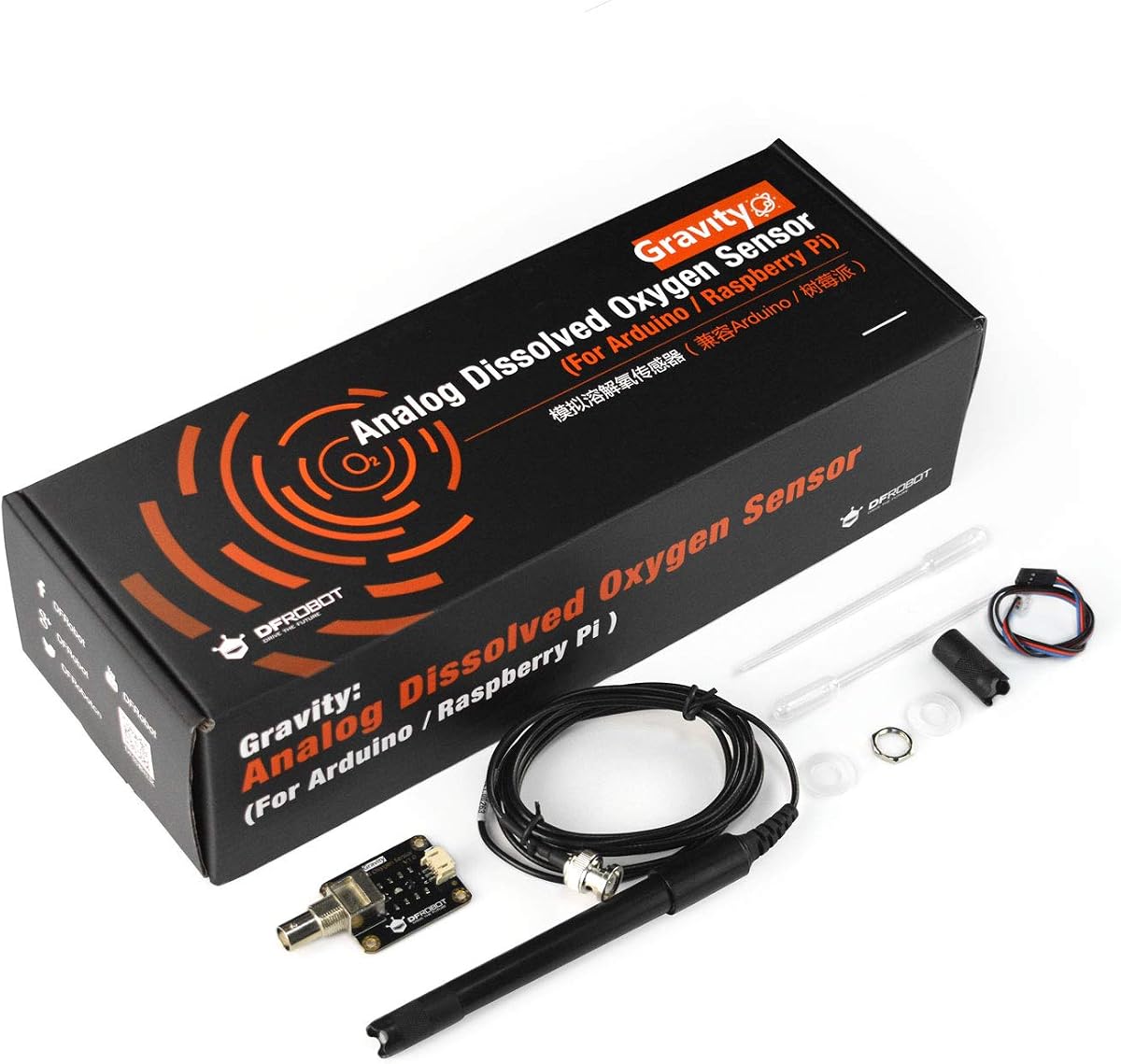
The Gravity Analog Dissolved Oxygen Sensor Kit stands out as a top choice for makers and IoT projects. With a 4.4 rating, it offers a galvanic probe that requires no polarization, enabling instant readings.
We may earn a commission when you buy through this link, at no additional cost to you.
Its hardware filtering ensures stable analog signals without complex software processing. The kit supports a wide voltage range and includes spare membrane caps, making it ideal for hydroponics or lab research.
While the filling solution is not included due to shipping rules, it is easy to prepare. The lack of an ADC module in the package is a minor trade-off for the flexibility it provides.
This kit is perfect for users building custom water quality monitors. Its open-source support and quick calibration make it a reliable pick for aquaculture and educational applications.
The galvanic probe allows immediate measurements without waiting for stabilization, saving time in intermittent power setups.
Compatible with Arduino, ESP32, and Raspberry Pi, this sensor simplifies building automated water monitoring systems.
We may earn a commission when you buy through this link, at no additional cost to you.
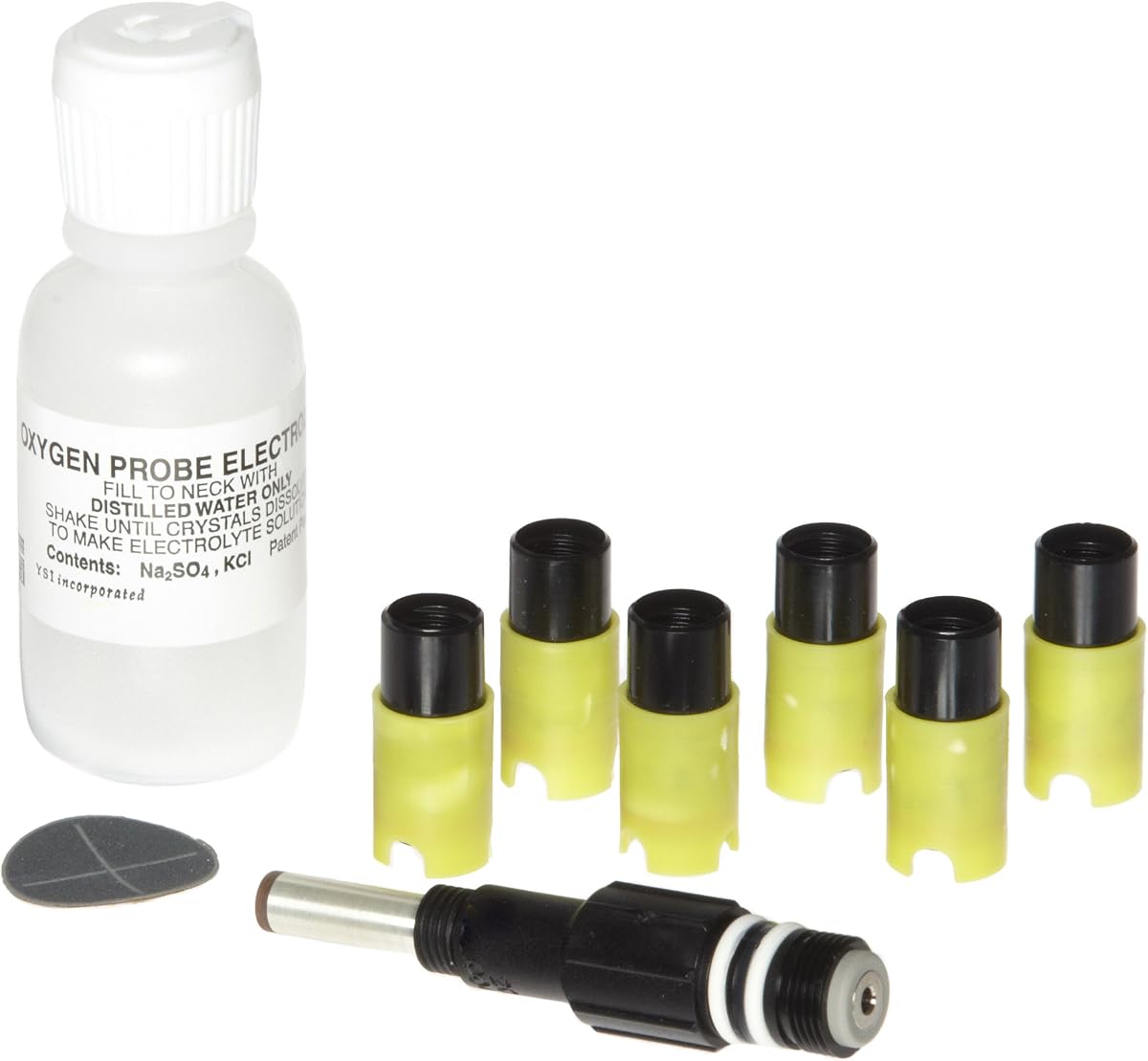
The YSI-605202 Pro Series sensor is designed for convenience with its user-replaceable design. It holds a strong 4.8 rating, reflecting user satisfaction with its simplicity and reliability.
We may earn a commission when you buy through this link, at no additional cost to you.
Features like screw-on cap membranes and tool-free replacement make maintenance straightforward. The package includes six membrane caps and a bottle of solution, ensuring you have supplies ready.
However, this is a sensor only and works with compatible YSI meters. You need to verify your existing equipment before purchasing to ensure compatibility and avoid extra costs.
Ideal for professionals using YSI systems, this sensor reduces downtime during maintenance. Its high ratings confirm it is a dependable choice for frequent water quality checks.
Screw-on caps allow quick membrane changes without tools, keeping your monitoring system operational with minimal interruption.
With six membrane caps and solution included, you can perform multiple replacements without immediate additional purchases.
We may earn a commission when you buy through this link, at no additional cost to you.
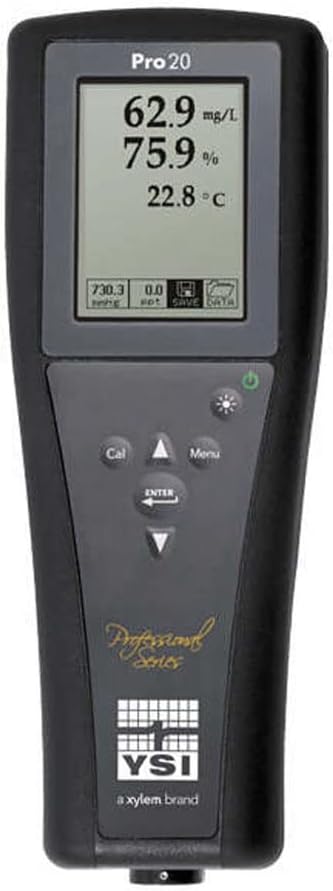
The YSI 6050020 Pro20 Handheld Meter is built for professionals needing accurate field readings. It offers a 4.4 rating and features One Touch Cal for rapid calibrations in just three seconds.
We may earn a commission when you buy through this link, at no additional cost to you.
Automatic barometric pressure compensation enhances accuracy across varying conditions. The ability to store 50 data sets reduces manual recording errors during extensive testing sessions.
This unit is sold as meter only, meaning you must have a compatible sensor. The higher price reflects its professional features but may be steep for casual hobbyists.
Best for researchers and field technicians, this meter ensures reliable data collection. Its backlit display and keypad make it usable even in low-light environments.
One Touch Cal simplifies the calibration process, allowing you to start measuring quickly without complex setup steps.
Storing up to 50 data sets helps track changes over time without needing to write down every reading manually.
We may earn a commission when you buy through this link, at no additional cost to you.
The YSI 6900 ProDSS ODO sensor utilizes optical technology to measure dissolved oxygen. This approach eliminates the need for membranes and electrolytes, reducing long-term maintenance tasks.
We may earn a commission when you buy through this link, at no additional cost to you.
Its design is optimized for the ProDSS multiparameter system, ensuring high accuracy and stability. Users appreciate the durability and reduced effort compared to traditional galvanic sensors.
The main drawback is the cost and requirement for a ProDSS meter. If you are already invested in the YSI ecosystem, this sensor offers significant operational benefits.
Ideal for professional water quality monitoring, this sensor delivers reliable data with minimal intervention. Its optical nature makes it a forward-thinking choice for modern labs.
Optical sensing avoids chemical depletion, providing consistent performance without frequent electrolyte refills or membrane changes.
Designed for the ProDSS platform, this sensor ensures seamless data logging and multi-parameter analysis capabilities.
We may earn a commission when you buy through this link, at no additional cost to you.
This Dissolved Oxygen Meter offers exceptional value with an extended 0-40 mg/L range. It includes ATC and a calibration kit, making it ready to use right out of the box.
We may earn a commission when you buy through this link, at no additional cost to you.
The user-friendly design allows simple immersion without removing covers. Automatic temperature compensation ensures accurate results across a wide range of conditions from 0-50°C.
Lacking a backlight might be inconvenient in dim environments, but the clear digital display helps. For the price, it provides essential features without unnecessary complications.
Perfect for aquariums and small-scale aquaculture, this meter balances cost and performance. It is an excellent starting point for those monitoring water quality regularly.
The 0-40 mg/L range supports diverse applications, from fresh water tanks to industrial uses, beyond standard limits.
Included calibration powder and filling fluid simplify initial setup, ensuring accurate readings from the first test.
We may earn a commission when you buy through this link, at no additional cost to you.
This meter for ponds provides a practical solution for aquaculture and pond owners. It measures both mg/L and percentage, offering flexibility in how you interpret data.
We may earn a commission when you buy through this link, at no additional cost to you.
The 3.6-foot cable allows easy measurement in deeper containers. It includes zero-oxygen calibration water and electrolyte solution to ensure accurate two-point calibration.
While the rating is lower than premium models, it remains a capable tool for routine checks. The backlit display enhances usability in various lighting conditions during testing.
Best for monitoring fish ponds and hydroponics, this kit simplifies water quality checks. Its portability makes it convenient for home use without complex setup requirements.
Displaying both mg/L and percentage saturation helps users understand oxygen levels in multiple relevant formats.
Included calibration solutions and membranes reduce preparation time, ensuring accurate measurements for every use.
We may earn a commission when you buy through this link, at no additional cost to you.
This meter offers extended reach with an 11.48-foot cable and data management features. It measures multiple parameters including salinity and pressure, providing comprehensive water insights.
We may earn a commission when you buy through this link, at no additional cost to you.
With 99 data memory and an IRDA port, you can store and transfer readings efficiently. The stability indicator ensures you are getting reliable results during testing.
The IRDA port may feel dated compared to modern Bluetooth options, but it serves the function. The long cable is particularly useful for large tanks or industrial settings.
Ideal for educational and basic industrial use, this kit provides essential data tracking. Its feature set supports routine monitoring needs without expensive connectivity requirements.
An 11.48-foot cable allows you to reach deep water bodies or tanks easily without lifting the entire unit.
Storing 99 readings and transferring them via IRDA simplifies record-keeping for compliance or research.
We may earn a commission when you buy through this link, at no additional cost to you.
The Milwaukee MW600 LED provides precise measurements with a 0.1 mg/L resolution. It is designed for educational and environmental analysis applications where consistent data is key.
We may earn a commission when you buy through this link, at no additional cost to you.
Its two-point manual calibration ensures accuracy across different water conditions. The 3m cable and screw-on cap membrane make maintenance straightforward for students and teachers.
While it has a limited saturation range compared to professional units, it covers most basic needs. The portable design allows easy transport between classrooms or field sites.
Best for school labs and basic water analysis, this meter balances simplicity and accuracy. Its durability and clear screen make it suitable for frequent student use.
With 0.1 mg/L resolution, this meter detects small changes in oxygen levels crucial for precise educational experiments.
The economy portable design and simple features keep costs low for educational institutions with tight budgets.
We may earn a commission when you buy through this link, at no additional cost to you.
The Apera Instruments AI480 DO850 offers a premium experience with its optical sensor. It eliminates the need for electrolyte refills and frequent membrane changes, reducing maintenance significantly.
We may earn a commission when you buy through this link, at no additional cost to you.
Its IP67 waterproof rating ensures reliability in harsh environments. The kit includes a 10 ft probe and carrying case, providing everything needed for immediate professional testing.
The auto-calibration feature simplifies setup, saving time during critical monitoring sessions. While the price is higher, the durability and convenience justify the investment.
Best for professional environmental monitoring, this kit delivers hassle-free testing. Its high rating confirms that users value its ease of use and robust design.
Optical technology eliminates electrolyte refills and frequent membrane changes, saving time and reducing long-term costs.
The IP67 waterproof rating protects against dust and water, ensuring reliability in demanding field conditions.
We may earn a commission when you buy through this link, at no additional cost to you.
The YSI-605203 Pro Series sensor uses polarographic technology for high precision. It holds a 4.6 rating, reflecting its reliability in laboratory settings requiring accurate measurements.
We may earn a commission when you buy through this link, at no additional cost to you.
Designed for the Pro Series, it ensures compatibility with YSI meters. Its lightweight design makes it easy to handle during extended testing or sampling sessions.
This sensor requires calibration solutions and proper maintenance, typical for polarographic units. However, its performance stability makes it a preferred choice for professional labs.
Best for research and analysis, this sensor delivers consistent data. If you need high-accuracy readings in controlled environments, this is a solid professional option.
Polarographic technology provides high accuracy essential for rigorous laboratory testing and compliance monitoring.
The lightweight design reduces operator fatigue during long sampling periods, improving overall workflow efficiency.
We may earn a commission when you buy through this link, at no additional cost to you.
Selecting the right dissolved oxygen sensor depends on your specific needs and environment. This guide outlines the key factors to consider for making an informed purchase.
Dissolved oxygen sensors generally use galvanic, polarographic, or optical technologies. Galvanic and polarographic sensors require membranes and electrolytes, while optical sensors eliminate these consumables for lower maintenance.
Choose optical sensors for minimal upkeep or traditional types for cost-effective solutions if you are comfortable with regular membrane changes.
Most standard sensors measure up to 20 mg/L, but some offer extended ranges up to 40 mg/L. Ensure the range matches your application, such as aquaculture or industrial wastewater.
Always verify the maximum limit covers your specific water conditions to avoid inaccurate readings during high oxygen saturation events.
Calibration is crucial for accuracy. Some meters offer one-touch or auto-calibration using zero-oxygen and air-saturated solutions. Others require manual two-point calibration steps.
Opt for models with easy calibration features if you need quick setup during field testing or frequent checks.
Environmental conditions dictate durability needs. Look for waterproof ratings like IP67 for outdoor use. Rugged casing helps withstand accidental drops in labs or field environments.
A sturdy carrying case is also beneficial for protecting your device during transport to various testing locations.
Advanced meters include memory storage and data transfer options. Check if the device supports USB, IRDA, or Bluetooth for exporting data to computers or cloud systems.
For basic needs, internal memory might suffice. For research, ensure data export formats match your analysis software.
Cable length affects how deep you can measure. Standard cables range from 3 meters to 11 feet. Longer cables are essential for deep tanks or ponds without submerging the whole unit.
Consider your tank depth when selecting a cable to ensure you can reach the desired sampling points easily.
User-friendly interfaces with backlit displays and intuitive buttons improve testing efficiency. Features like auto power-off save battery life during long sessions.
Prioritize models that simplify reading and setup to reduce user error and ensure consistent results.
Maintenance involves replacing membranes, electrolytes, and filling solutions. Optical sensors typically require less frequent maintenance. Always check the cost and availability of replacement parts.
Plan for long-term upkeep costs to ensure your sensor remains functional without unexpected expenses or downtime.
Always calibrate your sensor before first use and regularly thereafter. Use zero-oxygen water and air-saturated solutions to ensure two-point calibration accuracy. Follow the manufacturer's specific steps for best results.
Keep the sensor tip clean and dry when not in use. Avoid letting the membrane dry out; store it in a humid environment or solution as instructed. This prevents damage and extends sensor life significantly.
Check membrane condition frequently for wear or scratches. Replace membranes and electrolytes according to the recommended schedule. Clean the sensor body with a soft cloth and mild soap if needed.
Galvanic sensors generate their own current and do not require a voltage source, while polarographic sensors need an external voltage. Galvanic sensors generally have a longer life and faster response time.
Calibrate at least once a week for routine use. If you use the sensor daily or in harsh environments, calibrate before every use to ensure accurate readings and reliable performance.
Yes, but you must use a sensor designed for salinity compensation. Check the specifications to ensure it covers your salinity range and adjust settings appropriately for accurate measurements.
Unstable readings can result from air bubbles on the membrane, incorrect calibration, or a worn-out membrane. Inspect the tip, recalibrate, and replace components if necessary to fix stability issues.
If the sensor dries out, the membrane can crack or become porous, leading to inaccurate readings. Soak the sensor tip in water or the provided solution for a few hours before reuse.
Optical sensors typically need less frequent calibration because they do not have membranes that wear out quickly. However, regular checks are still recommended to maintain accuracy over time.
Store the sensor with the tip in a humid environment or soaking solution. Never let the membrane dry out. Use the protective cap provided with the device to prevent dust accumulation.
Yes, temperature affects oxygen solubility. Most modern sensors include automatic temperature compensation (ATC) to correct readings based on water temperature, ensuring accurate results across conditions.
We reviewed ten top models ranging from maker kits to professional optical sensors. Each offers distinct advantages for different users, whether you need IoT integration or field durability.
Prioritize your application needs like measurement range and maintenance tolerance. Optical sensors save time while traditional ones offer cost savings for those willing to manage upkeep.
Always check current prices and availability before purchasing to ensure you get the best value. Your choice should balance accuracy, convenience, and long-term costs for your specific water quality goals.