
Mcbazel 3 in 1 Handheld Digital Anemometer
4.5Editor score
Measures wind speed and temperature
Includes Beaufort scale display
Lightweight handheld design
This guide compares the top 10 marine anemometers for sailing, fishing, and outdoor use, covering accuracy, durability, and key features for every budget.
Marine anemometers are essential tools for sailors, fishermen, and outdoor enthusiasts who need precise wind data. Whether you are racing a yacht or casting a line, understanding wind speed and direction can make or break your experience on the water.
We evaluated ten leading models based on accuracy, build quality, ease of use, and specialized features. Our comparison includes handheld units for casual users and integrated systems for serious boaters, ensuring you find the right tool for your specific needs.
Each pick in this list highlights unique strengths, from budget-friendly portability to high-end marine integration. Please note that availability and pricing can fluctuate, so check current listings before making your final purchase decision.
4.5Editor score

4.5Editor score

4.4Editor score
The following table provides a side-by-side overview of all ten products, highlighting their core specifications and primary use cases to help you quickly identify the best fit.


The BTMETER BT-100 stands out as a versatile tool for marine and outdoor applications. With a solid rating, it offers reliable wind speed and temperature readings essential for sailing and drone flying.
We may earn a commission when you buy through this link, at no additional cost to you.
Its ability to measure wind speed in five different units makes it adaptable for various regions and preferences. The inclusion of a tripod hole ensures stability during long measurements, while the bright backlight aids visibility at dusk.
While the display is clear, the small font can be challenging in very dim conditions. However, the overall accuracy and durability make it a strong choice for enthusiasts who need consistent data.
If you need a handheld unit that balances precision with portability, this model is highly recommended. It suits sailors, fishermen, and hobbyists looking for a dependable wind meter without breaking the bank.
Switch easily between m/s, km/h, ft/min, knots, and mph to match your navigation or weather tracking needs.
Secure the device on a tripod for hands-free monitoring during extended sailing sessions or drone operations.
We may earn a commission when you buy through this link, at no additional cost to you.
The Mcbazel 3 in 1 offers exceptional value for casual sailors and anglers. Its simple design focuses on core functionality, providing wind speed and temperature readings without unnecessary complexity.
We may earn a commission when you buy through this link, at no additional cost to you.
The inclusion of the Beaufort scale is a standout feature for those familiar with traditional wind classification. The backlight ensures you can read data even when the sun is setting on the water.
Build quality is basic compared to higher-end models, which may limit longevity in harsh saltwater environments. Still, for occasional use, it delivers reliable performance at a fraction of the cost.
This device is perfect for beginners or those on a tight budget who need a quick wind check. Its portability and ease of use make it a convenient addition to any fishing or sailing kit.
Visualize wind force levels from 1 to 12 to better assess sea conditions and sailing safety.
Weighing little and fitting in a pocket, it is ideal for quick checks during outdoor activities.
We may earn a commission when you buy through this link, at no additional cost to you.
For serious sailors, the Raymarine i60 Wind System delivers professional-grade wind data. It includes a masthead transducer that captures accurate speed and direction, essential for racing and long voyages.
We may earn a commission when you buy through this link, at no additional cost to you.
The analog dial is easy to read at a glance, even in bright sunlight. Its robust construction ensures it withstands saltwater exposure and extreme weather conditions typical of open ocean sailing.
The high cost and need for professional installation may deter casual users. However, for those investing in a full marine instrument setup, this system offers unparalleled reliability and integration.
If you prioritize accuracy and durability over cost, this is the top choice. It provides the comprehensive wind data needed for advanced navigation and tactical sailing decisions.
Captures true wind data directly from the mast, ensuring precise measurements unaffected by boat wake.
Engineered to resist corrosion and weather, it offers years of trouble-free operation on the water.
We may earn a commission when you buy through this link, at no additional cost to you.
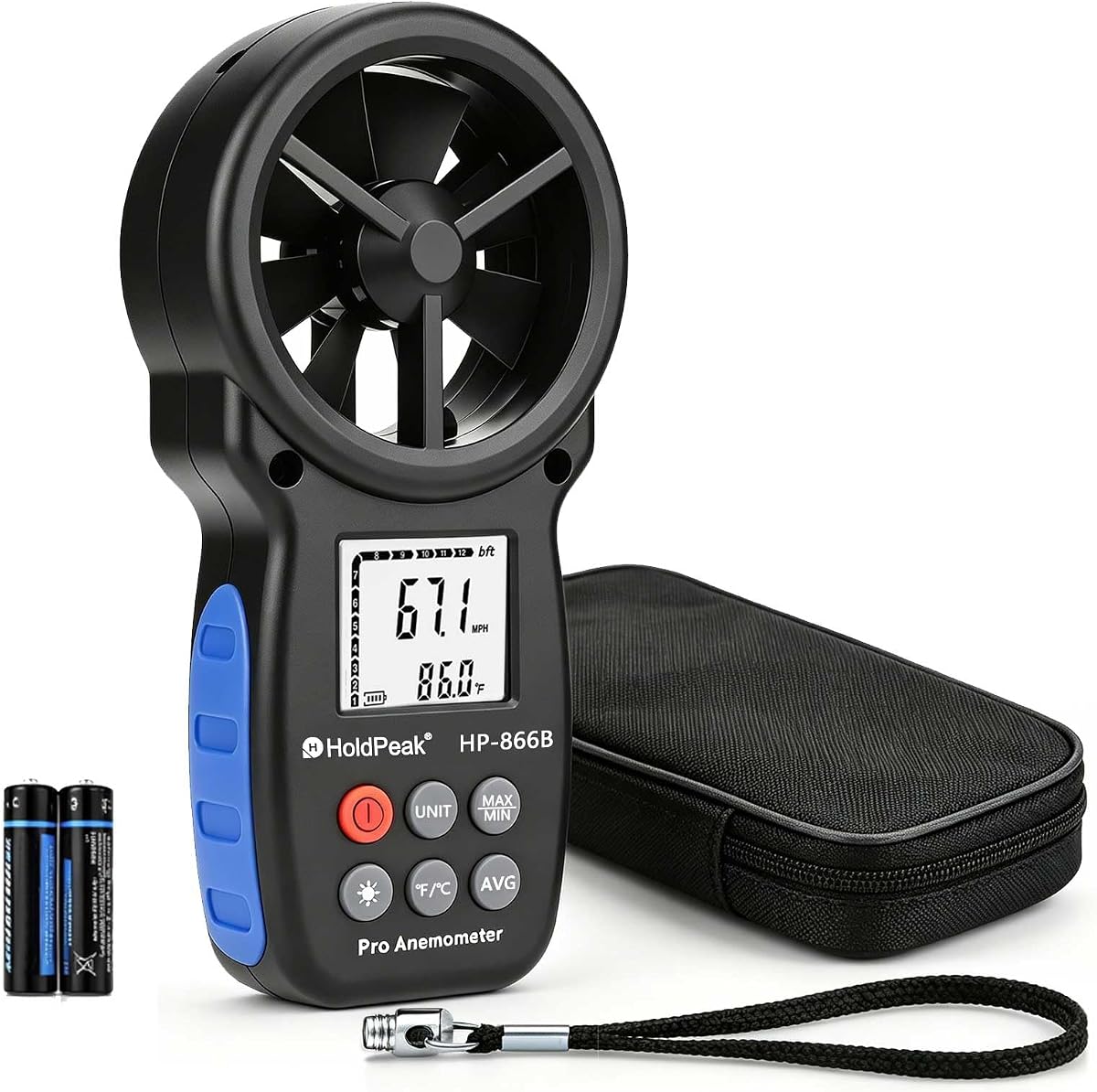
The HoldPeak 866B is a robust option for those needing detailed wind data. Its dual temperature sensors allow for precise wind chill calculations, useful for safety in cold marine environments.
We may earn a commission when you buy through this link, at no additional cost to you.
Features like Max/Min/Average tracking help you understand wind patterns over time. The carrying pouch and hand strap ensure the device stays protected during active outdoor use.
The unit is slightly heavier than competitors, which may cause fatigue during long handheld sessions. Additionally, the menu system can be complex for users seeking quick readings.
Despite these minor drawbacks, its functionality makes it ideal for serious outdoor enthusiasts. It balances professional features with portability, making it a reliable companion for sailing and fishing trips.
Combine wind speed and temperature to determine actual feel, enhancing safety during cold weather sailing.
Record Max, Min, and Average speeds to analyze wind consistency during your journey.
We may earn a commission when you buy through this link, at no additional cost to you.
The TopTes TS-301 features a large backlight LCD that ensures visibility in all conditions. This makes it an excellent choice for sailors who need to read data quickly without squinting.
We may earn a commission when you buy through this link, at no additional cost to you.
With six measuring units, it offers flexibility for international users. The humidity sensor adds another layer of environmental data, though it may take time to stabilize in new locations.
It lacks a tripod mount, limiting hands-free use. However, its lightweight design and battery saver mode make it convenient for handheld use during fishing or drone flying.
If readability is your top priority, this model excels. Its user-friendly interface and comprehensive data display make it a strong contender for casual and semi-professional marine users.
A big backlight screen ensures you can read wind data clearly even in direct sunlight or low light.
Track humidity alongside wind speed to get a fuller picture of weather conditions on the water.
We may earn a commission when you buy through this link, at no additional cost to you.
The Magnetic Mount Anemometer offers a unique design for quick wind measurements. Its magnetic base allows you to attach it to metal surfaces easily, perfect for rapid checks on a boat deck.
We may earn a commission when you buy through this link, at no additional cost to you.
Calibration ensures accurate readings, giving you confidence in the data. The compact form factor means it takes up minimal space, making it easy to store in a cockpit or toolbox.
The strength of the magnet may vary, requiring careful placement to avoid dropping. Limited documentation might challenge new users trying to set it up correctly.
This device is ideal for those who value speed and convenience. Its innovative mounting system makes it a practical tool for quick wind assessments during sailing or outdoor sports.
Attach securely to metal surfaces without tools for instant wind readings on deck.
Factory calibrated sensors provide reliable data for critical safety decisions on the water.
We may earn a commission when you buy through this link, at no additional cost to you.
For existing Raymarine users, the E28081 Weather and Bowls kit is essential for maintaining accuracy. It includes replacement bowls and vanes that fit ST50 and ST60 systems.
We may earn a commission when you buy through this link, at no additional cost to you.
Over time, wind sensors can wear out due to saltwater exposure. Installing new parts ensures your instrument continues to provide reliable data without needing a full system upgrade.
Installation requires some effort and tools, which might be a hurdle for DIY-inclined boat owners. Also, this is only compatible with specific older models.
If you already have a compatible system, this kit restores performance affordably. It extends the life of your existing instrument, saving the cost of a complete replacement.
Designed specifically for ST50 and ST60 systems, ensuring a perfect fit for your existing setup.
Includes all necessary screws and keys, so you have everything needed for installation.
We may earn a commission when you buy through this link, at no additional cost to you.
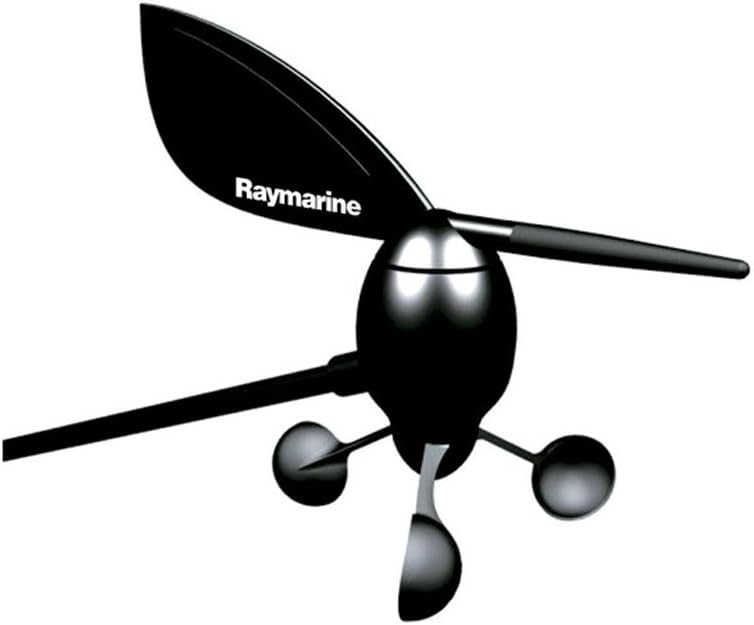
The RAYMARINE MASTHEAD ONLY kit provides a complete wind sensor replacement for Raymarine systems. It includes the cups, arm, and vane, ensuring all parts are up to date.
We may earn a commission when you buy through this link, at no additional cost to you.
Using the latest version improves accuracy and durability. The design is robust enough to handle high winds and saltwater exposure, maintaining reliability over time.
This product only includes the masthead, not the display unit. You must already have a compatible display to use this effectively.
If your masthead is damaged, this is the ideal replacement. It restores full functionality to your wind instrument system without needing a complete overhaul.
Featuring the newest design improvements for better wind capture and long-term durability.
Includes all necessary components like cups and vane for a full masthead replacement.
We may earn a commission when you buy through this link, at no additional cost to you.
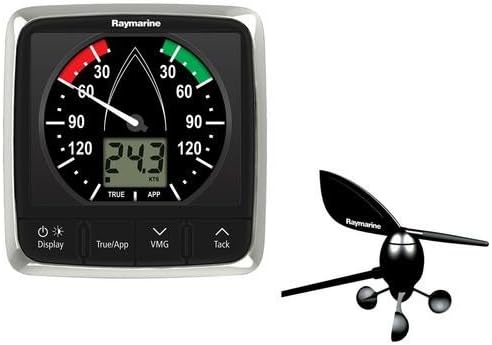
The Raymarine i60 Wind Display System offers advanced data options, including true and apparent wind angles. This level of detail is crucial for tactical sailing and navigation.
We may earn a commission when you buy through this link, at no additional cost to you.
The display allows customization, so you can prioritize the metrics that matter most. Adjustable backlighting ensures visibility day and night, while intuitive controls simplify navigation.
The setup can be complex, and the price point is high. However, the reliability and data depth make it worth it for serious sailors.
If you need comprehensive wind data for racing or long voyages, this system delivers. It provides the information needed to make informed decisions on the water.
Calculate true wind direction to improve sail trim and boat performance in varying conditions.
Tailor the display fields to show exactly the data you need for your sailing style.
We may earn a commission when you buy through this link, at no additional cost to you.
The Raymarine Instrument Wind I60 Display Only provides a modern look for your boat. If you already have a compatible masthead, this unit integrates seamlessly to show wind data.
We may earn a commission when you buy through this link, at no additional cost to you.
Its sleek black and grey design fits well in any cockpit. The high contrast text and graphics ensure readability, even in bright sunlight or at night.
This product does not include a masthead, so you must verify compatibility. Additionally, proper network setup is required to connect with your existing sensors.
For those upgrading older instruments, this display is a great option. It refreshes your setup with modern aesthetics while maintaining reliable performance.
The sleek black and grey finish enhances your boat's dashboard with a professional look.
High contrast graphics make wind speed and direction easy to read at a glance.
We may earn a commission when you buy through this link, at no additional cost to you.
Choosing the right anemometer depends on your specific needs, budget, and how you plan to use it. Consider these factors to make an informed decision.
Accuracy is critical for safety and performance. Look for devices with a low margin of error, typically under 5% for handheld units. Ensure the wind speed range covers your expected conditions, from light breezes to high winds.
Prioritize models with proven calibration and consistent performance across varying wind speeds.
Marine environments are harsh with salt, moisture, and UV exposure. Choose units with weather-resistant materials and robust construction. For handhelds, check for water resistance ratings to avoid damage from splashes.
Select products specifically designed for marine use to ensure longevity and reliability.
Readability is key. Look for large, backlit displays that are easy to read in all lighting conditions. Simple interfaces with intuitive buttons reduce the time needed to access data while on the move.
Opt for devices with clear screens and straightforward menus for quick readings.
Consider how you will use the device. Handhelds are great for occasional checks, but if you need continuous monitoring, look for tripod holes or magnetic mounts. Lightweight designs are easier to carry during active activities.
Ensure the device can be securely mounted or easily carried based on your needs.
Advanced users may want features like Max/Min/Average tracking, humidity sensors, or true wind angle calculations. Basic users might only need wind speed and direction. Assess which features align with your goals.
Choose units that provide the specific data types you require for safety and navigation.
For onboard systems, compatibility with existing instruments is crucial. Check if the device connects to your boat's network or requires separate cables. Ensure connectors and protocols match your current setup.
Verify connectivity options to ensure seamless integration with your existing marine electronics.
Long battery life is essential for extended trips. Look for auto power-off features to conserve energy. Check if the device uses standard batteries or requires charging, and consider availability of replacements.
Prioritize models with efficient power management to avoid interruptions during use.
Balance cost with features. While premium units offer advanced data, budget models can suffice for casual use. Avoid overpaying for features you won't use, but do not compromise on basic accuracy.
Find a model that fits your budget while meeting your core accuracy and durability needs.
To get accurate readings, ensure the anemometer is positioned in an open area away from obstructions like masts or hulls. Hold the device steady or mount it securely to avoid interference from your own movement.
Regularly clean the vane and cups with fresh water to remove salt residue and prevent corrosion. Store the device in a dry, cool place when not in use to protect it from moisture and UV damage.
Check batteries frequently and replace them as needed to avoid data loss. Calibrate the unit according to the manufacturer's instructions to maintain precision over time and ensure reliable measurements.
True wind is the wind blowing over the Earth's surface, while apparent wind is the combination of true wind and the wind created by your boat's motion. Understanding both helps you adjust sails for optimal performance and safety on the water.
Yes, handheld anemometers are suitable for casual sailing and checking conditions before setting out. However, they may not provide continuous data needed for tactical racing, so integrated systems are better for that purpose.
Rinse the device with fresh water after each use to remove salt deposits. Use models with weather-resistant coatings or enclosures to prevent corrosion and ensure long-term reliability in marine environments.
Look for a range that covers light breezes to gale conditions, typically 0 to 60+ knots. This ensures the device can provide accurate data in varying conditions without being overwhelmed by high winds.
A masthead sensor provides the most accurate wind data because it measures wind at the highest point on the boat, avoiding turbulence caused by the hull. It is recommended for serious sailors and racers.
Calibrate your device annually or if you notice inconsistencies in readings. Follow the manufacturer's guidelines for calibration to maintain accuracy and ensure the unit performs correctly in changing conditions.
We reviewed ten top marine anemometers, highlighting options for every user from budget handhelds to premium integrated systems. Each model offers unique strengths tailored to different sailing and outdoor needs.
When choosing, prioritize accuracy, durability, and ease of use based on your specific activities. Consider whether you need portability or continuous monitoring to select the right device.
Remember to check current availability and pricing before purchasing. With the right anemometer, you can enhance safety and performance on the water with reliable wind data.