
SOLPERK 20W Solar Kit
4.5Editor score
20W Monocrystalline Cell
Included Smart Controller
Adjustable Mounting Bracket
This guide compares the top 10 marine solar panels for boats and RVs, evaluating efficiency, durability, and charging performance for off-grid energy needs.
Marine solar panels provide reliable renewable energy for boats, RVs, and off-grid setups. A good panel delivers high efficiency, withstands harsh weather, and integrates seamlessly with your battery system.
We evaluated ten top-rated marine solar solutions based on cell technology, durability ratings, and real-world performance. Our analysis covers rigid, flexible, and bifacial options suitable for diverse marine applications.
Each pick highlights key features, pros, and cons to help you choose the right power source. Remember that prices fluctuate frequently, so check current listings before making your final purchase decision.
4.5Editor score

4.8Editor score
4.6Editor score
The following table offers a side-by-side comparison of all ten marine solar panels reviewed in this guide. Each entry lists essential specifications to help you quickly identify the best fit for your vessel's power requirements.


The Callsun 200W bifacial solar panel stands out as the top choice for marine applications requiring high power and reliability. With a 4.8 rating, it combines advanced N-type cells with bifacial technology to maximize energy generation even in challenging conditions.
We may earn a commission when you buy through this link, at no additional cost to you.
Its 25.6% conversion efficiency ensures you get more power per square foot, critical for limited deck space. The twin-cell anti-shading design allows partial sections to keep generating power when shadows occur, maintaining consistent output throughout the day.
While the price reflects its premium features, the durability offered by tempered glass and IP68 ratings justifies the investment. The low temperature coefficient means less power loss during summer heat, a common issue for marine solar systems.
Boaters seeking efficient, reliable energy should prioritize this panel. It balances performance with durability, making it the best overall option for serious off-grid marine power needs.
The transparent backsheet captures reflected sunlight from the deck or water, potentially boosting total energy output by up to 30% depending on installation angle.
Engineered to withstand harsh ocean environments, the corrosion-resistant frame and sealed junction box ensure longevity despite salt spray and UV exposure.
We may earn a commission when you buy through this link, at no additional cost to you.
The SOLPERK 20W solar kit is an ideal budget option for small boats or vehicles needing basic battery maintenance. Rated 4.5 stars, it provides a complete package with panel, controller, and mounting hardware for hassle-free installation.
We may earn a commission when you buy through this link, at no additional cost to you.
Its 20W output is sufficient for trickle charging 12V batteries, preventing drain during storage. The built-in controller prevents overcharging, ensuring battery safety without complex wiring or programming steps.
While not powerful enough for running appliances, it excels at keeping batteries topped off. The adjustable bracket helps optimize sun exposure, maximizing efficiency within its limited capacity.
For boaters on a tight budget or needing simple battery maintenance, this kit offers exceptional value. It delivers essential solar functionality without unnecessary complexity or high cost.
Unlike standalone panels, this kit includes every necessary component including cables, clamps, and mounting pieces, saving time and additional purchase costs.
Designed specifically for maintainers, it stops charging when full and resumes when voltage drops, requiring zero manual intervention from the user.
We may earn a commission when you buy through this link, at no additional cost to you.
The SUNER POWER 20W PRO kit upgrades standard maintenance with UltraSmart MPPT technology. With a 4.4 rating, it optimizes power tracking to extract maximum energy even in low-light marine conditions.
We may earn a commission when you buy through this link, at no additional cost to you.
Its visual charge indicators let you monitor battery status without instruments, showing precise charge levels from 25% to 100%. The three selectable modes accommodate AGM, lithium, and standard batteries, adding versatility.
Safety features like over-voltage and reverse polarity protection guard expensive marine batteries. The fully automatic design requires no manual adjustment, making it perfect for long-term dockside storage.
Boaters using sensitive lithium batteries will appreciate the tailored charging modes. This kit balances advanced technology with practical usability for small-scale marine power needs.
Unlike PWM controllers, MPPT technology adjusts input voltage to deliver more current to the battery, improving utilization rates significantly.
The LED indicators provide immediate feedback on charging status, helping users verify system function without needing separate multimeters.
We may earn a commission when you buy through this link, at no additional cost to you.
Renogy's 100W N-Type panel delivers strong mid-range performance for small boats and RVs. Rated 4.7 stars, it leverages advanced N-type cells to maintain high efficiency even in hot conditions common on the water.
We may earn a commission when you buy through this link, at no additional cost to you.
The 25% conversion efficiency means more power per square foot compared to older panels. Low degradation rates ensure consistent output over years, while IP67 ratings protect against rain and splash damage.
Its compact design fits tight spaces, and the included warranty offers peace of mind. While not the cheapest option, the longevity and performance justify the cost for long-term use.
For those needing reliable power without going to high wattage, this is a solid choice. It balances performance, durability, and brand reliability effectively.
N-type cells resist heat-induced degradation better than traditional PERC cells, maintaining higher output during peak summer temperatures.
Backed by a 25-year performance guarantee ensuring at least 80% output, Renogy stands behind the durability of this marine-rated panel.
We may earn a commission when you buy through this link, at no additional cost to you.
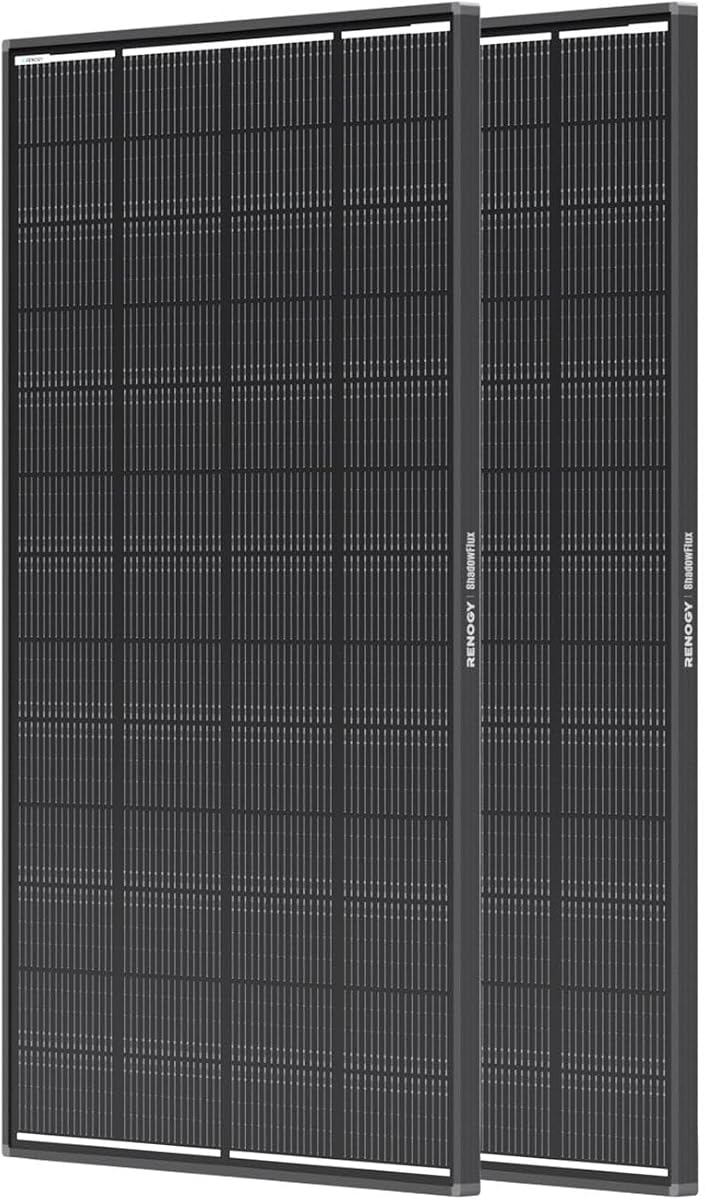
The Renogy ShadowFlux 200W panel is designed to overcome common marine shading issues. With a 4.5 rating, its anti-shading technology keeps power flowing even when parts of the panel are covered by masts or rigging.
We may earn a commission when you buy through this link, at no additional cost to you.
Using N-type cells, it achieves 25% efficiency, ensuring maximum energy capture. The compact design reduces weight and space needs, fitting well on smaller decks without sacrificing power.
While the price is higher, the ability to produce power in suboptimal lighting adds significant value. For vessels with complex shapes or multiple obstructions, this feature is invaluable.
Boaters who can't achieve a perfectly clear sun path will benefit most. It combines advanced tech with practical design for real-world marine environments.
ShadowFlux technology minimizes hot spots and maintains current flow even when specific sections are blocked, improving reliability in partial shade.
7% smaller than traditional panels, this model frees up valuable deck space for other equipment or comfort accessories.
We may earn a commission when you buy through this link, at no additional cost to you.
Renogy's flexible 200W panel offers unique installation freedom for curved boat surfaces. Rated 4.5 stars, it bends up to 240 degrees, allowing placement on cabin roofs or non-flat areas where rigid panels won't fit.
We may earn a commission when you buy through this link, at no additional cost to you.
Its lightweight design reduces load, and the black finish blends seamlessly into marine aesthetics. Despite flexibility, IP67 ratings ensure it withstands rain, salt, and wind effectively.
While slightly less efficient than rigid counterparts due to material differences, the installation versatility often outweighs this drawback. It maximizes usable surface area on complex hulls.
Ideal for sailors needing to integrate solar into unique curves. This panel solves the mounting challenge without compromising too much on power output.
The ability to bend allows mounting on curved cabin tops and bows, utilizing otherwise wasted surface area for power generation.
Despite being flexible, the panel meets IP67 waterproof standards, ensuring reliable protection against harsh marine elements.
We may earn a commission when you buy through this link, at no additional cost to you.
The Renogy ShadowFlux 120W panel balances power and size perfectly for smaller vessels. With a 4.5 rating, it delivers 120W output while maintaining high efficiency thanks to N-type cells.
We may earn a commission when you buy through this link, at no additional cost to you.
Its anti-shading tech ensures consistent power even with partial obstructions. Compact dimensions make it easy to fit on limited decks without compromising system capacity.
IP67 protection guarantees durability against rain and salt, and the 25-year warranty adds confidence. While not the cheapest, it offers balanced performance for diverse needs.
For boaters needing more than 100W but less than 200W, this is the ideal middle ground. It combines practical sizing with advanced tech.
10% smaller than traditional PERC panels, this model fits easily into tight spots where standard 100W or 150W panels may struggle.
Achieving 25% efficiency in a 120W format ensures maximum energy harvest for the surface area occupied on your vessel.
We may earn a commission when you buy through this link, at no additional cost to you.
For serious off-grid marine power, the Renogy 400W ShadowFlux panel offers top-tier performance. Rated 4.6 stars, its massive output supports high-demand appliances and larger battery banks effectively.
We may earn a commission when you buy through this link, at no additional cost to you.
The anti-shade tech ensures consistent generation even with masts or rigging casting shadows. Combined with 25% efficiency, this panel maximizes energy harvest per square foot.
IP67 durability protects against salt and weather, ensuring long life. The 25-year warranty reflects confidence in its build quality, justifying the premium price.
Ideal for liveaboards or expedition vessels needing significant power. It delivers reliability and high capacity in a robust package.
With 400W of power, this panel can run larger appliances or recharge big battery banks quickly, supporting extended off-grid voyages.
Designed to minimize power loss when shadows occur, it maintains output in challenging installation environments common on boats.
We may earn a commission when you buy through this link, at no additional cost to you.
The SUNER POWER 50W PRO kit bridges the gap between small maintenance and full power systems. Rated 4.4 stars, it provides 50W to top off batteries while offering MPPT efficiency for better energy capture.
We may earn a commission when you buy through this link, at no additional cost to you.
Visual indicators and automatic mode switching simplify monitoring. It handles various battery types safely, including lithium and AGM, without manual intervention.
Safety features like over-voltage protection prevent damage during storms or voltage spikes. The fully automatic design makes it ideal for seasonal storage.
For boaters needing slightly more power than 20W but not a full array, this kit offers a reliable middle ground. It balances cost with practical power needs.
The UltraSmart MPPT controller extracts more power from the panel by tracking the optimal voltage point continuously.
Built-in protections ensure safe operation without monitoring, protecting your battery investment from electrical faults.
We may earn a commission when you buy through this link, at no additional cost to you.
The POWOXI 7.5W kit is the most basic option for simple battery maintenance. Rated 4.4 stars, it offers a cheap way to keep batteries charged during storage without significant complexity.
We may earn a commission when you buy through this link, at no additional cost to you.
Its LED indicators show sunlight and charging status clearly, and the ABS frame is durable enough for occasional outdoor use. The low cost makes it accessible for anyone.
While power is minimal, it suffices for preventing deep discharge on small batteries. The plug-and-play design eliminates the need for technical knowledge or tools.
For very small boats or vehicles needing minimal protection, this kit does the job. It is ideal for those on a tight budget with low power needs.
At a fraction of the cost of larger panels, this kit provides basic solar protection for those just starting with battery maintenance.
No complex wiring is required; just connect the clips and place the panel in sunlight to keep batteries topped off.
We may earn a commission when you buy through this link, at no additional cost to you.
Selecting the right solar panel for your marine setup involves evaluating several technical and practical factors.
Power output measured in watts determines how much energy the panel generates daily. Higher efficiency means more power per square foot, which is vital for limited deck space. Look for panels with 20% or higher efficiency to maximize energy harvest.
Prioritize high wattage and efficiency ratings to ensure your system meets your energy demands without excessive panel count.
Marine panels face salt, rain, and UV exposure daily. Look for IP67 or IP68 ratings to ensure waterproof junction boxes and sealed frames. Tempered glass and corrosion-resistant aluminum add to long-term reliability.
Choose panels with high IP ratings and robust materials to withstand harsh ocean environments without premature failure.
N-type monocrystalline cells offer better temperature performance and durability compared to older PERC types. They lose less power in heat, a common issue on boats. Advanced cell tech also reduces microcrack risks over time.
Opt for N-type cells to maintain stable output in hot conditions and ensure better long-term reliability.
Marine environments often include masts and rigging causing shadows. Panels with bypass diodes or anti-shade technology like ShadowFlux maintain output even when partially covered. This prevents total power loss from minor obstructions.
Look for anti-shade features to ensure consistent power generation when shadows occur frequently.
Flexible panels allow mounting on curved surfaces, but rigid panels offer better durability and efficiency. Ensure mounting holes align with your deck design. Some kits include brackets to simplify placement.
Decide between rigid and flexible based on your deck shape and prioritize kits with complete mounting hardware.
Solar investments last decades, so strong warranties matter. Look for at least a 25-year performance guarantee and material coverage. Reputable brands provide better technical support and replacement options if issues arise.
Verify warranty length and brand reputation before buying to protect your investment.
Solar panels often require charge controllers to manage battery charging safely. Ensure the panel voltage matches your controller limits. MPPT controllers are more efficient than PWM for marine setups.
Pair your panel with the right controller type to maximize charging efficiency and battery safety.
Higher wattage and advanced features increase cost. Balance your power needs against available funds. Sometimes buying multiple smaller panels offers better total value than one large unit.
Assess your needs against budget to find the best value for your specific setup.
Install panels on a clean, flat surface facing the sun for maximum exposure. Secure mounts firmly to prevent vibration damage while sailing or on rough waters.
Regularly clean the glass surface with fresh water to remove salt buildup and dirt. Inspect wiring and junction boxes periodically for signs of wear or corrosion.
Connect panels to your battery system using the included charge controller to prevent overcharging. Monitor system performance regularly and replace damaged cables promptly.
Marine solar panels can power a boat completely if the system size matches your energy demands. A 400W+ array with sufficient battery storage can handle most daily usage, but smaller setups may need supplemental charging.
Flexible panels are durable enough for marine use if they have IP67 ratings and UV-stable materials. However, rigid panels generally offer longer lifespans and better efficiency due to stronger construction.
Solar panels generate power in cloudy weather but at reduced efficiency. Output may drop by 50% or more depending on cloud density, so size your system to account for lower light conditions.
Most marine solar panels last between 25 to 30 years with proper care. High-quality models include 25-year warranties guaranteeing at least 80% performance over time.
Yes, a charge controller is essential to regulate voltage and prevent battery overcharging. MPPT controllers are recommended for better efficiency, especially with higher wattage panels.
Yes, flexible panels are designed to bend up to 240 degrees, making them ideal for curved surfaces. Rigid panels require flat mounting and may need custom brackets.
Solar panels require minimal maintenance, mainly regular cleaning and visual inspections for damage. Checking wiring connections every few months ensures optimal system performance.
Yes, quality marine panels are waterproof with IP67 or IP68 ratings. However, ensure all connections are sealed properly to prevent water ingress at cable entry points.
We found the Callsun 200W Bifacial panel stands out as the top choice for efficiency and durability. The Renogy 400W ShadowFlux offers high output for serious power needs, while the SOLPERK 20W kit suits budget-conscious users.
When choosing, prioritize panels with high efficiency and anti-shade features to ensure consistent power. Consider your specific energy needs and deck space constraints before purchasing.
Prices and availability change frequently, so always check current listings before finalizing your purchase. Investing in quality solar tech ensures reliable power for years of marine adventures.