
AMD Ryzen 9 9950X
4.8Editor score
16 cores and 32 threads
5.7 GHz Max Boost speed
80 MB cache for fast access
This guide compares the top ten central processing units for Excel and data analysis to help professionals find the fastest reliable CPU for heavy spreadsheets.
Selecting the right central processing unit is crucial for handling large spreadsheets and complex data analysis tasks efficiently. A powerful CPU ensures smooth calculations and rapid processing of massive datasets without lagging or freezing during critical work hours.
We evaluated ten leading processors based on core count, clock speeds, cache sizes, and overall performance benchmarks relevant to spreadsheet applications. Our analysis focuses on models that deliver superior single-threaded performance and multi-core efficiency for demanding analytical workloads.
Each product entry highlights key specifications and real-world advantages to guide your purchase decision effectively. Please note that pricing and availability fluctuate frequently, so verify current details before finalizing your order on the retailer website.
4.8Editor score

4.6Editor score
4.7Editor score
This side-by-side comparison highlights the key specifications and performance capabilities of each processor to help you identify the most suitable model for your specific analytical computing needs and budget constraints.


The Intel Core Ultra 9 285K stands out as a top-tier choice for professionals managing complex data analysis workflows. With a robust 4.6 rating, this processor delivers outstanding performance across both single-threaded and multi-threaded tasks essential for spreadsheet applications.
We may earn a commission when you buy through this link, at no additional cost to you.
Its configuration features 24 cores comprising 8 performance cores and 16 efficiency cores, allowing simultaneous handling of heavy calculations and background processes. The up to 5.7 GHz boost clock ensures rapid response times when running large pivot tables or macro scripts.
While the processor does not include a thermal solution, its hybrid architecture optimizes power distribution to maintain efficiency under load. Users must pair it with a compatible Intel 800 series chipset motherboard to unlock full potential and support PCIe 5.0 connectivity.
This CPU is ideal for analysts requiring maximum throughput for large datasets without compromising system responsiveness. Investing in this high-end model ensures long-term viability for evolving data requirements and demanding computational workloads in enterprise environments.
The integration of performance and efficiency cores allows the system to allocate tasks dynamically, ensuring background processes do not interfere with active data crunching tasks.
With 40MB of cache and high boost clocks, frequent data access during complex calculations occurs with minimal latency, significantly reducing wait times for large workbook updates.
We may earn a commission when you buy through this link, at no additional cost to you.
The AMD Ryzen 7 9800X3D impresses with a 4.8 rating and specialized 3D V-Cache technology that benefits memory-intensive spreadsheet operations. This processor leverages Zen 5 technology to deliver substantial IPC uplift over previous generations for responsive computing.
We may earn a commission when you buy through this link, at no additional cost to you.
Featuring 8 cores and 16 threads, this model handles multitasking efficiently while maintaining high clock speeds up to 5.2 GHz. The 96MB L3 cache is a standout feature that reduces latency when accessing frequently used data sets during analysis.
Although designed partly for gaming, its thermal performance and power efficiency make it a reliable choice for workstation environments. Users should ensure they have a capable cooling solution since no cooler is included with the package purchase.
This CPU is best suited for users prioritizing latency reduction and single-threaded speed over massive core counts. It serves as a powerful engine for analytical tools that rely heavily on quick data retrieval and calculation cycles.
The enhanced L3 cache allows for more data to be stored closer to the cores, minimizing delays during complex data manipulation tasks.
Compatibility with the Socket AM5 infrastructure ensures future upgrade paths and support for PCIe 5.0 standards on select motherboards.
We may earn a commission when you buy through this link, at no additional cost to you.
The Intel Core i9-14900K offers leading max clock speeds of up to 6.0 GHz which translates to rapid responsiveness in data analysis applications. With a 4.2 rating, this processor is built for users who need extreme performance without compromising on system stability.
We may earn a commission when you buy through this link, at no additional cost to you.
Its configuration includes 24 cores and 32 threads providing ample headroom for running multiple heavy applications simultaneously. The integrated Intel UHD Graphics 770 ensures basic display functionality without needing a dedicated graphics card.
Compatibility with Intel 600-series or 700-series chipsets offers flexibility for existing system builds though potential BIOS updates might be necessary. DDR5 support significantly cuts load times and provides space for running demanding tasks alongside data processing.
This CPU is a strong contender for users seeking raw speed and high thread counts for parallel processing tasks. It delivers smooth performance across various workloads making it a versatile choice for professional computing environments.
The up to 6.0 GHz speed ensures that single-threaded tasks like complex formula calculations execute almost instantaneously for improved workflow efficiency.
Support for both DDR4 and DDR5 platforms allows users to choose memory configurations that best fit their budget and performance needs.
We may earn a commission when you buy through this link, at no additional cost to you.
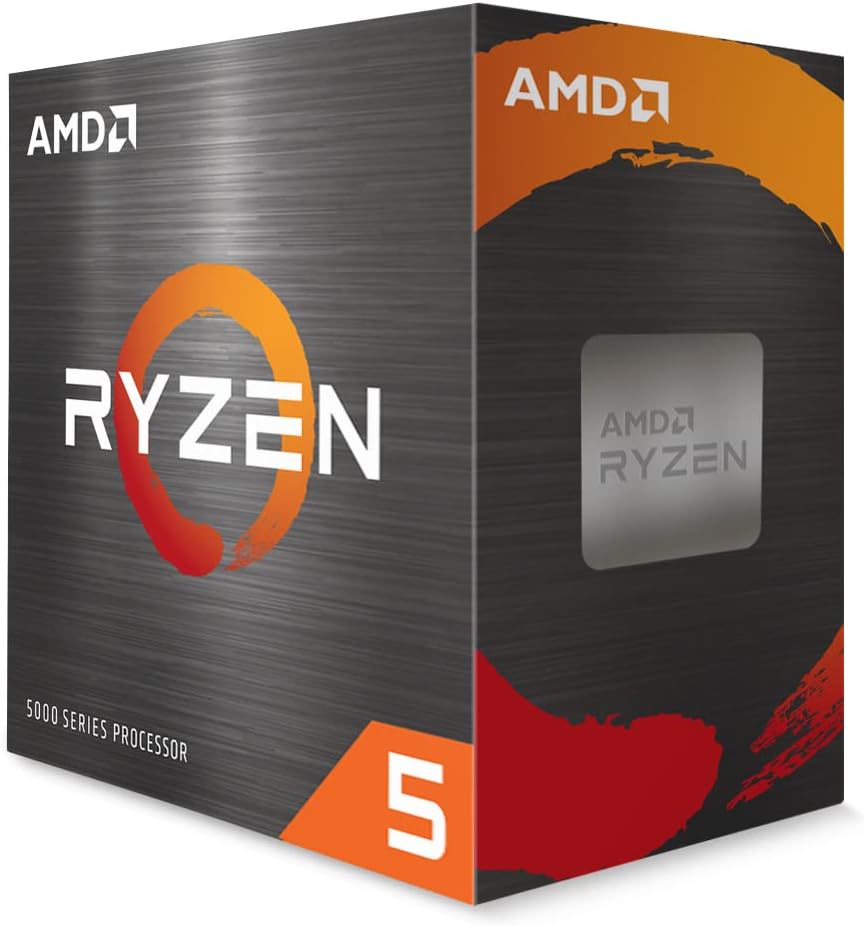
The AMD Ryzen 5 9600X delivers strong performance with a 4.8 rating and is based on the new Zen 5 architecture for improved efficiency. This processor features 6 cores and 12 threads suitable for handling moderate data analysis tasks and multitasking effectively.
We may earn a commission when you buy through this link, at no additional cost to you.
With a Max Boost of 5.4 GHz and 38 MB cache, this CPU ensures quick response times for common spreadsheet operations. It supports DDR5 memory speeds up to 5600 MT/s which enhances overall system throughput during data processing.
Although cooler is not included in the package, the unlocked nature of this processor allows for performance tuning by advanced users. Compatibility with Socket AM5 platforms ensures access to modern features including PCIe 5.0 support on select motherboards.
This model is an excellent choice for mid-range setups needing high performance without the premium price of top-tier processors. It balances speed and efficiency well making it suitable for professional analysts on a budget.
The latest architecture provides better power efficiency and IPC which translates to faster completion of analytical tasks without excessive power consumption.
Being unlocked allows enthusiasts to push clock speeds higher for maximum performance in specific high-priority computing scenarios.
We may earn a commission when you buy through this link, at no additional cost to you.
The Intel Core Ultra 7 270K Plus earns a 4.7 rating and is built to handle demanding gaming and creator workloads efficiently. It features 24 cores combining performance and efficiency units to distribute workloads optimally across tasks.
We may earn a commission when you buy through this link, at no additional cost to you.
Max turbo frequency reaches up to 5.5 GHz ensuring top-tier responsiveness when running complex analysis software. The processor supports high-speed DDR5 memory up to 7200 MT/s which significantly accelerates data transfer rates.
Robust power and thermal design with 125W base and 250W max turbo power sustain high-intensity operations without throttling. However users must pair it with an Intel 800 series chipset motherboard to access full platform capabilities.
This CPU is ideal for users needing a balance between raw power and efficiency for professional computing tasks. Its unlocked nature paired with Z-series chipsets makes it a versatile option for enthusiasts and power users.
Support for DDR5 up to 7200 MT/s ensures that memory bandwidth bottlenecks are minimized during large dataset processing.
Engineered thermal capabilities allow sustained performance under load ensuring consistent speeds during extended analysis sessions.
We may earn a commission when you buy through this link, at no additional cost to you.
The AMD Ryzen 9 9950X is a high-end processor earning a 4.8 rating and designed for creators and gamers alike. With 16 cores and 32 threads, this model delivers ultra-fast performance suitable for heavy multi-threaded data analysis tasks.
We may earn a commission when you buy through this link, at no additional cost to you.
Its 5.7 GHz Max Boost ensures quick processing of single-threaded operations while the 80 MB cache minimizes latency during large dataset access. This processor supports DDR5 memory speeds up to 5600 MT/s for enhanced system throughput.
Liquid cooler is recommended due to high power requirements during sustained loads which helps maintain optimal thermal performance. The Socket AM5 platform compatibility ensures access to PCIe 5.0 and future-proof upgrade paths.
This CPU stands out as a premium choice for users requiring maximum compute power for professional workflows. Its ability to handle complex simulations and data processing makes it ideal for enterprise-level analysis needs.
With 32 threads this processor can handle multiple data pipelines simultaneously improving productivity in heavy analytical environments.
The 80 MB cache allows larger working sets to be stored on-chip reducing reliance on slower system memory.
We may earn a commission when you buy through this link, at no additional cost to you.
The Intel Core i7-12700KF offers solid performance with a 4.7 rating featuring Intel 7 Architecture for improved efficiency. It combines 8 performance cores and 4 efficiency cores to deliver high performance for demanding applications efficiently.
We may earn a commission when you buy through this link, at no additional cost to you.
With up to 5.0 GHz speed and hyper-threading technology this CPU handles complex computations and background tasks well. The 25 MB L3 cache and 11 MB L2 cache ensure fast access to frequently used data during analysis.
Socket LGA1700 allows for placement on the PCB without soldering supporting Intel 600 Series Chipset motherboards. Discrete graphics is required as this model does not include integrated graphics for display output needs.
This CPU is a reliable choice for users seeking strong performance on a mature platform. Its power efficiency and high clock speeds make it suitable for professional computing tasks that demand consistent responsiveness.
Intel 7 Architecture enables improved efficiency allowing high performance without excessive power consumption during daily tasks.
Supreme cache performance supports computation-intensive apps reducing latency when running complex data processing scripts.
We may earn a commission when you buy through this link, at no additional cost to you.
The Intel Core i5-14400F earns a 4.8 rating and features a hybrid architecture integrating two core microarchitectures for optimized performance. With 10 cores and 16 threads this CPU prioritizes workloads to run cooler and quicker effectively.
We may earn a commission when you buy through this link, at no additional cost to you.
Up to 4.7 GHz speed and 20MB cache provide sufficient power for standard spreadsheet tasks and light data processing. Compatibility with Intel 600-series and 700-series chipset-based motherboards ensures flexibility in system builds.
RAM1 thermal solution is included though discrete graphics are required since this model lacks integrated graphics. Support for both DDR4 and DDR5 memory allows users to choose cost-effective configurations while maintaining speed.
This processor offers strong value for users needing reliable performance without breaking the budget. It handles common analytical tasks well making it a practical choice for standard office and professional environments.
By distributing workloads efficiently this CPU optimizes performance for daily tasks while reducing power usage during lighter loads.
Support for both DDR4 and DDR5 allows users to balance performance and cost according to their specific system requirements.
We may earn a commission when you buy through this link, at no additional cost to you.
The AMD Ryzen 9 9900X is a versatile processor earning a 4.8 rating based on the Zen 5 architecture. With 12 cores and 24 threads this model delivers ultra-fast performance suitable for demanding gaming and data processing tasks.
We may earn a commission when you buy through this link, at no additional cost to you.
Max Boost reaches up to 5.6 GHz ensuring quick response times during complex analytical operations. The 76 MB cache provides ample storage for frequently accessed data reducing latency during heavy workload processing.
This CPU supports DDR5-5600 speeds and PCIe 5.0 on select motherboards ensuring future-proof performance for evolving software needs. However cooler is not included so users must purchase a separate cooling solution for optimal thermal management.
It stands out as a strong mid-to-high-range option for professionals needing balanced multi-core performance. Its unlocked nature allows for overclocking to push performance limits in specific high-demand scenarios effectively.
The substantial 76 MB cache supports fast data retrieval ensuring smooth operation during complex analytical computations.
Support for Socket AM5 guarantees access to PCIe 5.0 and advanced platform features for future upgrades.
We may earn a commission when you buy through this link, at no additional cost to you.
The AMD Ryzen 5 5500 is a budget-friendly option with a 4.7 rating featuring 6 cores and 12 threads for basic data work. It is bundled with the AMD Wraith Stealth cooler providing immediate usability without extra component purchases.
We may earn a commission when you buy through this link, at no additional cost to you.
With a Max Boost of 4.2 GHz and 19 MB cache this processor handles common spreadsheet tasks and moderate analysis well. It supports DDR4-3200 memory speeds suitable for standard computing needs within the AM4 platform constraints.
Discrete graphics card is required for this model which may increase total system cost for display output. However its unlocked nature allows for overclocking to gain additional performance from the available silicon headroom.
This CPU is ideal for entry-level analysts or users on a strict budget needing functional performance. Its inclusion of a cooler makes it a convenient choice for those building cost-effective workstations.
The bundled Wraith Stealth cooler simplifies system setup and provides adequate cooling for standard usage scenarios.
Socket AM4 compatibility ensures users can upgrade existing systems with a cost-effective processor option easily.
We may earn a commission when you buy through this link, at no additional cost to you.
Selecting the right processor requires understanding how core count and clock speed impact spreadsheet performance and multitasking capabilities.
More cores allow simultaneous processing of multiple tasks like running macros while updating large spreadsheets. Look for at least 6 to 8 cores for professional workflows needing efficiency.
Prioritize higher thread counts to ensure smooth multitasking without slowdowns during complex data operations.
Higher clock speeds improve single-threaded performance essential for running formulas and scripts quickly. Boost clocks over 4 GHz are recommended for responsive analytical workflows.
Aim for models with high max boost speeds to reduce wait times during active data crunching tasks.
Larger cache stores frequently accessed data closer to cores reducing memory latency. Look for 30MB or more L3 cache for better spreadsheet performance.
Increased cache size helps maintain speed when working with massive datasets that exceed RAM capacity.
DDR5 support offers faster speeds and bandwidth ideal for loading large datasets quickly. Ensure the motherboard supports the memory type for best performance.
Check memory speed support to ensure the CPU can utilize high-frequency RAM for efficient processing.
High-performance CPUs generate heat needing robust cooling solutions. TDP ratings help determine cooling requirements for stable operation.
Plan for adequate cooling to prevent thermal throttling during extended data analysis sessions.
Choosing a newer socket like AM5 or LGA1851 ensures future upgrade paths. Older sockets may limit longevity of the investment.
Prioritize platforms with long-term support to avoid frequent motherboard replacements.
Higher-end CPUs cost more but offer better performance for complex workflows. Determine necessary features to avoid overspending on unused specs.
Balance performance needs with total system cost to maximize value for analytical tasks.
Some data tools optimize better for specific architectures. Research software requirements to match CPU strengths.
Align CPU features with your primary analytical software for optimal speed and efficiency.
Ensure proper installation of the CPU with compatible thermal paste and cooler to prevent overheating. Check BIOS settings to enable XMP or equivalent memory profiles for best speed.
Maintain stable power supply and clean dust from fans regularly to sustain optimal temperatures. Monitor system temperatures under load to ensure cooling efficiency over time.
Update motherboard firmware periodically for improved stability and compatibility. Adjust power plans to high performance to prevent unnecessary throttling during data processing.
Modern versions of Excel can utilize multiple cores for complex calculations and macros. Enabling multi-threaded calculations in settings allows better performance on CPUs with more cores.
For heavy data analysis, 30MB or more L3 cache helps reduce latency significantly. Larger cache stores more frequent data close to cores improving processing speed.
DDR5 offers higher bandwidth which helps when loading massive datasets quickly. While not mandatory, it provides faster speeds compared to DDR4 for large workbooks.
Higher clock speeds improve single-thread performance which is critical for many Excel formulas. Look for high boost clocks to ensure quick response times in calculations.
Most data analysis tasks rely on CPU not GPU unless using specific visualization tools. Integrated graphics are often sufficient for standard spreadsheet and data viewing tasks.
Unlocked CPUs allow overclocking to increase clock speeds beyond defaults. Ensure proper cooling and motherboard support to avoid overheating or instability.
Choosing the right CPU for Excel and data analysis involves balancing core count and speed with budget constraints. Top picks like the Intel Core Ultra 9 and AMD Ryzen 9 9950X deliver exceptional performance for heavy workloads.
Prioritize processors with high cache sizes and support for DDR5 memory to maximize efficiency in data processing. Ensure your motherboard matches the CPU requirements for stable long-term operation.
Always verify current pricing and availability as market conditions can shift rapidly. Investing in a powerful CPU ensures smoother workflows and faster completion of complex data analysis tasks.