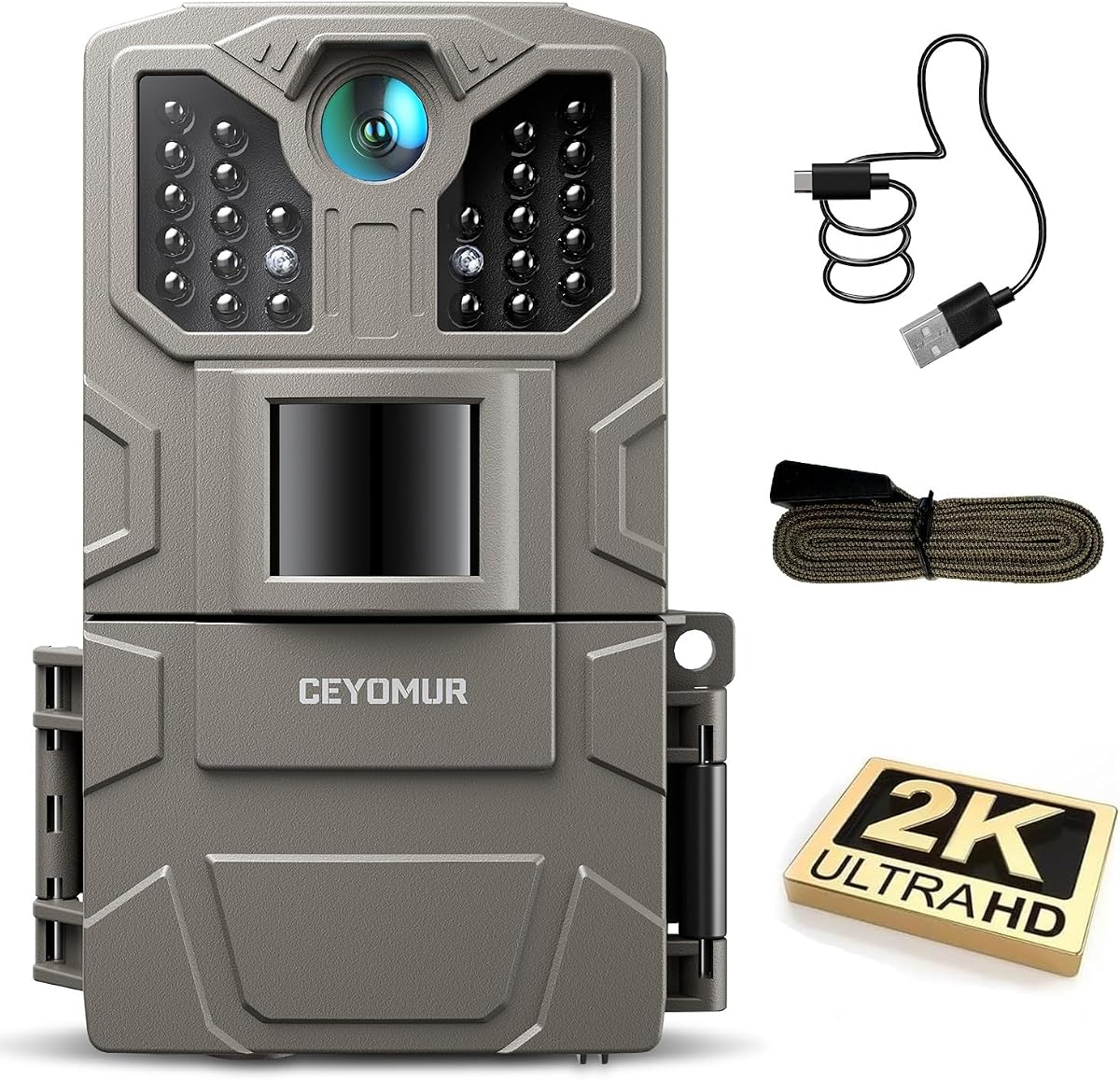
CEYOMUR Trail Camera
4.0Editor score
Low-power AA battery design
Integrated one-side setup
IP66 waterproof housing
This guide compares the top battery life trail camera models for 2026, evaluating power efficiency, solar compatibility, and runtime performance for reliable
Choosing a battery life trail camera is essential for consistent wildlife monitoring without frequent maintenance. Long-lasting power ensures you capture critical moments even in remote locations where charging is difficult.
We evaluated ten top-rated models based on battery efficiency, solar compatibility, and real-world runtime. Our analysis highlights which cameras deliver the most reliable power for extended outdoor deployment.
Each pick showcases unique power features tailored to different monitoring needs. Prices fluctuate regularly, so verify current offers before purchasing to ensure you get the best value for your investment.
4.0Editor score

4.2Editor score

4.3Editor score
This side-by-side comparison highlights key power specifications and design features across all ten selected trail cameras to help you identify the most efficient option for your needs.


The MAXDONE Solar Trail Camera stands out for its integrated solar charging and 6000mAh battery, ensuring continuous power without frequent battery swaps. It holds a strong 4.2 rating for reliability and user-friendly design.
We may earn a commission when you buy through this link, at no additional cost to you.
Its high-efficiency solar charging system combined with the large rechargeable battery provides uninterrupted power for year-round monitoring. The WiFi and Bluetooth app control allows easy photo access without removing the SD card.
While it lacks cellular connectivity, the local storage and free app ensure privacy and cost savings. The compact design and waterproof rating make it suitable for diverse outdoor environments.
Ideal for hunters and landowners seeking a maintenance-free trail camera with robust battery life. This model offers excellent value for those prioritizing solar compatibility and long-term reliability.
The built-in solar panel and 6000mAh battery eliminate the need for disposable batteries, providing eco-friendly and uninterrupted operation.
WiFi and Bluetooth connectivity allow remote photo preview and download via the free app without removing the SD card.
We may earn a commission when you buy through this link, at no additional cost to you.
The Moultrie Edge 3 Cellular offers premium features including remote battery life monitoring via the app and compatibility with rechargeable lithium packs and solar panels. Its 4.3 rating reflects strong performance in connectivity and durability.
We may earn a commission when you buy through this link, at no additional cost to you.
Powered by compatible lithium batteries and solar panels, this camera ensures months of dependable power. The built-in GPS and live aim feature simplify placement while battery checks prevent unexpected downtime.
Subscriptions are necessary for cellular alerts which adds ongoing cost but provides real-time insights. The AI detection reduces false alerts optimizing battery usage by capturing only relevant activity.
Best for serious hunters needing real-time data and remote management. The flexible plans and robust power options make it a top choice for extensive property monitoring.
Monitor battery levels remotely through the Moultrie app allowing proactive management without visiting the camera site.
Compatible with lithium battery packs and solar panels for extended runtime reducing dependency on standard AA batteries.
We may earn a commission when you buy through this link, at no additional cost to you.
The CEYOMUR Trail Camera delivers reliable performance with a low-power design running on standard AA batteries. Its 4.0 rating highlights simplicity and affordability making it ideal for beginners focused on basic monitoring.
We may earn a commission when you buy through this link, at no additional cost to you.
The integrated one-side design simplifies field setup reducing the time needed to configure settings. Efficient power usage extends battery life compared to many competitors in this price range.
Lacking solar support limits long-term deployment without frequent checks. However, for seasonal use or short-term monitoring the cost savings and ease of use are significant advantages.
Recommended for budget-conscious users seeking a straightforward trail camera. It provides solid battery efficiency for entry-level wildlife tracking without complex features.
The integrated side design allows quick angle adjustments and preview during installation saving time in the field.
Optimized low-power consumption extends battery life on standard AA cells reducing replacement frequency.
We may earn a commission when you buy through this link, at no additional cost to you.
The WOSPORTS Trail Camera offers flexible power solutions supporting 8xAA batteries rechargeable lithium packs or solar panels. Its 4.3 rating reflects robust build quality and reliable outdoor performance.
We may earn a commission when you buy through this link, at no additional cost to you.
Extended power options allow users to choose based on specific needs. Solar compatibility ensures continuous operation during sunny months while lithium packs reduce weight compared to alkaline cells.
Without built-in cellular connectivity manual SD card retrieval is required. This limitation is acceptable for those prioritizing battery longevity and cost efficiency over instant alerts.
Suitable for users needing adaptable power configurations. This model balances performance and efficiency making it a strong contender for wildlife monitoring.
Support for AA lithium and solar inputs provides flexibility to adapt power sources to specific deployment conditions.
0.2 second trigger speed ensures quick capture of moving wildlife minimizing missed moments.
We may earn a commission when you buy through this link, at no additional cost to you.
The Meidase P70 is designed with solar readiness allowing eco-friendly non-stop operation when paired with the compatible panel. Its 4.4 rating highlights strong optical quality and durability.
We may earn a commission when you buy through this link, at no additional cost to you.
While it runs on 8xAA batteries the solar-ready feature provides a sustainable backup option. This dual approach ensures reliability even in areas with limited direct sunlight.
Users must purchase the solar panel separately which adds to initial costs. However the environmental benefits and reduced battery changes justify the investment for long-term use.
Ideal for eco-conscious users wanting extended deployment. This model delivers strong performance with flexible power options for various environments.
The solar-ready design supports continuous power usage reducing waste from disposable batteries.
High-performance lens and no-glow LEDs ensure sharp footage without disturbing wildlife.
We may earn a commission when you buy through this link, at no additional cost to you.
The WOSPORTS Mini Trail Camera uses only 4 AA batteries reducing initial power needs and extending standby time through low-power optimization. Its 4.2 rating confirms reliability for compact monitoring.
We may earn a commission when you buy through this link, at no additional cost to you.
The lightweight design minimizes energy consumption compared to larger models. This efficiency makes it suitable for short-term deployments or secondary locations where minimal intervention is needed.
With fewer batteries the total runtime is shorter than 8AA units. Regular checks may be required but the compact size allows easy access for quick swaps.
Best for users needing a discreet and efficient camera. It balances portability with decent power usage for basic tracking.
Powered by just 4 AA batteries this camera reduces initial setup costs and energy requirements.
Low-power design ensures longer standby times between active recordings preserving battery life.
We may earn a commission when you buy through this link, at no additional cost to you.
The GardePro E5S emphasizes minimal power consumption through non-cellular and non-WiFi operation ensuring fewer battery changes. Its 4.4 rating reflects excellent outdoor durability and optical quality.
We may earn a commission when you buy through this link, at no additional cost to you.
Powered by 8 AA batteries it offers solid baseline runtime. Solar panel compatibility provides an eco-friendly extension for continuous monitoring without manual checks.
The lack of cellular connectivity means no remote alerts which conserves battery but requires physical checks. This trade-off suits users prioritizing battery longevity over real-time data.
Recommended for those needing dependable and long-lasting monitoring. This model excels in efficiency and durability for standard wildlife observation.
Non-Cellular and non-WiFi operation significantly reduces power consumption extending battery life between changes.
Supports solar panels for extended outdoor use ensuring consistent power in remote areas.
We may earn a commission when you buy through this link, at no additional cost to you.
The WOSPORTS Mini 2 Pack offers coverage across multiple sites with each unit running on 4 AA batteries for low power consumption. Its 4.2 rating indicates reliable performance for distributed monitoring.
We may earn a commission when you buy through this link, at no additional cost to you.
Low power design extends standby time making these cameras efficient for covering wide areas without immediate battery replacement. The included SD cards simplify setup reducing accessory costs.
Using two cameras doubles the total battery requirement. Regular rotation may be needed but the flexibility of multiple sites enhances tracking capability.
Ideal for monitoring larger properties with minimal equipment. This kit provides cost-effective power efficiency for multi-location setups.
Two cameras allow monitoring of different locations maximizing wildlife detection range and coverage area.
Low power design ensures extended standby times reducing battery replacement frequency for each unit.
We may earn a commission when you buy through this link, at no additional cost to you.
The WOSODA Mini 4 Pack provides extensive coverage with each camera using 4 AA batteries for low power consumption and extended standby time. Its 4.3 rating reflects user satisfaction with performance and ease of use.
We may earn a commission when you buy through this link, at no additional cost to you.
Included batteries and SD cards simplify initial setup. The compact design blends easily into environments ensuring discreet monitoring across multiple points.
Managing power across four cameras requires careful planning. Battery life is shorter due to the 4AA design but the large number of units offers superior area coverage.
Best for users needing broad surveillance with minimal individual unit power needs. This kit balances efficiency with extensive monitoring capability.
Four cameras enable tracking across vast areas ensuring no wildlife activity goes unnoticed.
Included batteries reduce initial setup complexity and allow immediate deployment.
We may earn a commission when you buy through this link, at no additional cost to you.
The GardePro E5S 2-Pack offers dual high-efficiency cameras with 8 AA batteries per unit and solar compatibility for extended runtime. Its 4.4 rating highlights reliability and strong optical capabilities.
We may earn a commission when you buy through this link, at no additional cost to you.
Non-cellular operation minimizes power consumption allowing longer deployment without changes. Solar panel support ensures continuous power even in remote locations.
Higher initial cost reflects the dual-unit value. Users save on maintenance over time due to battery efficiency and durable construction.
Ideal for extensive monitoring needing multiple high-quality units. This pack provides excellent balance of power life and performance.
8 AA batteries and non-cellular design maximize operational time between maintenance checks.
Compatible with solar panels for sustainable power extension suitable for remote installations.
We may earn a commission when you buy through this link, at no additional cost to you.
Selecting a trail camera with optimal battery life requires evaluating power sources, runtime expectations, and environmental factors. This guide explains the critical considerations to help you choose the right model.
Trail cameras typically run on AA batteries rechargeable lithium packs or solar charging systems. AA batteries are widely available and affordable but need frequent replacement. Lithium packs offer longer life and better performance in cold weather. Solar systems provide continuous power but require sunlight exposure and upfront investment.
Choose a power source that matches your access to the camera site and environmental conditions for best results.
Battery capacity is often indicated by the number of AA batteries the camera uses such as 4 or 8. Higher counts generally translate to longer runtime. Check manufacturer claims for expected capture counts per battery set and adjust based on your activity level.
Estimate your usage needs to determine the required capacity reducing unnecessary maintenance trips.
Many modern trail cameras support external solar panels that extend battery life significantly. Verify if the camera has a solar input port and whether the panel is included or sold separately. Ensure the solar panel matches your local sunlight conditions to guarantee consistent charging.
Solar compatibility is essential for remote or hard-to-reach installations where frequent battery swaps are impractical.
Cameras with efficient firmware consume less power during standby and recording. Features like adjustable motion sensitivity and longer recovery times can extend battery life. Some models offer sleep modes when no motion is detected to conserve energy.
Prioritize models with optimized power management to maximize operational time between charges or replacements.
Cold temperatures drain standard alkaline batteries faster. Lithium batteries perform better in freezing conditions maintaining voltage and capacity. If you operate in cold climates choose a camera compatible with lithium packs or those with thermal management systems.
Ensure your battery choice suits your local temperature range to avoid unexpected failures during winter months.
Cellular and WiFi-enabled cameras consume more power due to constant data transmission. If battery life is your priority non-cellular models are preferable. For cellular models check if they offer low-power modes or scheduled transmission times to reduce energy drain.
Balance connectivity needs against battery longevity based on your monitoring requirements.
Robust cameras with weatherproofing protect batteries from moisture and temperature extremes. Compact models often have smaller battery compartments limiting capacity. Check the build quality and IP rating to ensure the camera withstands outdoor conditions without compromising power components.
Choose a durable and weather-resistant model to maintain consistent battery performance in various environments.
Initial costs for solar or lithium options are higher but reduce long-term expenses. Consider the total cost of ownership including batteries replacements and maintenance time. Sometimes paying more upfront saves time and money over the camera's lifespan.
Evaluate both purchase price and ongoing maintenance to determine the most cost-effective solution for your needs.
Install the correct type of batteries and ensure they are properly oriented to avoid leakage and connection issues. For best results use high-quality alkaline or lithium batteries depending on the camera's specifications and environmental conditions.
Adjust motion sensitivity and recording settings to prevent unnecessary battery drain. Lower sensitivity reduces false triggers from wind or small animals while longer recording times capture more data per event.
Regularly clean the lens and housing to prevent moisture buildup and corrosion. Inspect battery compartments for signs of wear and ensure the camera is securely mounted to avoid accidental dislodging that could interrupt power.
Battery life varies significantly based on activity levels and settings. On average expect 300 to 500 captures with alkaline batteries. Using lithium batteries or solar charging can extend this to several months depending on environmental conditions and usage patterns.
Yes many trail cameras support rechargeable AA batteries. Ensure they have sufficient voltage capacity especially in cold weather. Lithium rechargeables often perform better than nickel-metal hydride options for outdoor trail cameras.
Primary factors include the number of triggers recording duration temperature and connectivity features. High activity areas and cellular models drain batteries faster. Adjusting settings and using efficient power sources helps extend runtime.
Use lithium batteries which perform better in low temperatures. Insulate the camera with an external battery pack if possible. Reduce motion sensitivity and enable power-saving modes to conserve energy during freezing conditions.
Solar panels can generate power in cloudy conditions but less efficiently than in direct sunlight. Ensure the panel is positioned correctly and the battery buffer is sufficient. Using a high-capacity battery alongside solar extends reliability during low-light periods.
Lithium batteries are best for winter as they maintain performance at low temperatures. Alkaline batteries lose capacity in the cold leading to frequent failures. Invest in lithium batteries for consistent operation during colder months.
The MAXDONE Solar Trail Camera Moultrie Edge 3 and CEYOMUR Trail Camera lead in battery efficiency and power versatility. Each offers distinct advantages depending on whether you prioritize solar capability remote monitoring or cost-effectiveness.
Prioritize models with solar compatibility and lithium support for the longest runtime. Balance your connectivity needs with power efficiency to minimize maintenance while capturing high-quality footage.
Verify current pricing and availability before purchasing as offers change frequently. Choose the camera that aligns with your power needs and deployment environment for the best monitoring experience.