
EVISTR Digital Voice Recorder
4.2Editor score
64GB high capacity storage
Voice activated recording mode
Long battery life support
This guide compares the top handheld recorders for journalists in October 2026. We evaluate audio quality, portability, battery life, and essential features to
Journalists need reliable tools to capture clear audio in dynamic environments. A great handheld recorder offers high fidelity, long battery life, and easy controls. Whether covering breaking news or conducting interviews, the right device ensures your voice and story are heard clearly without technical interruptions.
We evaluated ten top models based on microphone quality, recording formats, ease of use, and durability. Our comparison includes devices from leading brands known for professional audio performance. Each product was assessed for its suitability in demanding field conditions where reliability is paramount for success.
Each pick highlights key strengths and ideal use cases to match your specific reporting needs. Ratings reflect user feedback and expert analysis of performance features. Prices vary by seller and change over time, so verify current offers before purchasing your next essential audio equipment for journalism.
4.2Editor score
4.2Editor score

4.7Editor score
This side-by-side comparison evaluates all ten recorders on key specifications relevant to journalism. We look at recording formats, battery performance, input options, and special features like voice activation or AI transcription to help you decide which device fits your workflow best.




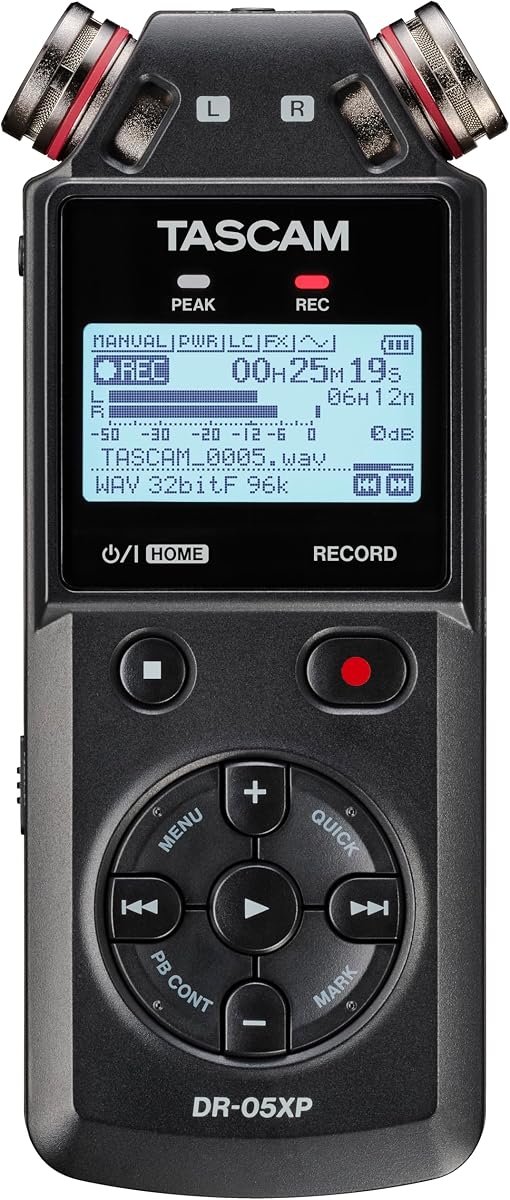
The TASCAM DR-05XP earns our Editor's Choice for its 32-bit float recording that handles varying sound levels without clipping. Its compact design and USB-C interface make it ideal for journalists who need to transfer files quickly to laptops in the field.
We may earn a commission when you buy through this link, at no additional cost to you.
The 32-bit float capability ensures audio is captured safely even if volume spikes unexpectedly during interviews. Users appreciate the ability to record directly to computers via USB-C and the long battery life for extended field work.
While battery performance is solid, users should carry spare batteries as the device does not include them. The lack of Bluetooth may limit wireless monitoring options for those who prefer remote audio checks on smartphones.
Journalists seeking reliable, high-quality audio capture with modern connectivity should prioritize the DR-05XP. Its combination of professional features and portability makes it a strong investment for daily reporting.
This feature captures a wide dynamic range without clipping, allowing post-processing adjustments that salvage loud or quiet sections.
Direct connection to computers enables seamless file transfer and streaming for remote interviews or live broadcasts.
We may earn a commission when you buy through this link, at no additional cost to you.
The Zoom H5 stands out as a premium option with interchangeable capsules that adapt to different recording scenarios. Its four-track simultaneous recording and XLR inputs offer journalists flexibility for capturing multiple sources at once in complex environments.
We may earn a commission when you buy through this link, at no additional cost to you.
Users value the ability to swap microphones like a camera lens, which is rare in handheld recorders. This versatility is perfect for investigative reporting where ambient sound and interview audio must be captured separately yet simultaneously.
The higher cost and weight may be considerations for daily carry. However, the professional inputs and durability justify the investment for those needing studio-grade audio quality in field conditions.
Journalists who need multi-track recording and professional connectivity will find the H5 unmatched. It bridges the gap between portable recorders and full audio interfaces effectively.
Swap out capsules to fit different acoustic environments or source distances for tailored audio capture.
XLR/TRS combo connectors allow connection to external mics and instruments with phantom power support.
We may earn a commission when you buy through this link, at no additional cost to you.
The EVISTR recorder offers an impressive 64GB storage at a budget price, ideal for long assignments requiring extensive file retention. Its voice activation feature saves space by only recording when sound is detected, which is useful for capturing meetings without filler noise.
We may earn a commission when you buy through this link, at no additional cost to you.
Users appreciate the long battery life and simple two-button operation, reducing complexity during fast-paced reporting. The Type-C charging adds convenience for those already using modern cables for devices.
While not professional grade, it covers basic needs well for students or casual journalists. Build quality is adequate for light use but may not survive harsh field conditions like heavy-duty models.
This is an excellent entry point for journalists needing storage and simplicity without high costs. It ensures no recording is lost due to full memory cards during critical events.
Up to 4660 hours of recording files available internally, eliminating frequent transfer needs during trips.
Automatic start stop based on sound levels saves battery and memory while capturing only relevant audio.
We may earn a commission when you buy through this link, at no additional cost to you.
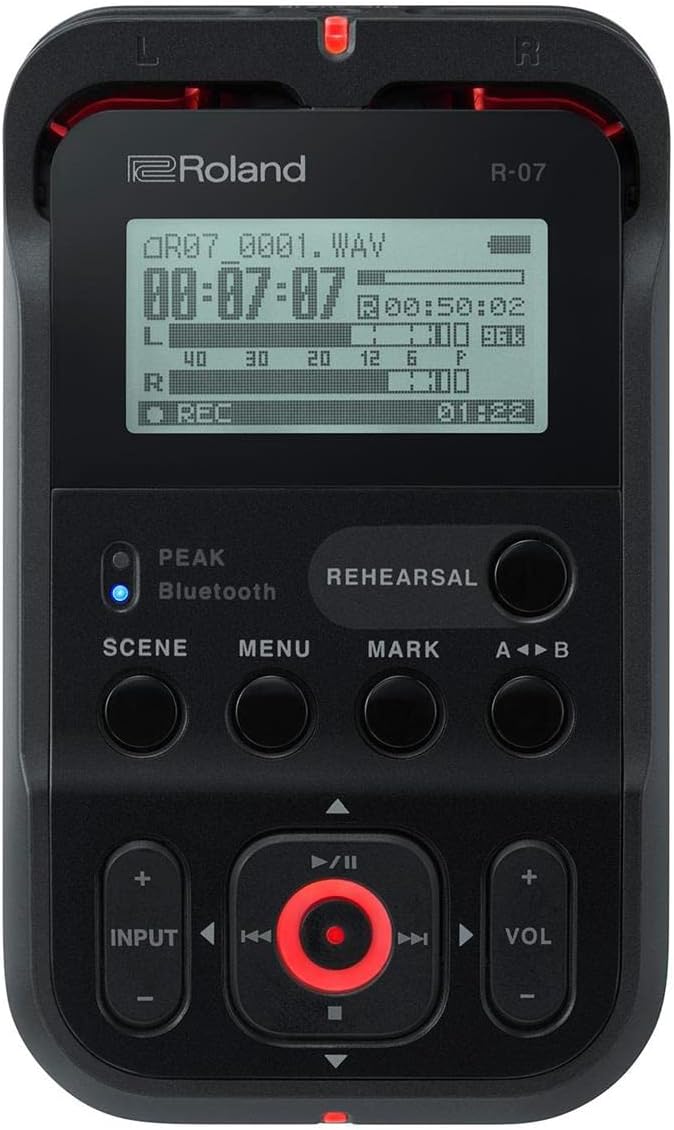
The Roland R-07 offers unique Bluetooth control and monitoring, allowing journalists to check audio quality remotely. Its simultaneous MP3 and WAV recording provides instant backups while maintaining high-resolution files for editing.
We may earn a commission when you buy through this link, at no additional cost to you.
The 128×64 graphic LCD with white backlight ensures visibility in varying light conditions. High-resolution audio capture meets professional standards for field reports requiring clarity.
Battery life is shorter than competitors, which could be limiting for all-day events. The price point reflects its niche features that may not appeal to all users.
This recorder is ideal for journalists who need to monitor audio live without headphones. It suits tech-savvy users prioritizing workflow efficiency over raw battery endurance.
Connect to smart devices to control and listen to content remotely for easier field adjustments.
Record MP3 for quick sharing while preserving high-quality WAV files for detailed editing.
We may earn a commission when you buy through this link, at no additional cost to you.
The Tonfarb recorder adds security with password protection, safeguarding sensitive interview files. Its PCM noise reduction ensures clear audio in noisy environments without sacrificing sound clarity.
We may earn a commission when you buy through this link, at no additional cost to you.
Users benefit from a 48-hour battery life and 64GB storage, making it suitable for long trips. One-click recording simplifies operation, allowing immediate capture of unfolding events.
While feature-rich for its class, the interface lacks some advanced audio settings found in higher-end models. It remains a practical choice for those needing basic reliable tools with added security.
This model fits journalists requiring secure storage and long endurance on a budget. It ensures files remain safe and accessible when and where they are needed most.
Password protection prevents unauthorized access to sensitive recordings, adding privacy for confidential reports.
Advanced processing minimizes background noise to deliver clear playback suitable for professional use.
We may earn a commission when you buy through this link, at no additional cost to you.
The Tascam dr 40 provides four-track recording in a compact silver design, allowing simultaneous audio capture. Its portability makes it easy to carry alongside cameras and notebooks during field assignments.
We may earn a commission when you buy through this link, at no additional cost to you.
Users appreciate the balance between functionality and size. It serves well for basic interviews and ambient sound capture without overwhelming bulk.
Compared to newer models, it lacks some modern connectivity options. Still, its reliability and audio fidelity keep it relevant for straightforward reporting tasks.
Journalists looking for a simple multi-track solution without complexity will find this recorder effective. It handles daily recording duties efficiently.
Capture multiple audio channels at once for flexible post-production and editing workflows.
Slim profile ensures the device fits easily in pockets or bags without adding weight.
We may earn a commission when you buy through this link, at no additional cost to you.
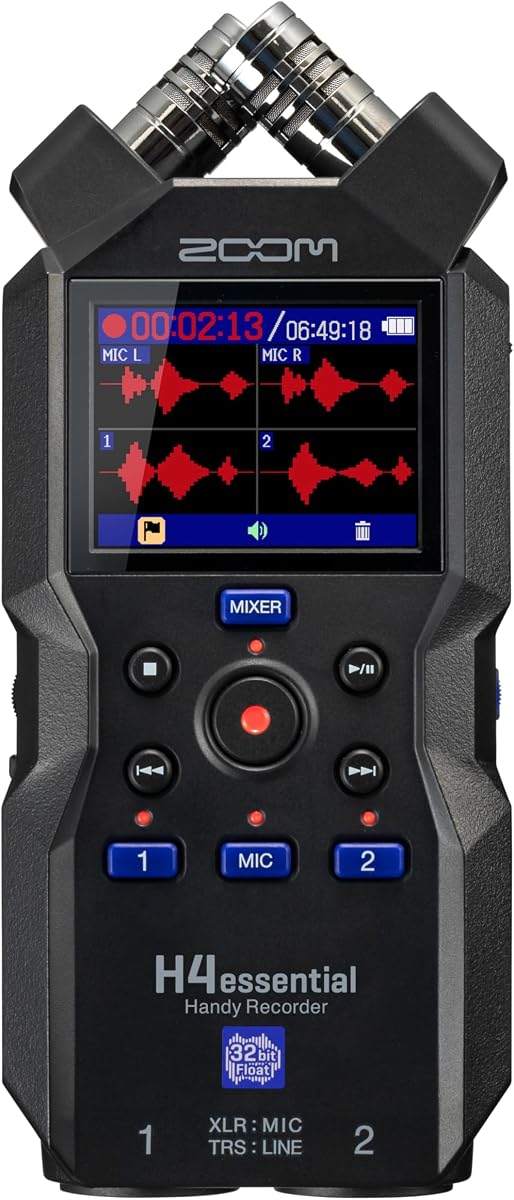
The Zoom H4 Essential prioritizes accessibility with spoken menu guidance, making it easier for visually impaired users to navigate. It supports two XLR/TRS inputs, allowing connection to professional microphones and mixers.
We may earn a commission when you buy through this link, at no additional cost to you.
Recording to both devices and SD cards provides redundancy for critical sessions. The USB-C port enables direct streaming and recording, useful for live broadcasts.
Battery life and features are standard for the price. The focus on usability ensures that less technical users can capture high-quality audio reliably.
This recorder suits journalists valuing accessibility and reliable connectivity. It removes barriers to high-quality recording for diverse reporting teams.
Audible instructions help visually impaired users navigate settings and recording functions easily.
Connect via USB-C for streaming to devices while maintaining local SD card backups.
We may earn a commission when you buy through this link, at no additional cost to you.
The Pocket AI Voice Recorder transforms audio into text and summaries instantly, saving journalists hours of manual transcription. Its MagSafe compatibility allows hands-free attachment to devices, ensuring secure placement during meetings.
We may earn a commission when you buy through this link, at no additional cost to you.
Users can ask questions across recordings to extract insights directly, improving research efficiency. The 4-day battery life supports extended travel without frequent charging.
Some advanced features require a subscription which may be a cost consideration. It also depends on smartphone connectivity which could limit offline use in remote areas.
This device is ideal for reporters focused on research efficiency and quick content preparation. It streamlines the workflow from capture to publication effectively.
Automatic conversion of audio to text allows quick review and searching of recorded conversations.
Easily attach to compatible devices for stable recording without holding the recorder manually.
We may earn a commission when you buy through this link, at no additional cost to you.
The Zoom H1 Essential excels at capturing clear stereo audio for live streams and remote interviews via USB-C. Its compact design ensures easy transport without sacrificing audio fidelity for content creation.
We may earn a commission when you buy through this link, at no additional cost to you.
Users find it perfect for casual and professional recording tasks like capturing ambience and conversations. The USB connection simplifies integration with computers for calls.
With limited input options compared to larger models, it suits specific focused recording needs. Budget-conscious journalists may appreciate its price and simplicity.
This recorder is ideal for content creators who need reliable audio streaming. It balances performance with portability for dynamic reporting environments.
Direct USB connection enables use as a high-quality microphone for remote meetings and broadcasts.
Built-in microphones record natural stereo sound for immersive audio suitable for videos and podcasts.
We may earn a commission when you buy through this link, at no additional cost to you.
The Zoom H2 Essential features three built-in mics offering nine selectable recording patterns. This versatility allows journalists to capture everything from close-up interviews to wide soundscapes without changing equipment.
We may earn a commission when you buy through this link, at no additional cost to you.
32-bit float recording ensures audio quality remains intact across different volume levels. Bluetooth sync supports multiple units for coordinated multi-camera setups in events.
Accessibility features like audible menus make it inclusive for visually impaired users. The automatic gain control simplifies operation in unpredictable field settings.
This recorder suits journalists needing pattern flexibility and ease of use. It adapts well to varied reporting scenarios from quiet rooms to busy streets.
Switch between nine mic patterns to tailor audio capture to different environments and sources.
Record audio safely without distortion regardless of input levels for consistent field quality.
We may earn a commission when you buy through this link, at no additional cost to you.
Selecting the right handheld recorder requires balancing audio quality, usability, and specific reporting needs. We highlight key factors to help you make an informed decision.
Look for devices supporting high-resolution formats like WAV or PCM to ensure clarity during playback and editing. Bit depth and sample rates determine dynamic range and fidelity for professional outputs.
Prioritize models offering 24-bit or higher bit depth and at least 48kHz sampling for reliable field audio.
Built-in microphones vary from omnidirectional to stereo patterns affecting how sound is captured. External mic inputs allow flexibility if you need specialized mics for interviews or ambient noise.
Choose a recorder with XLR/TRS inputs if you plan to connect external microphones or mixers regularly.
Journalists often work long hours so battery endurance is critical. Devices running on AA batteries or rechargeable Li-ion offer portability but check runtime estimates carefully.
Opt for models with at least 15 hours of continuous recording to avoid interruptions during events.
Internal memory and card slot support determine how many files you can keep without transfers. High-capacity SD cards expand storage for extended field use.
Select recorders with at least 64GB internal storage or support for 256GB SD cards for long sessions.
Simplified menus and large displays help operate quickly during live reporting. Voice activation can automate recording when sound starts saving time and storage space.
Ensure the device has intuitive controls and clear screens to reduce user errors in the field.
USB-C or Bluetooth options allow faster file transfers and remote control via smartphones. Reliable connectivity is essential for timely content delivery.
Look for recorders with modern USB-C ports and Bluetooth for seamless integration with editing tools.
Field work exposes equipment to drops and varying weather. Ruggedized devices or metal bodies withstand rough conditions better than plastic alternatives.
Invest in models with proven durability and protective designs if you operate in harsh environments.
Some recorders include AI transcription, noise reduction, or audio backup modes that streamline workflows. Consider if these extras justify the cost based on your reporting style.
Choose recorders with features like automatic gain control to handle unpredictable volume levels confidently.
Before each use, check battery levels and ensure sufficient storage space. Insert fully charged batteries or connect charging cables as needed to avoid missing critical moments during interviews.
Use voice activation when available to capture only meaningful audio which saves time and memory. Test microphone placement by recording a short sample and adjusting gain settings accordingly.
Clean the device regularly with a soft cloth and avoid exposure to moisture or extreme temperatures. Store in protective cases when not in use to maintain longevity and performance.
A sampling rate of 48kHz with 24-bit depth is ideal for field interviews to ensure clarity and editing flexibility. It balances file size and quality without overloading storage. Higher rates like 96kHz are optional but increase file sizes significantly.
External microphones improve audio quality significantly especially in noisy environments. Many recorders support XLR inputs allowing lapel mics for clear voice capture. Built-in mics suffice for quiet settings but external options are recommended.
Battery life varies but most handheld recorders offer 10 to 30 hours depending on usage. Rechargeable Li-ion batteries are convenient while AA batteries provide flexibility. Always carry spares for extended field work.
Many modern recorders offer Bluetooth or USB-C connectivity for direct smartphone integration. Check compatibility for file transfers and remote control. Apps may extend functionality for live sharing.
32-bit float recording provides safety against audio clipping which is valuable in unpredictable environments. It allows adjusting levels later without distortion. While optional it adds peace of mind for critical reporting.
Use automatic segmentation to split long recordings into manageable clips. Transfer files regularly to cloud storage or hard drives to maintain space. Organize with date-based file names for quick retrieval.
Yes, models with noise reduction and high maximum SPL handle loud environments well. Position the recorder away from noise sources and use wind protection. External directional mics help isolate voices.
Choose recorders with password protection or encryption for sensitive interviews. Backup files to secure locations to prevent loss. Avoid public Wi-Fi for transfers when handling confidential content.
The TASCAM DR-05XP stands out for its 32-bit float safety net and USB-C interface ideal for quick field transfers. For those needing multi-track recording the Zoom H5 offers unmatched versatility with interchangeable capsules. Budget buyers can rely on the EVISTR recorder for massive storage and voice activation features.
Prioritize battery life and microphone inputs based on your typical reporting environments. Devices supporting external mics and long runtimes ensure reliability during extended assignments. Consider connectivity options like USB-C for modern workflows and ease of file management.
Prices and availability fluctuate so always verify current offers before purchasing. Invest in a recorder matching your specific needs to guarantee quality audio for every story. Choosing the right tool empowers you to focus on journalism without technical distractions.