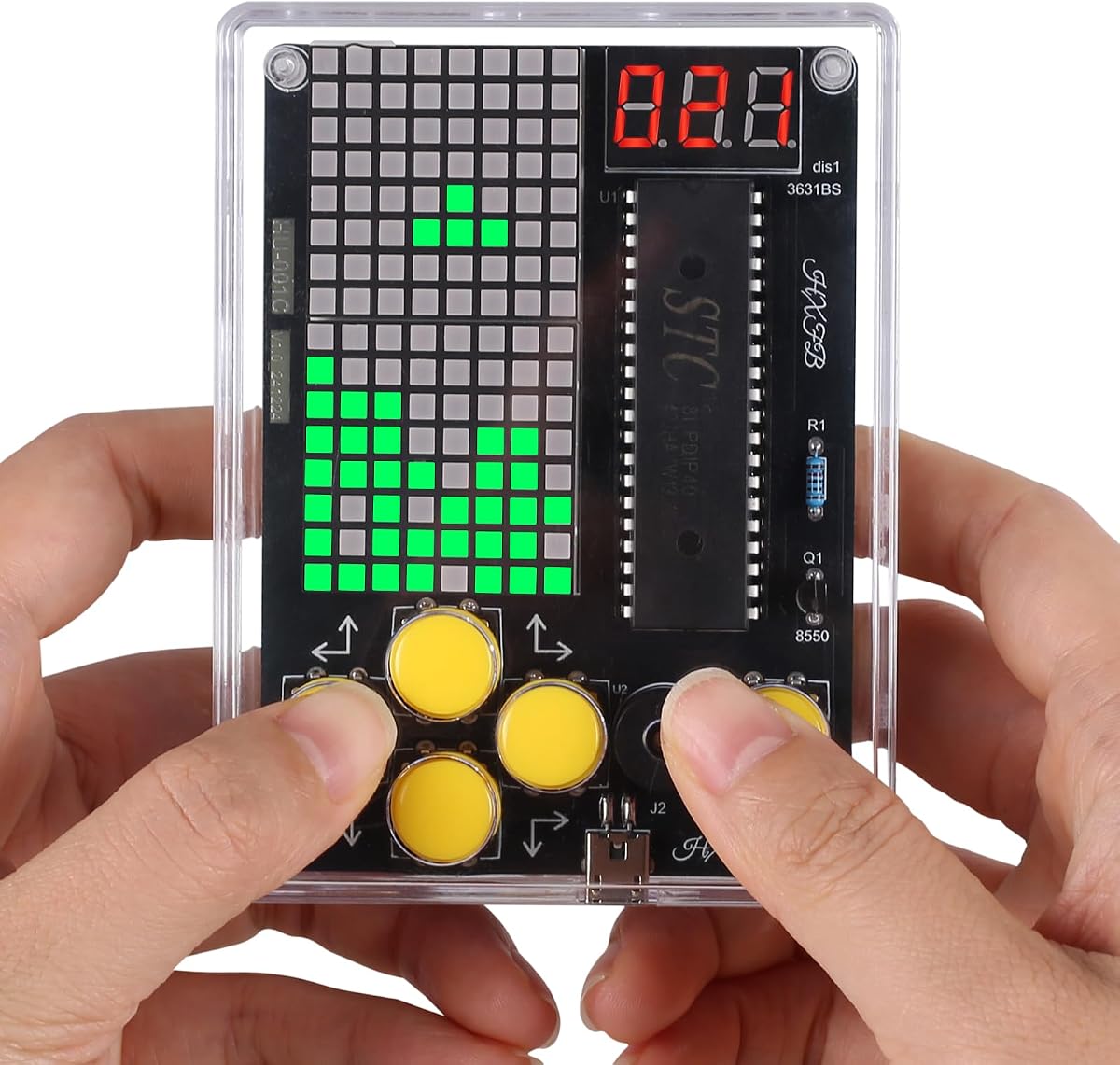
PEMENOL 7-in-1 DIY Game Kit
4.1Editor score
7 interactive functions
3 difficulty levels
Soldering practice
This guide compares the best electronics kits for teens to help you choose the right STEM learning tool for coding, robotics, and hands-on engineering projects.
Electronics kits for teens offer a fantastic way to learn coding, engineering, and problem-solving skills through hands-on projects. These tools transform abstract concepts into tangible creations like robots, sensors, and interactive devices. Whether for school projects or personal hobbies, the right kit can spark a lifelong interest in technology and innovation.
We compared ten top-rated electronics kits based on component quality, project variety, ease of use, and educational value. Each option was evaluated for its ability to engage teens in meaningful STEM learning while providing clear instructions and reliable hardware for successful builds.
Each pick highlights unique strengths like soldering practice, robot assembly, or sensor exploration. Note that product availability and pricing may change over time. We recommend checking current listings before purchasing to ensure you get the most up-to-date version of these educational tools.
4.1Editor score

4.7Editor score

4.5Editor score
The following table provides a side-by-side comparison of all ten electronics kits evaluated in this guide. It highlights key specifications and features to help you quickly identify which option best fits your teen's skill level and project interests.



This kit stands out as a top choice for teens interested in electronics and coding. With a 4.7 rating, it offers 35+ guided projects ranging from simple LED tasks to complex motor control and environmental monitoring systems.
We may earn a commission when you buy through this link, at no additional cost to you.
The Mega 2560 R3 board provides significant memory and I/O capacity compared to smaller boards. Teens can work with RFID access, real-time clocks, and interactive displays. The organized storage case keeps components like sensors and wires easy to find between sessions.
Some users might find the sheer number of components overwhelming at first. However, the structured lessons allow for progressive learning. Following the example code helps adjust sensor thresholds and timing to create custom projects.
Ideal for STEM classrooms or hobbyists ready to dive deep into electronics. It encourages modification and creativity once the basics are understood. Highly recommended for teens seeking a comprehensive learning experience.
The larger memory space allows for more complex code and sensor integration than standard starter kits.
Guided lessons help users move from simple outputs to interactive systems step by step.
We may earn a commission when you buy through this link, at no additional cost to you.
This kit offers an excellent entry point for teens learning Arduino programming. Rated 4.7, it includes over 200 components and 30 guided projects covering RFID, motion detection, and motor control. The UNO R3 board is widely supported and easy to program.
We may earn a commission when you buy through this link, at no additional cost to you.
Beginners benefit greatly from the solderless breadboard and pre-soldered modules. This reduces frustration and allows focus on coding and wiring logic. The included 9V power supply and battery support experiments without needing extra accessories.
Some learners might struggle initially with identifying components among the large set. However, the organized small-parts box helps manage storage. Adjusting thresholds and timing in the provided code encourages creative experimentation beyond the lessons.
A strong choice for coding clubs or homeschool units. It balances simplicity with enough complexity to keep teens engaged. Perfect for those wanting to build original projects after mastering the basics.
Pre-soldered modules minimize the need for technical soldering skills right away.
Includes multiple power options like USB and 9V battery for versatile testing.
We may earn a commission when you buy through this link, at no additional cost to you.
This robot car kit transforms coding into a physical, drivable project. With a 4.5 rating, teens can assemble a smart car featuring an onboard camera for FPV video and ultrasonic sensors for obstacle avoidance. It is highly engaging for makers.
We may earn a commission when you buy through this link, at no additional cost to you.
Keyed XH2.54 connectors help reduce wiring errors during assembly. The ESP32 module supports Wi-Fi and camera streaming via the app. Programming movement logic with Arduino IDE develops engineering skills through trial and error.
Assembly can be complex for younger teens without adult help. The recommended age is 8+ but adult guidance ensures first-time success. However, the visual feedback of a moving robot makes the effort rewarding.
Ideal for STEM classrooms or family weekend builds. It encourages creative modifications to routes and behaviors. Great for teens interested in robotics and autonomous vehicle basics.
Control via app or IR remote adds layers of interaction to the building process.
The camera allows teens to see what the robot sees in real-time.
We may earn a commission when you buy through this link, at no additional cost to you.
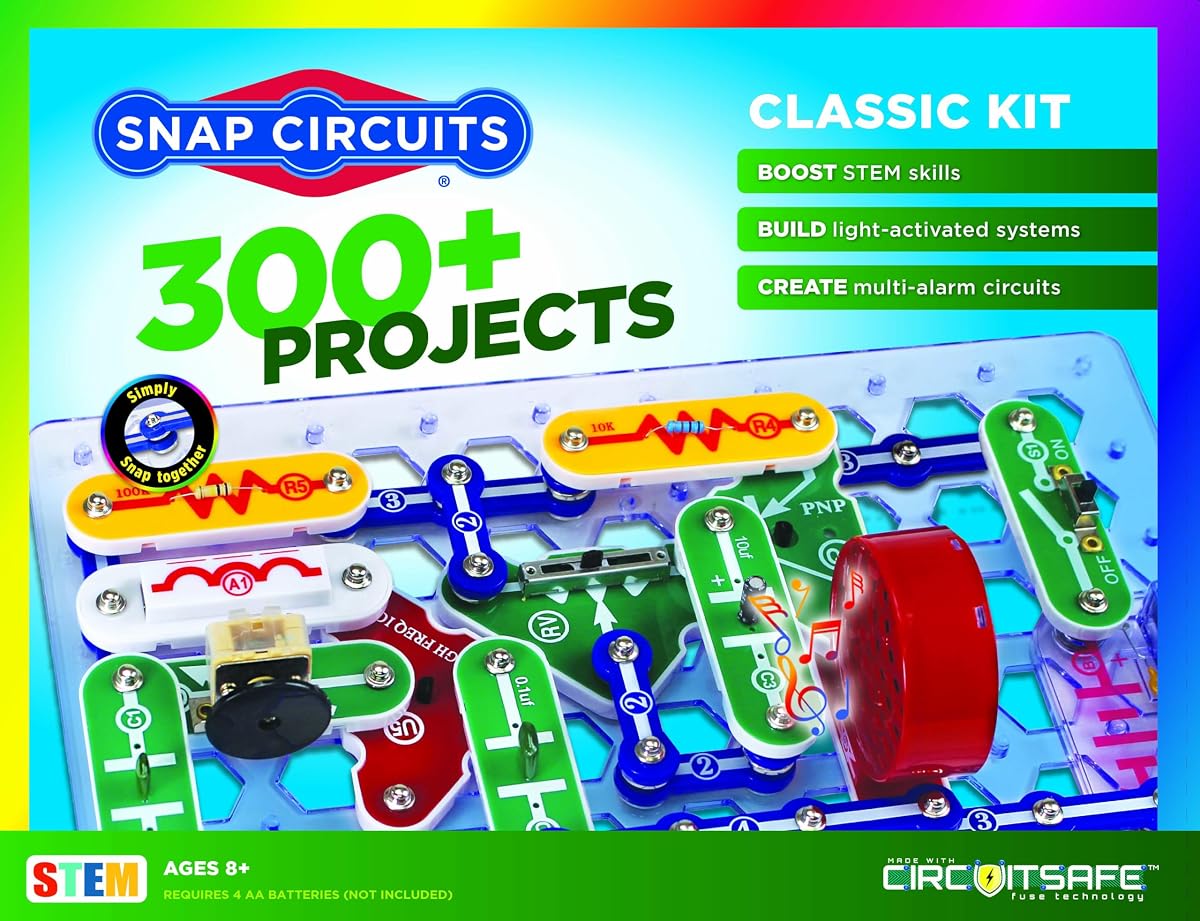
This kit is a staple for learning electronics without the risk of soldering. Rated 4.8, it allows teens to build over 300 projects like radios and alarms using snap-together pieces. It is perfect for understanding circuit logic safely.
We may earn a commission when you buy through this link, at no additional cost to you.
The color-coded plastic grid makes assembly intuitive. Projects include burglar alarms and doorbells, offering immediate gratification. The award-winning design ensures durability and ease of use for young learners.
While it lacks programming features, the focus on electrical engineering concepts is strong. Teens learn how current flows through components. It is less interactive than coding kits but simpler to start.
Ideal for introducing electrical engineering to beginners. Great for homeschool units needing a tool-free activity. Recommended for teens who enjoy visual and tactile learning experiences.
Snap-together design allows teens to see circuit results instantly after assembly.
No soldering tools reduce injury risk and frustration during experiments.
We may earn a commission when you buy through this link, at no additional cost to you.
This kit provides a practical application for soldering and amplifier circuits. With a 3.9 rating, it helps teens learn to build a working Bluetooth speaker. The dual 3W speakers produce usable sound for desks or dorm rooms.
We may earn a commission when you buy through this link, at no additional cost to you.
The amplifier board is pre-soldered to simplify the process. Teens focus on soldering the LED board and connecting the enclosure. This step-by-step approach builds confidence in handling a soldering iron safely.
Bluetooth module versions may vary, requiring careful manual review. The blue text in the instructions indicates different soldering steps for different batches. Ensuring proper connection is crucial for music playback.
Ideal for teens ready to move beyond breadboards. It produces a tangible object they can use daily. Perfect for hobbyists wanting to learn basic audio electronics.
Creates a functional speaker that demonstrates the value of hands-on assembly.
Highlights how amplifier circuits and power delivery work together.
We may earn a commission when you buy through this link, at no additional cost to you.
Offering strong value, this kit focuses on turning code into real-world results. Rated 4.7, it includes 22+ guided lessons covering sensors, motors, and displays. The UNO R3 controller is compatible with standard Arduino tutorials.
We may earn a commission when you buy through this link, at no additional cost to you.
Pre-soldered LCD headers simplify the wiring process for beginners. Teens learn logic for digital output and analog sensing. Components are clearly listed to reduce confusion during setup.
The included fan blade and relay expand project possibilities beyond simple lights. Adjusting thresholds creates custom alarms or motion projects. It is structured well for first-time learners in homeschool units.
Recommended for families seeking an affordable entry into Arduino. It balances cost and quality effectively. Perfect for teens ready to explore coding logic hands-on.
Provides a wide range of components at a lower price point than competitors.
Quick start guides help teens build projects quickly to stay engaged.
We may earn a commission when you buy through this link, at no additional cost to you.
This kit adds a visual element to audio projects. With a 4.7 rating, it features a 10-LED light show that pulses with music. The transparent acrylic case showcases the internal circuitry beautifully.
We may earn a commission when you buy through this link, at no additional cost to you.
Building this requires basic soldering skills. The manual provides high-resolution photos for every step, making assembly easier. Teens learn how audio signals interact with visual feedback systems.
Assembly is straightforward but still requires precision. The LED visualizer requires correct wiring to sync with audio frequency. It offers a unique twist on standard speaker kits.
Ideal for creative teens who enjoy customizing gadgets. The visual feedback makes it engaging. Perfect for hobbyists looking for a project with immediate visual results.
The LED show adds a dynamic element that responds to sound inputs.
The clear case turns the build into a displayable piece of art.
We may earn a commission when you buy through this link, at no additional cost to you.
This kit allows teens to build a musical instrument using electric fields. Rated 4.5, it helps them learn capacitance physics without soldering. Teens wave their hands to create sound by changing field distance.
We may earn a commission when you buy through this link, at no additional cost to you.
The colorful 22-page manual guides step-by-step assembly. Using a breadboard makes it safe and easy to correct mistakes. The concept of sensing electric fields is engaging for curious minds.
While specialized compared to general robotics, it offers deep insights into how circuits interact with the environment. It bridges music and electronics uniquely. The results are fun and surprising for users.
Ideal for teens interested in music or physics. Great for science fairs. Recommended for those who want something distinct from standard coding kits.
The hand-waving control method is intuitive and fun to experiment with.
Explains capacitance and electric fields in a practical, hands-on way.
We may earn a commission when you buy through this link, at no additional cost to you.
This kit acts as a sensor lab for expanding projects. Rated 4.7, it includes 37 modules covering motion, distance, temperature, and sound. Teens can experiment with inputs like PIR detection and ultrasonic ranging.
We may earn a commission when you buy through this link, at no additional cost to you.
It works with UNO, MEGA, or Nano boards. Each module connects easily to test functions like clocks or alarms. The digital tutorial materials include wiring diagrams and code samples.
Since no board is included, buyers need an existing Arduino. The power module requires 6.5-9V DC. This makes it a specialized expansion kit rather than a standalone starter.
Ideal for teens ready to add more sensors to existing builds. Great for prototyping complex systems. Recommended for those needing a large variety of inputs.
The large number of modules allows testing nearly any input scenario.
Perfect for expanding existing projects with new detection capabilities.
We may earn a commission when you buy through this link, at no additional cost to you.
Designed for teens 15 and up, this kit offers structured soldering practice. Rated 4.1, it includes three difficulty levels to match experience. The 7 interactive functions provide immediate feedback on assembly.
We may earn a commission when you buy through this link, at no additional cost to you.
Video guidance supports assembly steps alongside the manual. Users practice component placement and soldering technique. The project focuses on developing precision with a soldering iron.
It is best suited for those ready for independent work. Younger teens may need supervision for safety. The game-like interaction keeps engagement high after completion.
Ideal for workshops or individual practice for older teens. Strong for skill development. Recommended for those looking to master the basics of soldering safely.
The three difficulty levels allow users to build confidence gradually.
The finished project provides seven interactive games for fun testing.
We may earn a commission when you buy through this link, at no additional cost to you.
Choosing the right electronics kit depends on skill level and interests. Consider these factors to find the best match.
Look for kits that match your teen's current knowledge. Beginner kits often use breadboards and pre-soldered modules to avoid complex assembly tasks. Advanced kits might require coding or soldering experience.
Choose beginner options for those new to electronics to ensure early success and motivation.
Check how many projects are included in the kit. More projects mean more time to explore different concepts like sensors or displays. Variety keeps learning fresh and engaging.
Select kits with multiple project types to prevent boredom during long-term use.
Determine if the kit requires coding or is purely hardware-based. Arduino kits use code for control which builds programming skills. Snap kits are hardware-only for basic circuit understanding.
Choose coding kits if your teen wants to learn software alongside electronics hardware.
Assess the quality of sensors and modules included. Durable components last longer through repeated use. High-quality boards ensure stable performance during experiments.
Prioritize kits with robust components to reduce frustration from hardware failures.
Consider if soldering is required for the project. Soldering kits need adult supervision for heat safety. Non-soldering options are safer for younger teens or independent use.
Select non-soldering kits if supervision is limited to ensure safety during builds.
Review the availability of tutorials and manuals. Good kits include video guidance or detailed PDFs. Strong documentation helps troubleshoot assembly issues effectively.
Choose kits with clear instructions to minimize support needs during projects.
Check if the kit is compatible with other modules. Expansion-friendly kits allow adding more sensors later. This helps build a larger system over time.
Select expandable kits if you plan to grow the project setup later.
Compare prices across similar options. Kits vary widely in cost based on component counts. A higher price often means more sensors or advanced features included.
Balance cost with educational value to ensure you get the best features.
Always organize components before starting a new project. Use small boxes or dividers to keep wires and sensors sorted. This saves time searching for parts during builds.
Follow the tutorial steps exactly when assembling for the first time. Verify connections before powering the circuit to avoid damage. Take photos of wiring setups for future reference.
Store kits in a dry place away from direct sunlight. Moisture can corrode metal parts. Use a sealed container to protect electronics from dust or spills.
The SNAP CIRCUITS Classic SC-300 is ideal for absolute beginners. It requires no soldering and has snap-together pieces. This reduces frustration and focuses on basic electrical concepts immediately.
Most Arduino kits do not require prior coding knowledge. They include example code and tutorials to help you learn. However, understanding basic logic is helpful for modifying examples.
Soldering kits are safe with adult supervision. Teens should use proper ventilation and safety gear. Some kits offer pre-soldered modules to reduce risks during initial assembly.
Yes, these kits are excellent for school STEM projects. They provide hands-on experience with sensors and coding. Teachers often use them for robotics or electronics classes.
Many kits like the ELEGOO Sensor Modules offer expansion options. You can buy additional sensors to add to your existing board. Compatibility is key when adding new parts.
A single project usually takes 1 to 3 hours. Complex builds like robot cars may take longer. Beginners might need multiple sessions to complete a full assembly.
The ELEGOO Mega 2560 R3 and the Robot Car Kit are top choices for comprehensive learning. They offer structured lessons and high-quality components. These kits support both coding and hardware development.
Prioritize kits with clear instructions and component variety. Beginners should start with solderless options. Those ready for challenges can choose advanced sensor or robotics kits.
Always check current prices and availability before purchasing. Prices may vary based on region and seller. Ensure you have the right power supplies and tools for setup.