
Workman A28
4.5Editor score
PL-259 male and female
Side ground screw included
Affordable protection option
This guide compares the top ham radio lightning protection for antennas to help you safeguard your equipment from surges and strikes effectively.
Protecting your ham radio equipment from lightning strikes is essential for maintaining a reliable station. A good protection device diverts dangerous surges safely to ground before they damage sensitive transceivers and accessories.
We evaluated ten top-rated lightning arrestors based on construction quality, frequency range, insertion loss, and surge capacity. Each product was reviewed for compatibility with common coax connectors and ease of installation.
This list shows detailed specs, pros, and cons for every model. Prices and availability may change frequently so please verify current details before making your final purchasing decision.
4.5Editor score

4.8Editor score

4.8Editor score
The following table provides a side-by-side overview of all ten selected products. Review each entry to compare connectors, frequency bands, and construction materials side by side for your needs.




This XRDS-RF arrester offers a reliable balance of performance and affordability for general ham radio setups. With a 4.6 star rating from users, it consistently delivers low insertion loss and stable VSWR across common HF bands.
We may earn a commission when you buy through this link, at no additional cost to you.
Its construction features a brass body with nickel plating which provides strong corrosion resistance. The internal Teflon insulator ensures that the signal remains clean during transmission. This model is particularly effective for base stations where cost efficiency matters.
While it provides solid protection, it does not include a grounding cable so you must source one separately. Additionally, the power handling is moderate so it may not suit high-wattage amplifiers without further assessment of the manufacturer specs.
Overall this arrestor is an excellent choice for operators seeking dependable protection without overspending. It integrates easily into existing coax lines and safeguards equipment against common electrical surges encountered during storms.
Low RF insertion loss ensures your transmitted signal remains strong and clear without unnecessary attenuation.
Nickel plated brass housing resists rust and weathering for long-term outdoor reliability.
We may earn a commission when you buy through this link, at no additional cost to you.
The Diamond SP1000 stands out for its exceptional surge capacity and replaceable design. Rated for 6000 Amps discharge it offers superior protection compared to many standard arrestors in this class. Users appreciate the durability and signal fidelity.
We may earn a commission when you buy through this link, at no additional cost to you.
Its replaceable surge arrester element extends the lifespan of the device significantly after a major lightning event. This feature makes it a cost-effective long-term investment despite the higher upfront cost. The low loss design maintains excellent signal integrity.
While highly effective, it may be overkill for simple low-power setups. Also ensure your coax connectors match its specifications before purchase. The extra cost is justified if you operate high-value equipment.
This model is ideal for serious operators who demand the highest level of protection. It provides peace of mind during severe weather and ensures your transceiver remains safe from induced surges.
Replaceable elements allow you to refresh protection without replacing the entire unit after a surge.
Insertion loss under 0.3 dB ensures minimal impact on your transmission quality.
We may earn a commission when you buy through this link, at no additional cost to you.
The Workman A28 offers basic lightning protection at an accessible price point. It features standard PL-259 connectors that fit most common coax cables used in ham and CB radio stations. Users find it straightforward to install.
We may earn a commission when you buy through this link, at no additional cost to you.
Its side ground screw simplifies the grounding process by providing a dedicated terminal for attaching a ground wire. This eliminates the need to improvise grounding connections on the main body. However specs are minimal compared to premium units.
This unit is best suited for entry-level operators or temporary installations where budget is the primary constraint. While it handles common surges it may not withstand direct hits or extremely high energy events as well as heavy-duty models.
For those just starting out or needing a spare protection device this arrestor is a practical choice. It provides essential safety without requiring a significant financial commitment for your station setup.
The integrated ground screw makes connecting to your earth system quick and secure.
Standard PL-259 connectors ensure compatibility with a wide range of amateur radio equipment.
We may earn a commission when you buy through this link, at no additional cost to you.
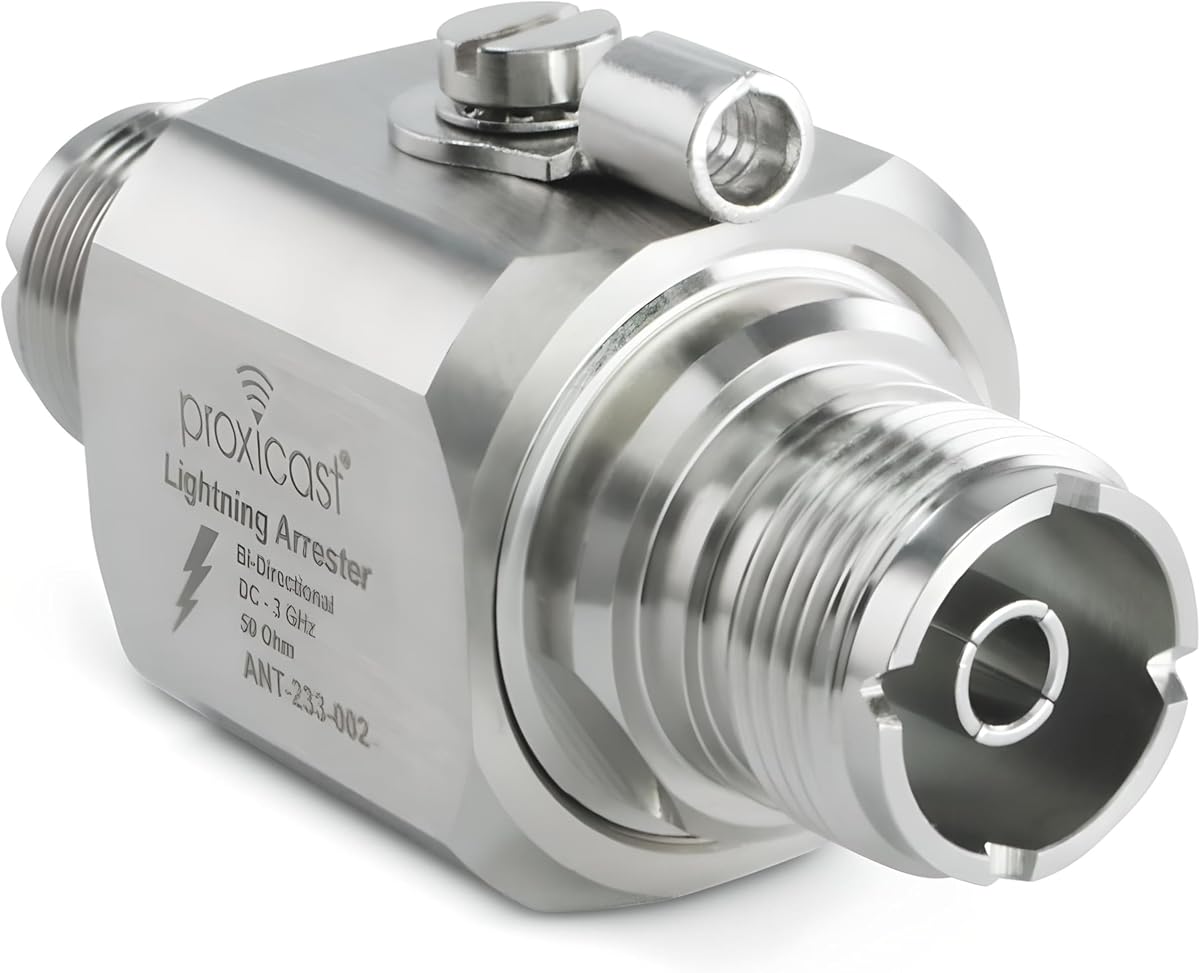
This Proxicast model is specifically designed for SO-239 connectors which are common on many amateur radio transceivers and antennas. The 230V gas discharge tube ensures effective surge shunting to ground. Its bi-directional design protects both ways on the line.
We may earn a commission when you buy through this link, at no additional cost to you.
The DC pass-through capability allows you to pass bias or control signals through the arrester without interruption. This is essential for systems requiring remote antenna power or motor control. It is built for outdoor use with weather-resistant materials.
If your station uses PL-259 connectors exclusively you may need adapters which adds complexity. Also ensure your grounding system meets local codes for optimal performance. The unit offers robust protection for mobile and base setups.
It is a strong choice for operators with SO-239 interface equipment looking for reliable protection. The gas tube ensures rapid response to transients keeping your radio safe from sudden voltage spikes.
Maintains DC signal flow which is vital for remote antenna systems and bias tees.
Protects against surges traveling from either the antenna or external power sources.
We may earn a commission when you buy through this link, at no additional cost to you.
This arrester features an aluminum housing that excels at heat dissipation during surge events. The perfect 5.0 rating reflects high user satisfaction with its reliability. It includes an earth lead for quick grounding setup right out of the box.
We may earn a commission when you buy through this link, at no additional cost to you.
The internal protective components react instantly to surges without requiring any fuse replacements. This makes it a low maintenance solution for busy operators. The aluminum construction also provides excellent corrosion resistance for outdoor mounting.
While it is highly rated it does not provide detailed power specs on the listing. Ensure it matches your system requirements before purchase. The included earth lead is a convenient addition that saves time during install.
It is an excellent choice for those prioritizing heat management and ease of use. The robust aluminum design ensures it withstands environmental challenges while keeping your radio equipment safe from electrical spikes.
Aluminum housing helps dissipate heat generated during high energy surge events effectively.
Included earth lead reduces the need for extra components during initial installation.
We may earn a commission when you buy through this link, at no additional cost to you.
The SP3000 offers a broad frequency range from DC up to 3000 MHz making it suitable for many modern amateur radio applications. It handles 200 Watts which covers most standard ham transceivers. The N-Type connectors ensure a secure and low-loss connection.
We may earn a commission when you buy through this link, at no additional cost to you.
With a 4.8 rating users trust its durability and performance under stress. The 1000V impulse discharge capacity provides robust protection against lightning-induced surges. This model is ideal for stations using multiple bands or wideband equipment.
N-Type connectors are less common than PL-259 so you might need adapters for older gear. The higher price reflects the premium construction and performance capabilities. It remains a top choice for serious operators.
This arrestor ensures your equipment stays protected across a wide spectrum of frequencies. Its quality construction minimizes signal loss while maximizing safety during severe weather conditions.
Supports frequencies up to 3000 MHz covering VHF UHF and beyond.
Handles 200 Watts of power which fits most amateur radio transmitters.
We may earn a commission when you buy through this link, at no additional cost to you.
This bulkhead arrestor allows direct mounting through a panel or enclosure for professional installation. The integrated nut simplifies securing it to metal boxes or walls. It features male to female UHF connectors for straightforward compatibility.
We may earn a commission when you buy through this link, at no additional cost to you.
Inside it uses a 230V gas discharge tube to shunt surges to ground safely. With a max power of 50 Watts it is best for low power equipment or receive antennas. Its design keeps your coax entry neat and organized.
Ensure your enclosure is thick enough for the threads to engage securely. The power limitation means it should not be used on high-power transmit lines. It is a practical solution for base stations.
Use this model when you need a tidy feedthrough into your equipment room or shelter. It protects the entry point of your coax and keeps your wiring clean and functional.
Integrated nut allows secure installation through standard enclosures without extra hardware.
Uses a gas tube to divert damaging surges safely away from sensitive components.
We may earn a commission when you buy through this link, at no additional cost to you.
This two-pack offers great value for operators with multiple antennas or stations. Each unit features a nickel-plated brass body which resists corrosion and ensures durability. The PTFE insulator protects the inner core effectively.
We may earn a commission when you buy through this link, at no additional cost to you.
The design supports wide bandwidth usage making it versatile for various radio frequencies. It ensures stable signal connections due to the brass plated inner pin. Having two units allows you to protect multiple feedlines simultaneously.
Verify the connector type matches your setup before ordering. While it lacks detailed specs it delivers standard protection for general amateur use. The two-pack pricing makes it cost-effective for expanding stations.
Use this pack to equip your primary and backup antennas with basic protection. The materials ensure a long service life even in outdoor conditions.
Two units in one package let you protect multiple antennas cost effectively.
Brass plated inner pin and PTFE insulator ensure a stable signal connection.
We may earn a commission when you buy through this link, at no additional cost to you.
The RAIGEN arrestor supports a broad frequency range from 0 to 6 GHz making it ideal for IoT and modern Ham setups. It includes a replaceable 90V gas discharge tube for ongoing protection. The ground lug ensures proper bonding to your ground system.
We may earn a commission when you buy through this link, at no additional cost to you.
Its heavy-duty brass nickel plated body withstands outdoor weather conditions. The unit is designed for professional outdoor deployments and offers low insertion loss to preserve signal strength. It handles various LTE and WiFi frequencies.
While it is robust it focuses on N-Type connectors which may require adapters for other types. The replaceable tube adds maintenance value over time. This model suits complex setups needing high frequency coverage.
Choose this for stations combining Ham radio with IoT or cellular equipment. It ensures comprehensive protection across a wide spectrum of wireless technologies.
Supports a wide range of wireless technologies including IoT and Ham bands.
Replaceable tube allows you to refresh protection without replacing the entire unit.
We may earn a commission when you buy through this link, at no additional cost to you.
The Opek LP-350a is designed to handle up to 350 Watts which suits higher power amateur setups. It operates up to 600 MHz covering HF and VHF bands. The standard PL-259 connectors ensure easy integration with common radios.
We may earn a commission when you buy through this link, at no additional cost to you.
It includes a dedicated ground terminal for reliable grounding of surge energy. The unit is built to resist static and lightning surges effectively. Its focus on power handling makes it suitable for transmitter protection.
The frequency range is limited compared to wideband models so it may not fit UHF needs. Ensure your ground terminal is properly bonded for optimal performance. It is a reliable unit for traditional Ham setups.
Use this model if your station uses higher power transmitters on HF bands. It provides robust protection against surges while maintaining signal integrity.
Handles up to 350 Watts which protects high power transmitter lines.
Dedicated ground terminal ensures effective discharge of surge energy.
We may earn a commission when you buy through this link, at no additional cost to you.
Selecting the right lightning protection depends on your connector type frequency range and power levels. This section covers key factors to help you choose the ideal device for your station.
Most amateur radio systems use PL-259 or N-Type connectors. Ensure the arrestor matches your coax ends to avoid needing adapters that introduce loss and points of failure. SO-239 is also common on some transceivers.
Choose a unit with connectors identical to your existing gear for a secure direct fit and optimal performance.
Lightning arrestors are designed for specific bands. HF units may not work well on VHF or UHF. Check the DC to MHz range to ensure it covers all your operating frequencies including any auxiliary equipment.
Match the frequency coverage to your primary operating bands to ensure the device performs as intended.
Transmitters deliver significant power that can damage surge protectors. Choose a unit rated above your peak output power to avoid failure during high power transmissions. This is critical for amplifiers and HF rigs.
Select an arrestor with power ratings comfortably above your transmitter maximum to ensure safe operation.
Higher surge capacity like 6000 Amps means better protection against strong lightning currents. Units with replaceable elements offer long-term value after a storm. This ensures your equipment stays safe even after repeated strikes.
Look for high discharge capacity and replaceable parts to maximize the lifespan of your protection device.
Every device in your coax line introduces some signal loss. Aim for units with less than 0.5 dB loss to keep your transmitted signal strong. Low loss ensures your signal reaches the antenna with minimal attenuation.
Choose units with the lowest insertion loss to maintain your signal strength and system efficiency.
Outdoor arrestors face heat rain and corrosion. Brass or aluminum housings with nickel plating resist rust and ensure durability. Teflon insulators protect the inner conductor from moisture and breakdown during storms.
Select devices with robust materials and plating to withstand years of outdoor weather exposure.
Proper grounding is essential for the arrestor to work. Units with dedicated ground screws or lugs simplify this process. Verify that you can connect to a proper ground rod or system effectively.
Ensure the unit provides easy access to grounding terminals for a safe and effective connection.
Bulkhead styles allow panel mounting for clean enclosures while inline units are simple and direct. Decide based on your setup needs whether you prefer a hidden or accessible connection point.
Choose a mounting style that fits your enclosure or cable routing for a tidy installation.
Install the arrestor directly between the antenna coax and your radio or amplifier. Keep it as close to the point of entry as possible to divert surges before they enter your equipment shelter.
Connect the grounding terminal securely to a dedicated ground rod or grounding system. Ensure the ground wire is as short and straight as possible to minimize resistance during a strike.
Regularly inspect the unit for corrosion damage or loose connectors. Replace gas discharge tubes if your model supports it after a major storm to maintain optimal protection levels.
No arrestor can guarantee complete protection but they reduce risk significantly. A proper ground connection diverts most energy to earth reducing voltage spikes reaching your gear. Use them alongside other safety measures for best results.
Check the frequency range listed on the product specs. Units rated up to 600 MHz or more cover HF bands fully. Ensure the connectors match your existing coax to avoid connection issues.
Yes but you must route the ground cable outdoors to a ground rod for proper protection. Indoor units lack weatherproofing and require external grounding to function safely during surges.
Some models feature a screw-in or clip-in design for easy replacement. Use the specified tube voltage and type listed in the manual. This ensures the unit functions correctly after a surge event.
The difference often lies in frequency handling and connector types. VHF units focus on lower frequencies while UHF or wideband support higher frequencies. Choose based on your operating band needs.
Only if the arrestor power rating exceeds your amplifier output. High wattage amplifiers can exceed standard arrestor limits causing failure. Verify the wattage rating before installation.
We reviewed ten top arrestors that suit various needs from budget setups to premium stations. The Diamond SP3000 and Workman A28 lead in performance and value respectively.
Prioritize matching connector types and frequency ranges to ensure reliability. Proper grounding remains the most critical factor for effective surge diversion and equipment safety.
Check current prices and stock availability before purchasing to ensure you get the best deal for your budget and requirements.